Batch Generation: The AI Product Photo Generator Built for Your Entire Catalogue
Shooting an entire catalogue used to mean weeks of coordination, five-figure budgets, and dozens of back-and-forth emails with studios. Batch Generation replaces that with a single workflow.
Most AI product photo generators were built for one image at a time. You upload a flat lay, pick a model, choose a background, and hit generate. That works when you have five SKUs. It falls apart at fifty. Picjam's AI product photo generator is built for the whole catalogue instead.
Fashion and ecommerce teams don't shoot one product at a time. They shoot collections. A seasonal drop might mean 200 SKUs that all need consistent models, coordinated backgrounds, and creative direction that matches the brand. Doing that in a one-by-one chat interface means hours of repetitive prompting, inconsistent outputs, and no easy way to QA or approve at scale.
We get told constantly that AI is indeed dropping the cost of production. But it hasn't yet dropped down the time.
The changes today, with Picjam's Batch Generation.
What is Batch Generation?
Batch Generation is Picjam's workflow for producing on-model product photography across your entire catalogue in a single run. Instead of generating images one at a time, you brief the whole batch upfront — products, models, backgrounds, poses, styling notes — and let Picjam handle the rest.
It's built for the way ecommerce teams actually work: in bulk, against deadlines, with brand consistency as a non-negotiable.
How can I access it?
Enterprise and Custom plan customers get access to Batch Generation.
How it works
1. Select your products and add styling notes
Start by choosing which SKUs to include in your batch. You can add styling notes for each product — hats, accessories, product pairing — so every image reflects how you'd actually merchandise the item.
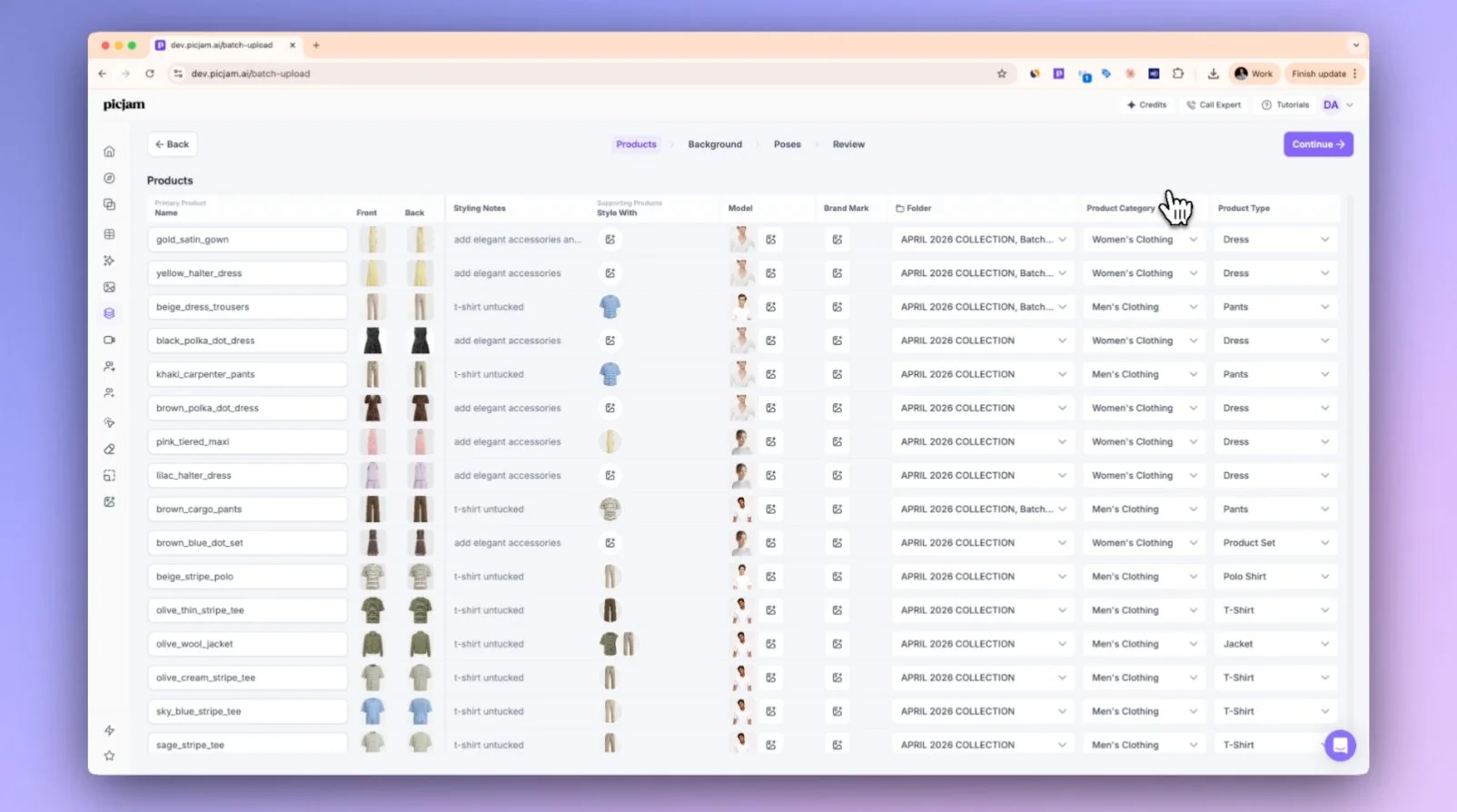
2. Choose consistent models across the batch
Pick your AI models once and apply them across the entire run. No more hoping that each generation looks like it came from the same shoot. You get the same face, the same look, the same brand feel across every SKU.

3. Pick your backgrounds
Choose from studio, lifestyle, or textured backgrounds. Set the look for the whole collection or vary it by product category — whatever matches your brand guidelines.

4. Select poses and shot types
Full body, close-up, dynamic angles — choose the shot types that work for your product category. Batch Generation gives you control over how each product is presented without having to re-brief every image.
5. Generate a free sample
Before committing to the full run, generate a sample to check quality. This is your chance to review the output, tweak the brief, and make sure everything looks right before scaling up.
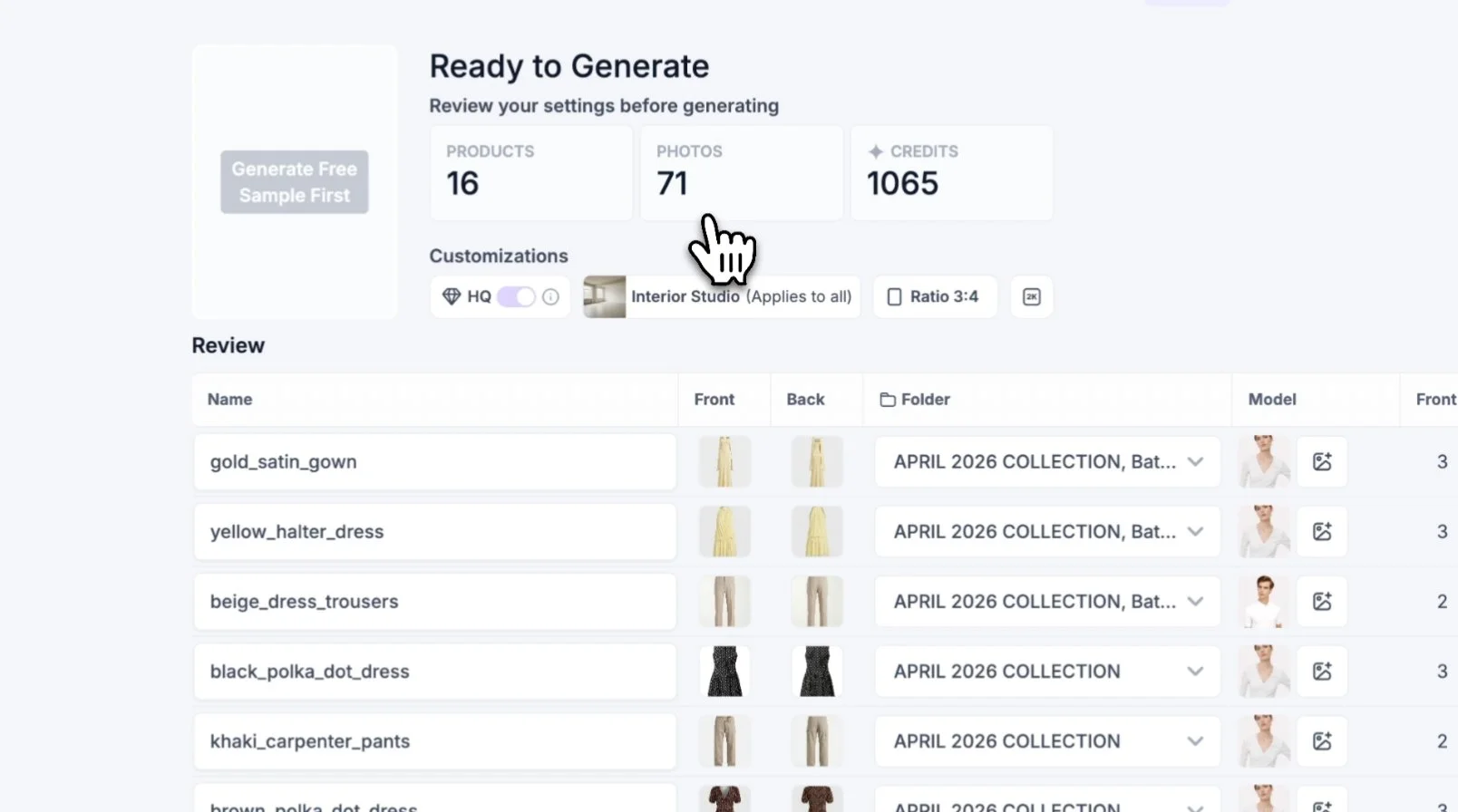
6. QA and approve
Once the batch is generated, use Picjam's QA workflow to review the results. Favourite your hero shots with a single key press, flag anything that needs rework, and approve final images — all in one place.
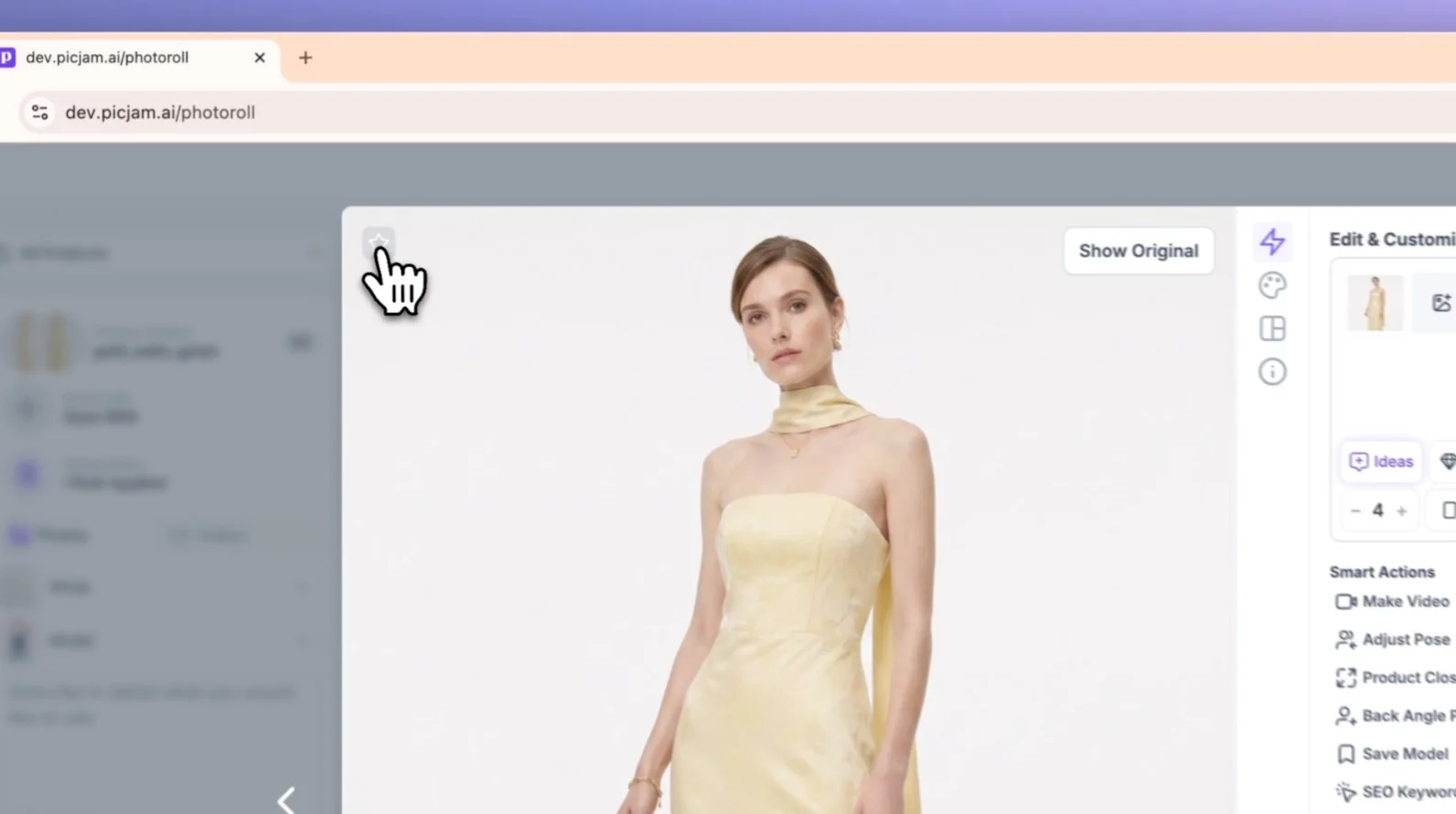
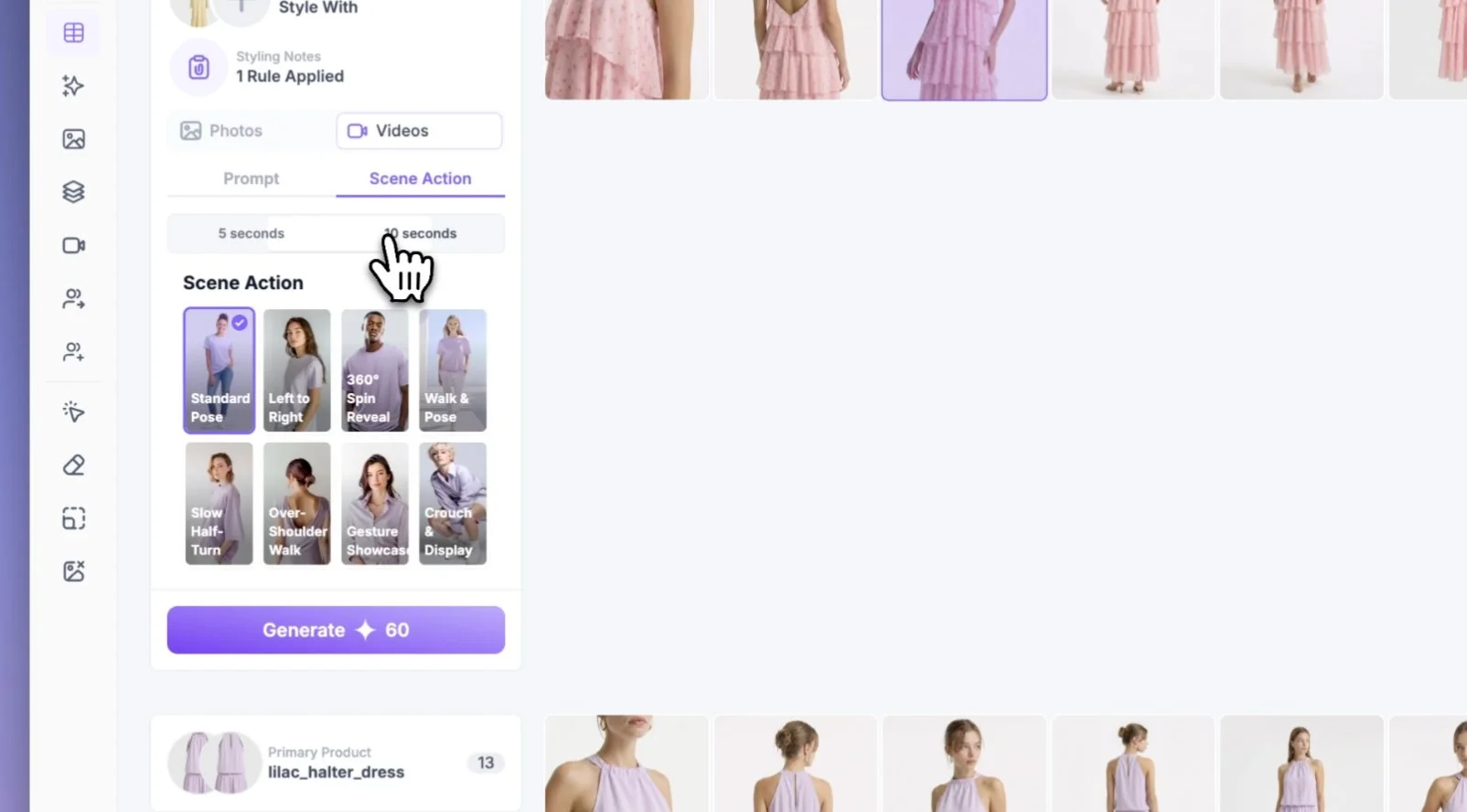
7. Turn stills into video
Once you've picked your hero shots, turn them into product videos with a single click. No separate tool, no export-import dance — it's built right into the workflow.
Why this matters for ecommerce teams
Traditional product photography at catalogue scale means coordinating studios, models, stylists, and post-production across weeks. AI product photography tools have made the per-image cost dramatically lower, but most still force you into a one-at-a-time workflow that doesn't scale.
Batch Generation changes the unit of work from a single image to an entire collection. The result:
- Go from flat lays to full on-model imagery for 100+ SKUs in minutes, not weeks
- Maintain brand consistency across every product in the drop
- Cut content production costs by up to 90% compared to traditional shoots
- Get to market faster — no waiting on studio availability or post-production queues
Who it's for
Batch Generation is built for fashion and ecommerce brands producing imagery at scale. It best fits stores with the following:
- Brands doing at least $2m in revenue
- Brands that have previously spent multi five-figures on photography and content
- Brands that do 10+ shoots per year traditionally
If you're a fit, book a demo here to get access — we can make a significant difference to your content operations.
Michael Pirone
Co-Founder