AI Fashion Photography Unlocked for On-Model Imagery
Discover how AI fashion photography cuts costs, accelerates image production, and boosts conversions. A practical guide for creating on-model visuals instantly.
When Crocs tested AI-generated photos for their spring collection, they discovered a 60% faster campaign rollout. For fashion brands, speed is survival, yet many are stuck with a six-week photoshoot schedule. AI fashion photography transforms that reality, giving brands the power to create entire on-model campaigns from a single flat-lay photo — all in minutes, not weeks.
This guide explains how brands like Zara and Levi's are using AI to create on-model imagery, cutting costs and accelerating their go-to-market strategies.
Picjam's AI fashion photography tool turns a simple product shot into hundreds of campaign-ready visuals.
How AI Slashes Photoshoot Costs by Up to 90%
Traditional photoshoots are a logistical and financial drain. Booking studios, hiring models, managing photographers, and waiting on post-production is a slow, expensive process. For a DTC brand on Shopify or an independent seller on Etsy, the high upfront cost creates a massive barrier to competing with larger players.
Even fast-fashion giants like Zara find the old model a liability. The workflow is too sluggish to keep up with micro-trends, leading to missed opportunities.
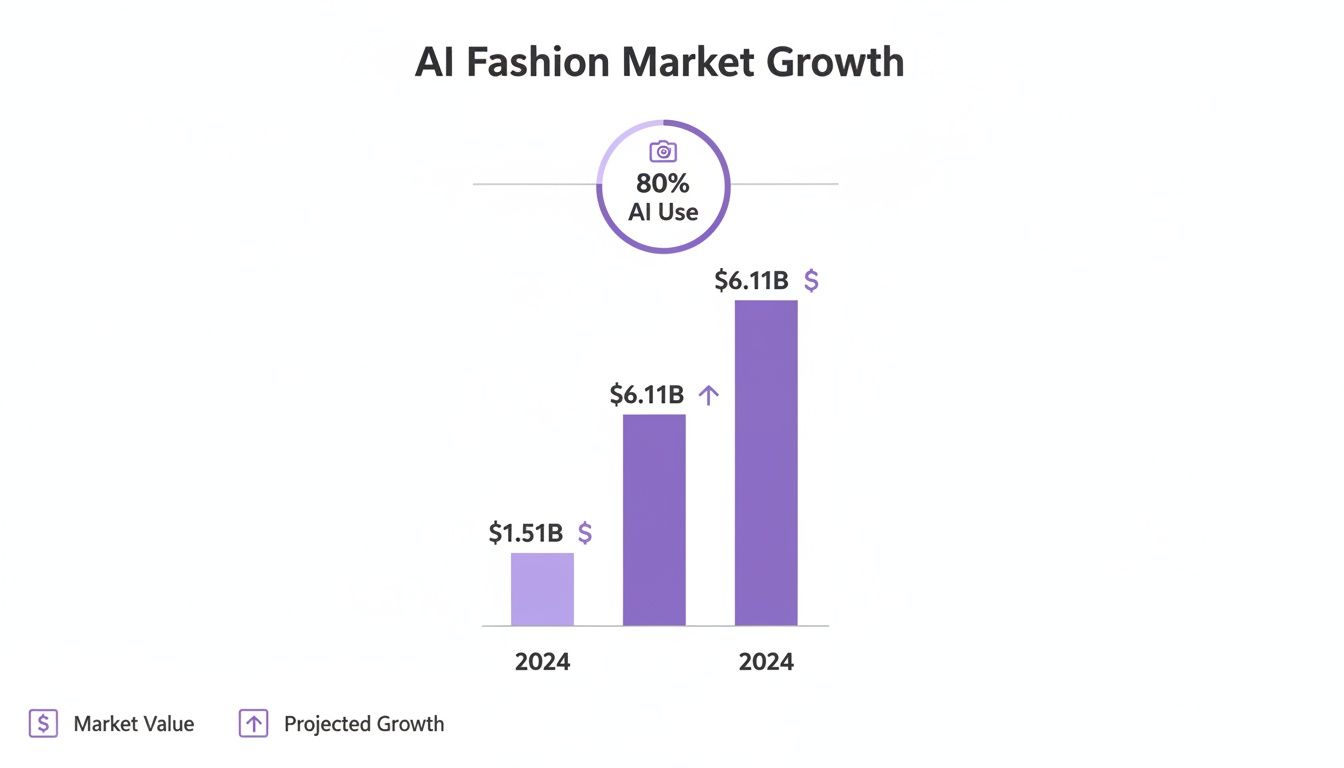
This is why the market for AI fashion photography is growing by an estimated 32.1% annually. According to a McKinsey report, generative AI is set to add significant value to the fashion industry.
Why Inflexibility Costs More Than the Photoshoot Itself
The biggest issue with traditional shoots isn't just the price tag — it's the total lack of creative freedom. Once a shoot is wrapped, the images are final. Need a different background for a new ad? A different model? Another pose? The only option is another expensive reshoot.
This static approach kills any chance for A/B testing visuals.
Picjam's AI fashion photography platform lets brands generate endless on-model variations from one product photo. A DTC swimwear brand, for example, can create shots of the same bikini on 10 different models, placing them on a Miami beach one minute and by a Santorini pool the next.
This agility transforms a resource-intensive process into a digital-first workflow.
"We could finally afford to show our plus-size line on models that reflect our customers, and our conversion rate doubled." — Anonymous DTC Founder
From a $29,000 Invoice to a $200 Subscription
For any fashion brand, the real cost of a traditional photoshoot is lost time. Weeks spent on logistics are weeks you aren't selling. AI fashion photography addresses this by cutting costs while massively increasing efficiency and creative output.
Industry data shows that brands using AI for visual content can see cost reductions of up to 90% while producing 500% more creative assets. This translates directly to performance, with some brands reporting conversion lifts as high as 3X.
Traditional Photoshoot vs. AI Fashion Photography Cost Breakdown
Transforming Creative Scarcity into Marketing Abundance
The cost savings are just the beginning. The truly profound shift is the explosion in creative output. A traditional shoot might yield 20 finished images. An AI platform can generate hundreds of unique, on-model variations in minutes.
- Go Global, Look Local: Generate campaigns with models and backgrounds native to customers in Tokyo, Paris, or New York.
- Target Every Demographic: Instantly create visuals showing the same jeans on Gen Z, Millennial, and Gen X models.
- A/B Test Everything: Wondering if a minimalist studio background converts better than a city street? Don't guess — test.
Your 4-Step Workflow for an Instant AI Photoshoot
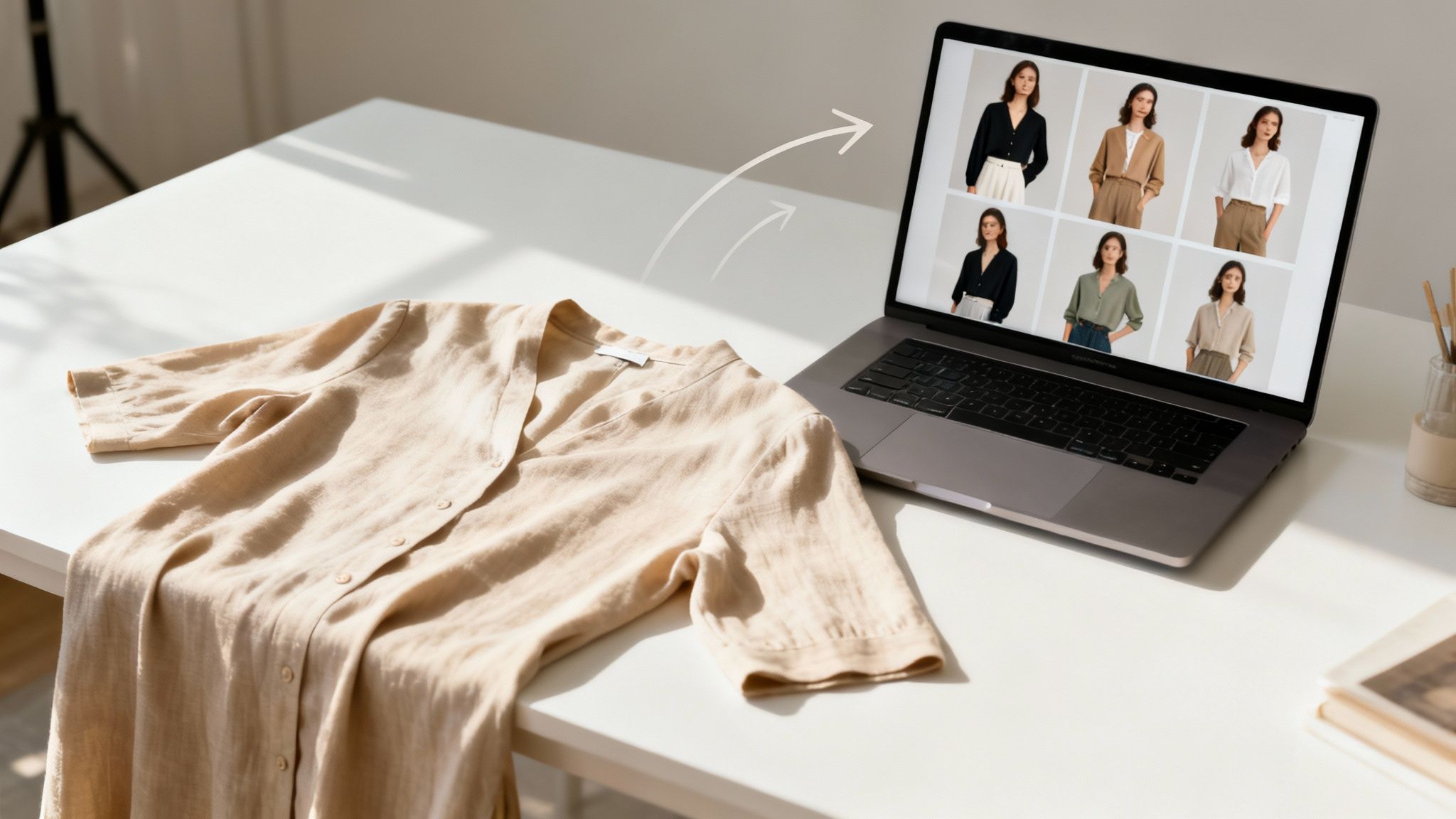
Step 1: Upload Your Product Image
Everything starts with a single, clean product shot. Ghost mannequin shots and flat lays on a plain background work great. The better your starting image, the more realistic your final photos will be. If you're starting from mannequin shots, Picjam's ghost mannequin removal tool can clean them up first.
Step 2: Select Your Ideal AI Model
Next is casting. Forget agency portfolios and scheduling conflicts. Picjam's AI virtual model library gives you instant access to a diverse range of models — pick one that speaks to your target customer.
A brand like Princess Polly can choose models with a Gen Z vibe, while a classic brand like J.Crew can select models with a more mature, polished look.
Step 3: Generate and Experiment with Scenes
With your product and model chosen, generate on-model images instantly. Want to swap a sunny beach for a cool urban street? It's one click. In minutes, you could create visuals for different marketing angles: vacation vibe, city chic, casual weekend. This immediate feedback lets you create tailored imagery for every channel.
Step 4: Refine and Finalize Your Visuals
The last step is dialling in the details. Key refinement tools include fit adjustment, detail preservation to keep fabric textures and patterns intact, and image upscaling ready for website banners or print catalogs.
How AI Achieves Photorealism and a Perfect Garment Fit
The biggest hesitation brands have about AI fashion photography isn't cost or speed — it's quality. Today's top-tier AI platforms generate hyper-realistic models by nailing the tiny details our brains register as authentic: believable skin textures, natural lighting, and nuanced facial expressions.
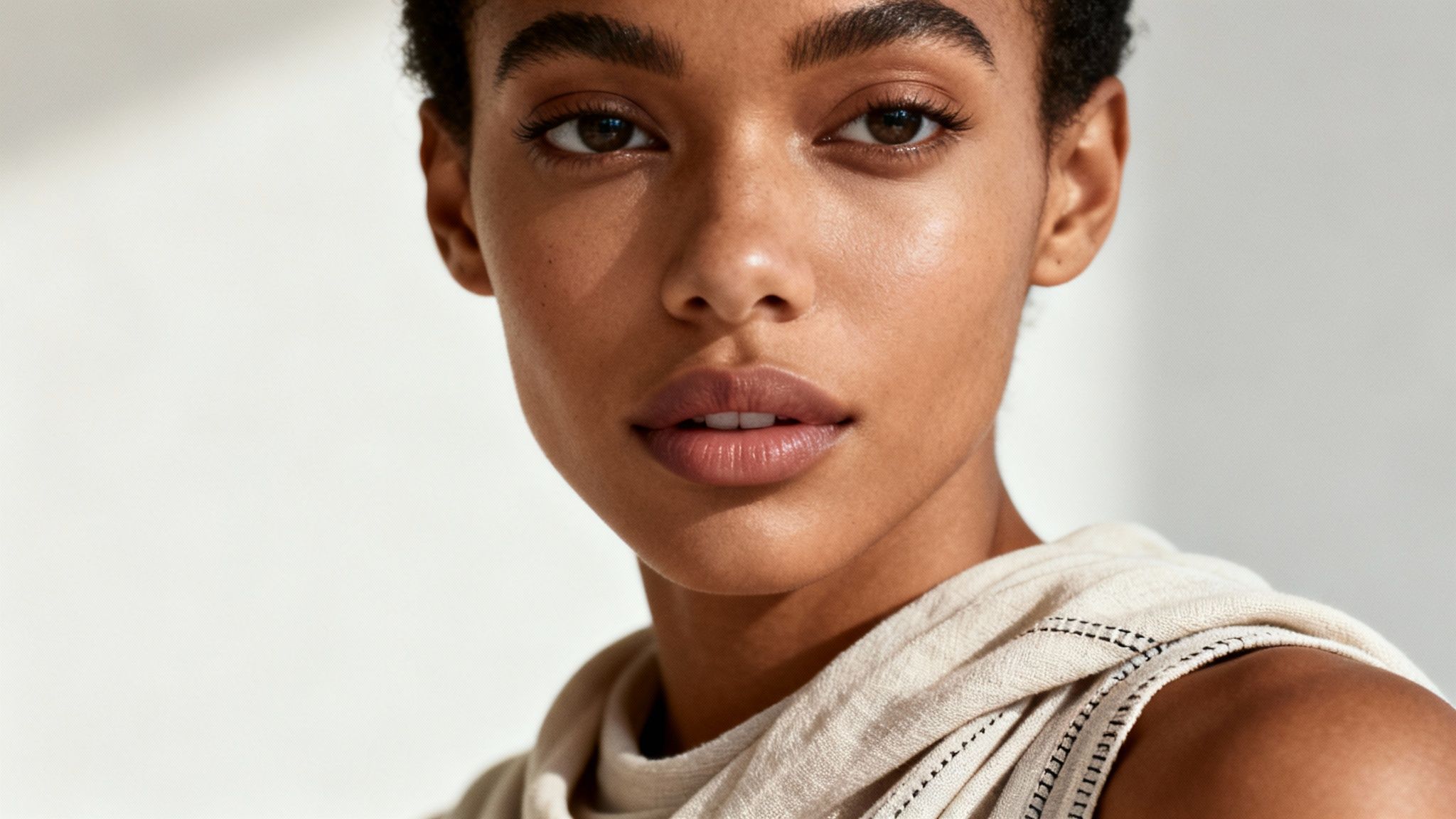
A Statista report found that 22% of online fashion returns happen because items look different in person. Getting the fit right directly attacks this expensive problem. Picjam's AI fashion photography platform uses two key technologies to ensure a perfect garment fit: Fixed Product Integrity, which locks in logos, embroidery, and fabric textures; and Fit to Model Draping, which intelligently drapes the fabric to look natural on different body types.
How Real Brands Cut Timelines and Boost Conversions with AI
One DTC startup launched a new collection in just 3 days instead of the usual 3 weeks. By sidestepping the logistics of a traditional shoot, they capitalized on a fleeting trend while demand was at its peak.
An independent label used AI to generate on-model photos for a new plus-size collection, something they could never have afforded traditionally. The results were immediate: their conversion rate for the collection doubled.
"We could finally afford to show our plus-size line on models that reflect our customers, and our conversion rate doubled." — Founder of an independent apparel brand.
Takeaway: 3 Actionable Steps to Get Started with AI
1. Audit Your Current Production Costs
Pull your invoices from the last 6 months of photoshoots and identify the biggest drains — model fees, studio rentals, or post-production cycles. This audit will reveal exactly where AI can make the biggest impact on your budget.
2. Run a Small, Focused Test
Pick a single product for your first experiment. Upload a clean flat-lay or ghost mannequin photo to Picjam's AI fashion photography tool and generate a set of on-model images for product pages or a social media ad campaign.
3. Measure Against Key Performance Indicators (KPIs)
Track how your AI-generated visuals perform against the metrics that matter:
- Conversion Rate: Did the new images lead to more sales?
- Add-to-Cart Rate: Are more shoppers adding the item to their carts?
- Campaign ROI: Did the AI-powered creative deliver a lower cost-per-acquisition?
Ready to see how the numbers stack up for your brand?

Picjam team
The Picjam team blends AI, product, and creative expertise to eliminate the cost and delay of traditional photography for modern eCommerce brands.