Modeling for Photoshoot Success: A Fashion Brand's Guide
Master the art of modeling for photoshoot scenarios. Our guide covers pre-shoot prep, posing, and how AI tools can scale your brand's visual content.
How to start saving money
Lorem ipsum dolor sit amet, consectetur adipiscing elit lobortis arcu enim urna adipiscing praesent velit viverra sit semper lorem eu cursus vel hendrerit elementum morbi curabitur etiam nibh justo, lorem aliquet donec sed sit mi dignissim at ante massa mattis.
- Neque sodales ut etiam sit amet nisl purus non tellus orci ac auctor
- Adipiscing elit ut aliquam purus sit amet viverra suspendisse potent i
- Mauris commodo quis imperdiet massa tincidunt nunc pulvinar
- Adipiscing elit ut aliquam purus sit amet viverra suspendisse potenti
Why it is important to start saving
Vitae congue eu consequat ac felis placerat vestibulum lectus mauris ultrices cursus sit amet dictum sit amet justo donec enim diam porttitor lacus luctus accumsan tortor posuere praesent tristique magna sit amet purus gravida quis blandit turpis.

How much money should I save?
At risus viverra adipiscing at in tellus integer feugiat nisl pretium fusce id velit ut tortor sagittis orci a scelerisque purus semper eget at lectus urna duis convallis. porta nibh venenatis cras sed felis eget neque laoreet suspendisse interdum consectetur libero id faucibus nisl donec pretium vulputate sapien nec sagittis aliquam nunc lobortis mattis aliquam faucibus purus in.
- Neque sodales ut etiam sit amet nisl purus non tellus orci ac auctor dolor sit amet
- Adipiscing elit ut aliquam purus sit amet viverra suspendisse potenti
- Mauris commodo quis imperdiet massa tincidunt nunc pulvinar
- Adipiscing elit ut aliquam purus sit amet viverra suspendisse potenti
What percentage of my income should go to savings?
Nisi quis eleifend quam adipiscing vitae aliquet bibendum enim facilisis gravida neque. Velit euismod in pellentesque massa placerat volutpat lacus laoreet non curabitur gravida odio aenean sed adipiscing diam donec adipiscing tristique risus. amet est placerat imperdiet sed euismod nisi.
“Nisi quis eleifend quam adipiscing vitae aliquet bibendum enim facilisis gravida neque velit euismod in pellentesque massa placerat”
Do you have any comments? Share them with us on social media
Urna ut fermentum imperdiet lacus, elementum etiam maecenas libero nunc, suspendisse massa, nisl, elit curabitur feugiat in quis ut nibh enim in tristique aliquam sed vitae dui, dis adipiscing pharetra aliquam turpis turpis nibh rhoncus enim, pellentesque leo laoreet neque in sed bibendum fermentum suspendisse tempus non purus adipiscing suscipit fringilla adipiscing convallis dolor nulla fermentum facilisis ullamcorper ut vehicula tortor libero metus donec velit, tristique fermentum, dictum euismod diam scelerisque enim non pharetra tristique lectus habitant pharetra est id
When Crocs tested AI-generated photos for their spring collection, they discovered a 60% faster campaign rollout. This highlights a shift: a successful photoshoot isn’t just about the day of the shoot anymore.
The real magic — the kind that prevents costly reshoots and chaotic days on set — happens long before anyone steps in front of the lens. It’s all in the planning.
How Smart Pre-Production Slashes Photoshoot Costs
A shoot’s success is decided before it even begins. For brands like sustainable footwear maker Allbirds, this starts with two critical documents: a detailed mood board and a rock-solid shot list. These aren't just creative exercises; they're your strategic roadmap.
A mood board translates abstract ideas into tangible visuals. For Allbirds, their mood boards consistently revolve around natural light, candid moments, and earthy tones. This directly mirrors their eco-conscious brand identity.
The shot list is the practical other half, serving as the day's blueprint. It meticulously outlines every single image you need, from a simple product shot on a white background to a dynamic lifestyle photo. Without one, a shoot burns through time and budget.
Preparing the Model and the Tech
For models, preparation is just as vital. Showing up ready sets a productive tone. A simple checklist — getting enough sleep, staying hydrated, and packing essentials like nude undergarments — is a game-changer. Knowing how to make makeup last all day is a must for looking fresh from the first shot to the last.
This is also where brands gain an edge with tools like Picjam. Before booking a studio, you can pre-visualize concepts by generating sample images with different models and backgrounds. This is how brands are test-driving creative ideas, making smarter bets on modeling for photoshoot concepts, and saving money before committing to a full-scale production.
According to Statista, the professional photography industry in the U.S. alone is expected to hit $11.3 billion in revenue this year. The demand for high-quality visual content is bigger than ever, making efficient production essential.
The Pre-Photoshoot Responsibility Checklist
To keep everyone on the same page, a shared checklist is invaluable. It clarifies who's responsible for what, ensuring nothing falls through the cracks before shoot day.
Structured planning elevates the entire process. When both brand and model are prepared, the creative energy flows, and the final images are infinitely better.
How to Direct Movement for High-Converting Shots
Static, lifeless poses can make incredible apparel look uninspiring. To create dynamic, authentic images that sell, it all starts with understanding how to move — not just how to strike a pose.
Of course, foundational poses like the S-curve, C-curve, and contrapposto work because they flatter both clothing and the body. These aren't just industry terms; they're proven techniques for creating graceful, visually interesting lines. The S-curve, for example, accentuates the waist by shifting weight to one hip.
From Poses to Authentic Motion
The best photos almost never come from holding a rigid position. The magic happens in the moments between the poses.
Micro-movements — a slight tilt of the head, a gentle shift of weight, the natural sweep of a hand — breathe life into an image. Activewear brands like Lululemon are masters of this. Their campaigns capture a runner mid-stride or a yogi flowing through a sequence. This doesn't just show off product function; it sells a feeling of energy.
This map shows how everyone and everything — the brand, the model, and the tech — comes together to create the final shot.
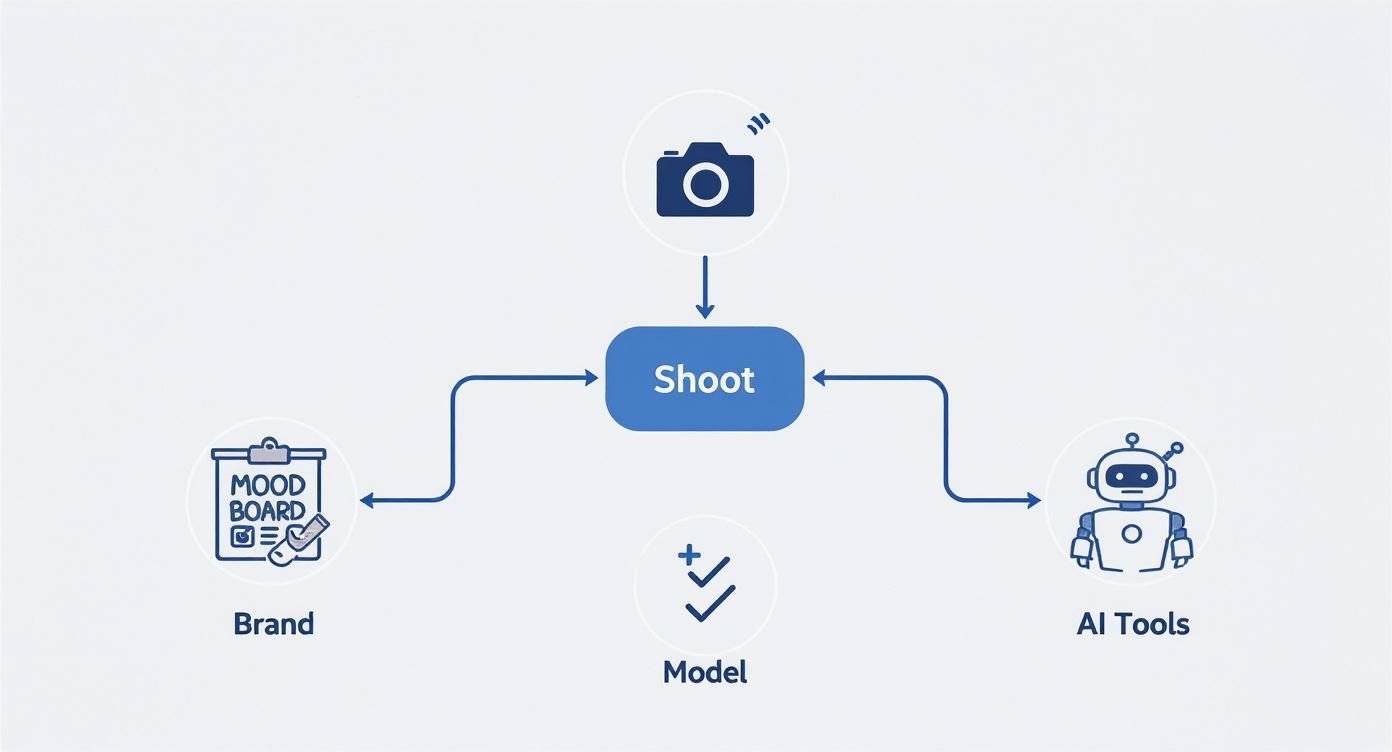
It’s a reminder that a successful shoot is a team sport where prep, talent, and technology all work in sync.
Why On-Set Collaboration Matters
A photoshoot is a partnership. While the photographer guides the vision, the best models bring their own creative energy. This means actively listening to direction but also experimenting with subtle variations in expression and movement.
Don't be afraid to interact with the environment. Lean against a wall or play with the fabric of a skirt. According to a Vogue Business report, 73% of Gen Z consumers prefer brands that use authentic, unretouched imagery. Genuine movement is a huge part of that.
How AI Cuts Photoshoot Costs by up to 90%
A traditional photoshoot is an exercise in logistics and runaway costs. A photographer, models, a studio, stylists, and a crew can easily cost $10,000 for a single campaign. For a brand like Everlane launching a new 20-piece collection, that old model is too slow and expensive.
AI platforms like Picjam are flipping the script. Brands can now create limitless on-model photoshoots without booking a single person or location. This transforms the economics, making professional-quality visuals accessible to any brand.
Multiply Creative Options While Slashing Budgets
The savings are transformative. AI allows brands to sidestep model fees, studio rentals, and photographer rates. This isn't about cutting corners — it’s about freeing up cash for product development and marketing.
A recent analysis showed AI can slash production costs by up to 90% while boosting creative output by 500%. Imagine a mid-size retailer cutting their annual photography budget from $480,000 down to just $48,000. They could go from producing 500 images a quarter to 2,000 images every month.
This efficiency opens up new possibilities. A brand can test hundreds of visual concepts in the time it used to take to plan one traditional shoot. Want to see your new dress on five different models in ten different settings? With an AI product photo generator, that takes minutes, not weeks.
The New Playbook for Agile E-commerce Brands
This technology is writing a new playbook for direct-to-consumer brands that need to move fast. Forget being locked into one campaign aesthetic for a whole season. Now, companies can generate fresh, on-trend visuals in real-time.
Imagine launching a collection and instantly creating a gallery of images that tap into a current social media trend — all without a reshoot. This approach gives brands the agility to compete. It’s not about replacing human creativity but about removing the financial and logistical roadblocks that get in the way.
Why Styling and Product Fit Drive Sales
Even the best model and photographer can't rescue a shot if the product looks sloppy. Nothing undermines a campaign faster than an ill-fitting garment. Meticulous attention to fit is non-negotiable.
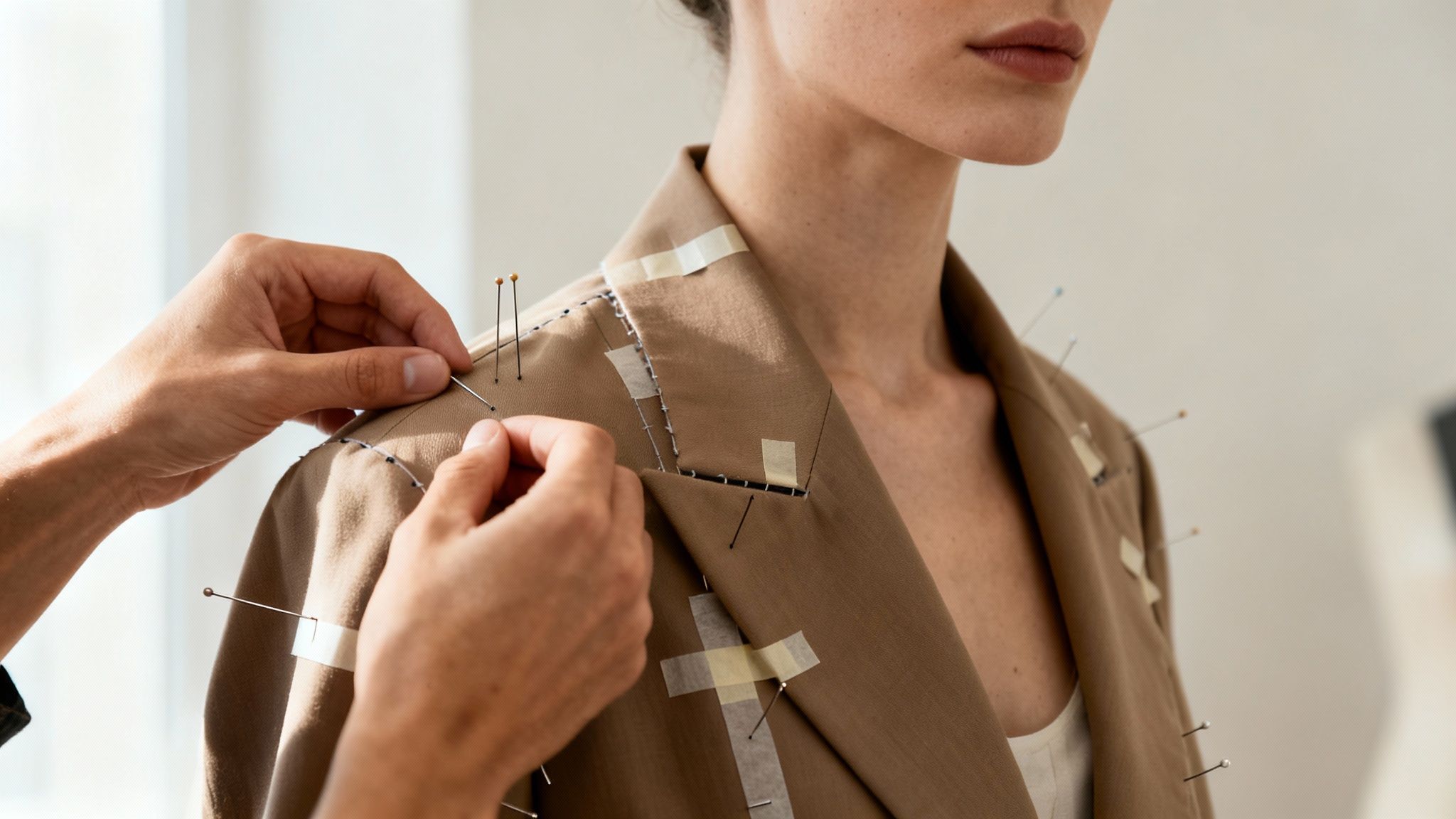
The on-set stylist is the unsung hero. Their toolkit of pins, clips, and fashion tape is the magic behind the perfect, crisp lines you see in high-end editorials from brands like Gucci. For them, every pleat and drape is deliberately placed to highlight craftsmanship and create a mood.
Making Fit Work for E-commerce
For e-commerce brands, great styling answers customer questions visually. When a shopper can't touch an item, styling must communicate its key features.
A few examples:
- Showcasing Stretch: A stylist might subtly pull the fabric of a performance legging to demonstrate flexibility.
- Highlighting Structure: For a handbag, styling will ensure it’s positioned to show off its clean lines and capacity.
- Defining Silhouette: Using pins to cinch the waist of a dress helps a customer understand its intended shape.
Our guide on choosing the best dresses for a photoshoot offers more ideas on making apparel look incredible on camera.
The Model’s Role in a Perfect Fit
While the stylist works, the model's contribution is critical. Simply wearing a garment correctly — making sure seams are straight and shoulders are aligned — makes a world of difference.
Open communication is key. A model should feel comfortable speaking up if something is pinching or restricting movement. A quick on-set adjustment is always better than fixing a fit issue in post-production.
Optimizing Your Photoshoot for E-commerce Conversions
In e-commerce, every image has one job: drive conversions. This is where a strategic approach to modeling for photoshoot campaigns is critical. Heavy hitters like ASOS and Zara don't just show one photo; they build a comprehensive visual case for every product.
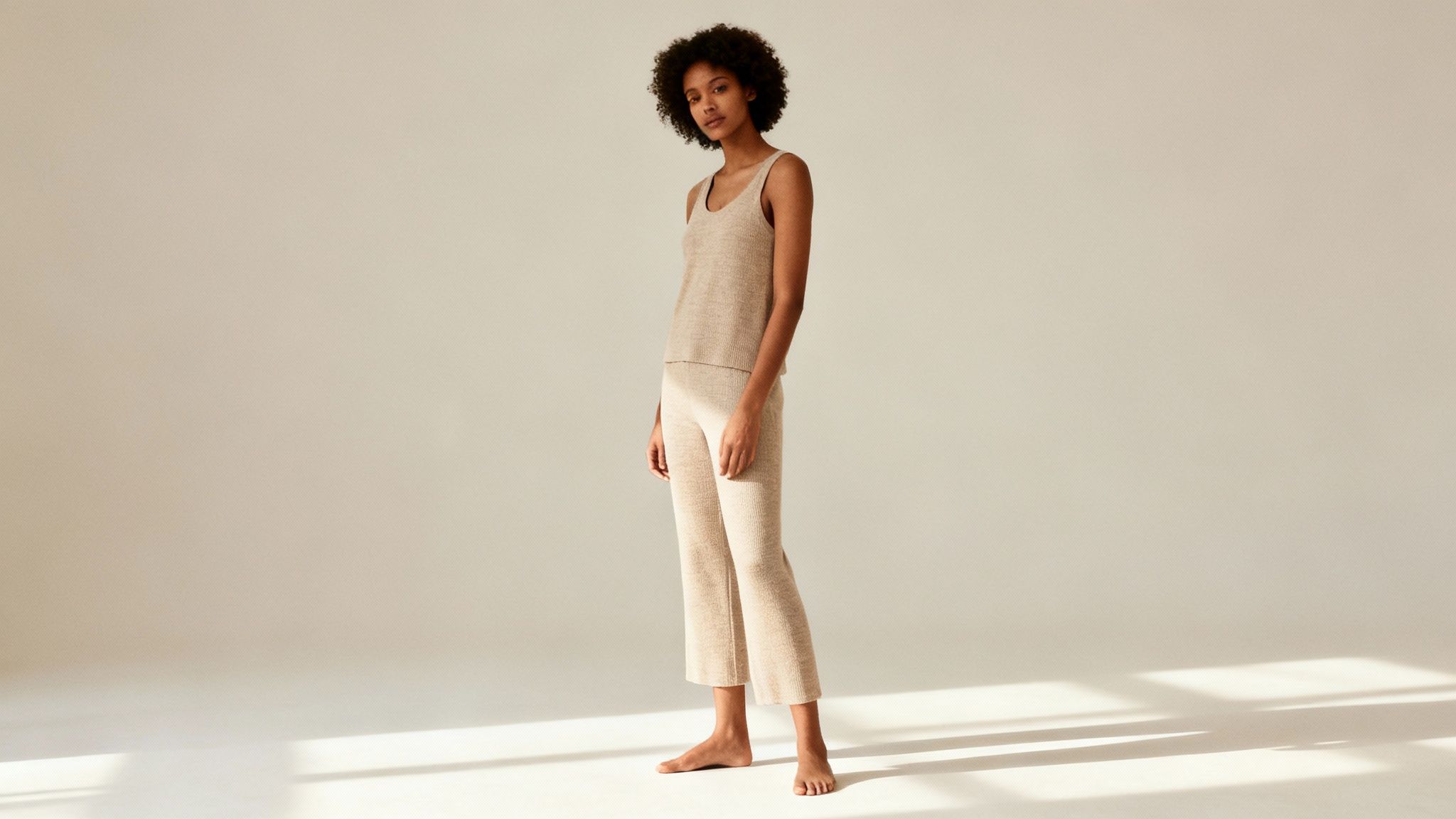
They seamlessly combine different image formats to tell a complete story. A product page will have on-model shots to show fit, flat lays to display silhouette, and close-ups that zoom in on fabric texture or stitching.
This multi-image approach is a deliberate strategy to anticipate customer questions. Can I see the back? How does the material look up close? Each photo builds trust and confidence to click "add to cart."
Creating a High-Converting Visual Narrative
The quality and variety of your photoshoot are directly tied to performance. If you want to improve your Amazon CTR by optimizing your main image, a strong visual story starting with diverse shots is essential.
A recent survey found 95.6% of fashion brands use model photos, confirming modeling is core to online retail strategy. Sportswear brands lead, using an average of 8 model images per product to showcase movement and function.
More high-quality images lead to more sales. It's about providing a 360-degree view that replicates the in-store fitting room experience.
Scale E-commerce Content With AI
Meeting the demand for more images can drain resources. This is where AI tools like Picjam become a game-changer. Instead of coordinating expensive photoshoots, you can generate endless on-model variations from a single product image.
This technology allows brands to create a full suite of e-commerce assets — from hero shots to detail views on different models — in minutes. It dramatically slashes the cost per image and gives marketing teams the content velocity to keep product pages fresh, test new looks, and drive conversions.
Takeaway
Getting killer visual content for your brand is about working smarter. By focusing on a few core principles, any brand can produce higher-quality images that connect with customers and drive sales.
1. Nail Your Pre-Production Every Time.
A shoot's success is decided in the planning phase. Your mood board and a detailed shot list are non-negotiable. They align the team, set expectations, and prevent costly mistakes on set.
2. Use AI to Scale Up and Save Big.
Tools like Picjam let brands create on-model imagery for a fraction of the cost and time. This delivers the agility to test creative, generate assets for A/B testing, and keep content fresh without the financial gamble of a full production.
3. Direct for Realness and Movement.
Encourage natural, fluid movements that highlight the product’s real-world feel. It creates dynamic, relatable images that grab attention and build a much stronger connection with your audience.
Ready to see what financial impact integrating AI could have? Use our savings calculator to compare Picjam with your current photography costs.
Frequently Asked Questions
How much does a professional photoshoot cost a small fashion brand?
For a full-day, professional shoot, a small brand should budget anywhere from $5,000 to $15,000 or more. That number covers the photographer, model fees, studio rental, a stylist, and a hair/makeup artist. Costs vary by location and talent experience. This significant investment is why AI-driven tools are becoming so essential, as they can slash these content creation costs by up to 90%.
What should a new model bring to a photoshoot?
Beyond a professional attitude, every new model should have a "model bag" packed and ready.
Here’s what to pack:
- The right undergarments: Nude and black seamless options are non-negotiable, along with a good strapless bra.
- Basic footwear: Bring a range of simple shoes — neutral heels, clean white sneakers, and simple flats.
- Personal essentials: Pack simple skincare for touch-ups and healthy snacks to keep your energy up on long shoot days.
How can a brand ensure consistent image quality across different shoots?
Consistency comes down to solid brand guidelines. Create a detailed document that spells out your brand's aesthetic — from preferred lighting and color palettes to posing direction and editing notes. Sharing this visual blueprint with every photographer, stylist, and model is the most effective way to maintain a cohesive, recognizable look across all campaigns.
Curious how AI can transform your content budget? Plug your numbers into the Picjam savings calculator to see how your current photography costs stack up.

Picjam team
The Picjam team blends AI, product, and creative expertise to eliminate the cost and delay of traditional photography for modern eCommerce brands.