How AI Backdrop Product Photography Slashes Content Costs
Master backdrop product photography with practical lighting, styling, and setup tips to create compelling product images that drive sales.
When the fashion brand Reformation needed to shoot a new sustainable denim line, their old process involved booking a costly Los Angeles studio and flying in a creative team. Now, they generate entire campaigns using AI-generated backdrops, cutting production time by 70% and achieving hyper-realistic results that align perfectly with their eco-conscious brand identity.
This isn't an isolated case. For fashion brands, your choice of backdrop is a critical business decision, shaping brand perception and directly influencing sales. The right backdrop product photography makes apparel pop and builds a cohesive visual identity.
With tools like Picjam, brands can generate flawless on-brand assets against any backdrop imaginable — from studio white to a compelling lifestyle scene. This approach saves significant time and money while unlocking a new level of creative agility.
Why Consistent Backdrops Build Customer Trust
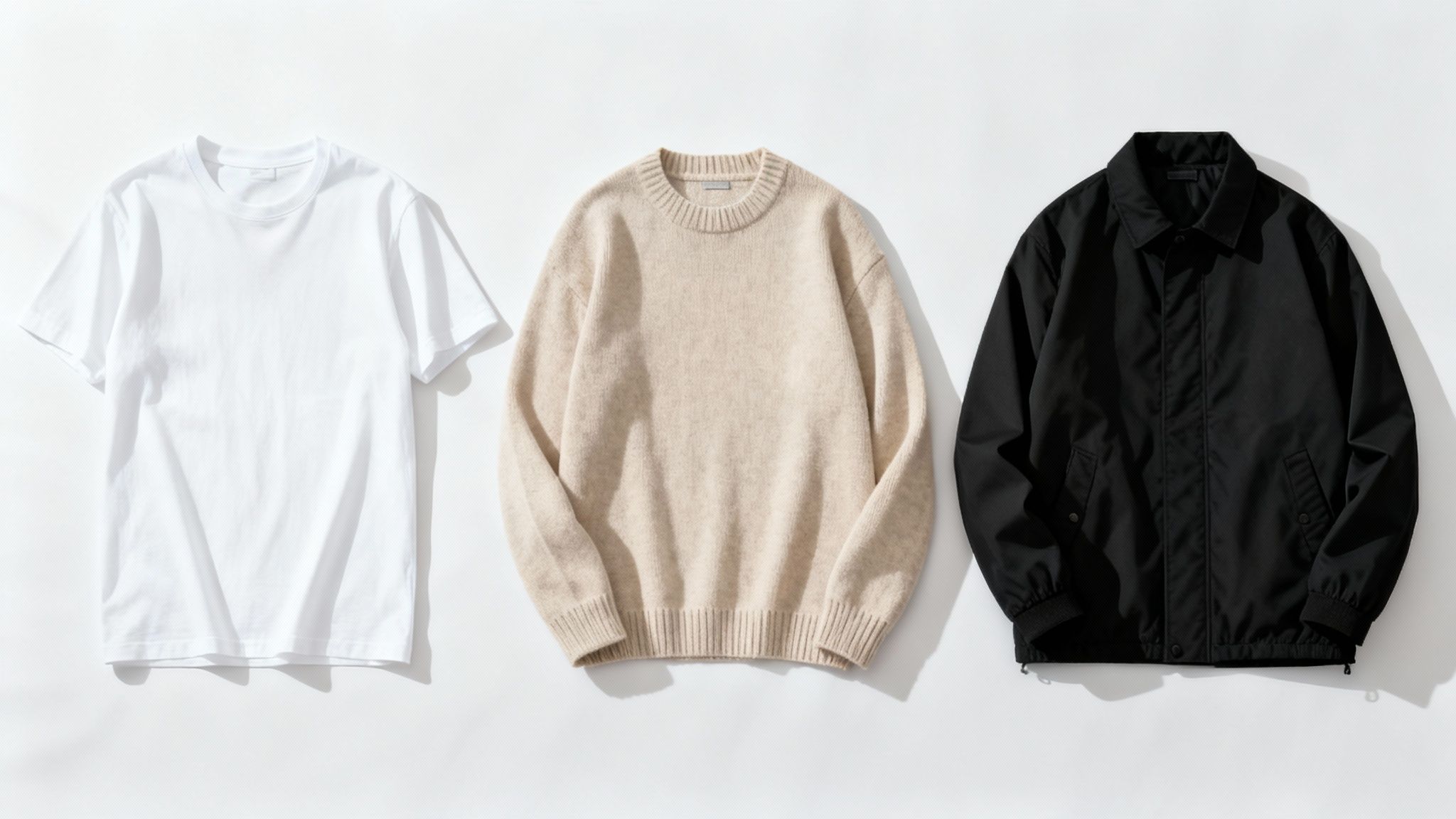
Visuals are the language of online shopping. A staggering 93% of consumers report that visual appearance is the single most important factor when deciding to make a purchase.
This is why major marketplaces like Amazon and Walmart mandate clean, simple backgrounds for primary product images. Eliminating distractions puts the focus squarely on the product.
Think about a brand like Everlane. Their minimalist, neutral-toned backdrops reinforce their ethos of clean, transparent quality. That consistency, repeated across their website, social media, and ads, creates a powerful and recognizable visual signature.
For any brand selling on competitive platforms, a standardized backdrop is essential.
- Marketplace Compliance: A simple white background is often required to get a product listed.
- Zero Distractions: It ensures the garment's color, texture, and fit are the stars of the show.
- Sign of Professionalism: A clean look tells customers you're a serious, reliable brand.
Our guide on creating pure white backgrounds for product photos walks you through the traditional process.
How to Select the Right Physical Backdrop
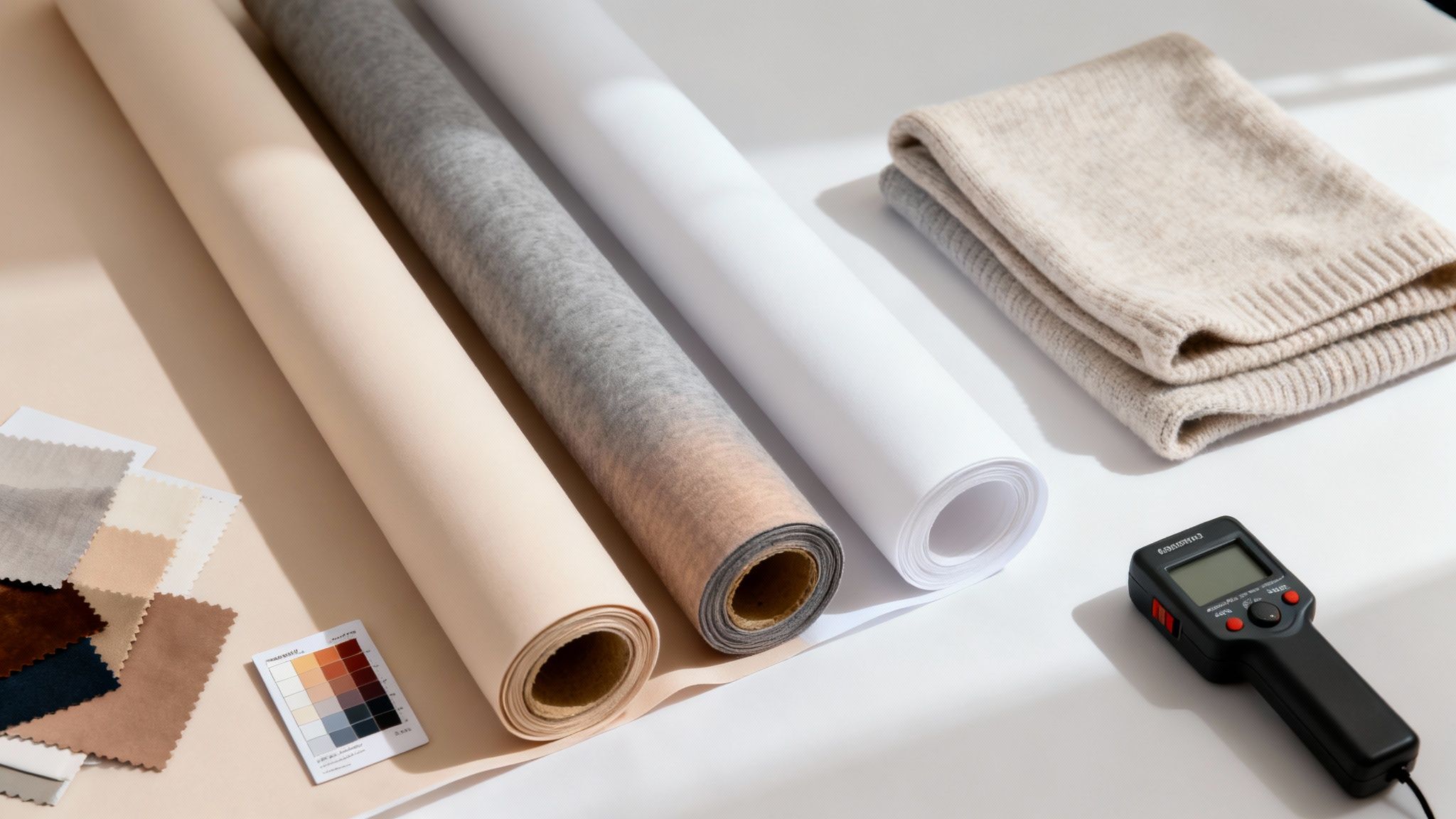
Choosing a physical backdrop is a tactical decision that communicates your brand identity. It’s about matching the material and color to your core message.
Take a luxury brand like Vince. They often shoot their cashmere knitwear against seamless paper in soft, earthy tones like beige or gray. This choice creates a feeling of warmth and understated elegance that mirrors the product.
If you’re shooting full-body model shots for a lookbook, you need a backdrop that’s at least 9 feet wide. Anything smaller risks showing the edges, leading to awkward crops or hours of expensive post-production.
Material and Texture Considerations
The material you choose sets the mood and dictates the practicality of your shoot.
- Seamless Paper: Your go-to for crisp e-commerce shots. It's affordable but creases and scuffs easily.
- Canvas: Perfect for editorial images, canvas offers a subtle texture that adds depth. It's tough but can be pricey.
- Vinyl: A lifesaver for high-volume studios. It’s durable and easy to clean but can sometimes create glare.
Pro Tip: Always test fabric swatches under your actual studio lights. A color that looks perfect in natural light can cast an undesirable hue under studio strobes, misrepresenting the product online.
Sizing and Color Practicality
Getting the backdrop size right is critical. For flat lays, a smaller 53-inch roll is sufficient. But for on-model apparel product photography, the 9-foot (107-inch) roll is non-negotiable for a professional look.
When picking a color, think beyond pure white. Off-white, light gray, or muted pastels can make your e-commerce site feel more curated and sophisticated.
For a hands-on approach, you can learn how to make a backdrop for photos with some great DIY tips.
How to Optimize Your Lighting and Camera Setup
You don't need a massive budget to get professional-grade shots. It's about control, not complexity.
A classic three-point lighting system is the gold standard for apparel shoots. This technique uses three light sources to shape the product, add dimension, and create a clean separation from the background.
- Key Light: Your main light source.
- Fill Light: Placed opposite the key light to soften harsh shadows.
- Back Light: Positioned behind the product to create separation and add depth.
Crafting Flattering Light for Apparel
To get a soft, flattering look that defines a garment's texture — like a chunky knit sweater from Naadam — place your key light at a 45-degree angle to the model.
Your fill light should always be less powerful. Its job is to lift shadows just enough so you don't lose important details, which can help reduce returns.
Pro Tip: On a tight budget? A simple white foam board can work as a reflector. Prop it up to bounce light from your key source back onto the subject, filling in shadows effectively.
Dialing in Your Camera Settings
Once your lighting is set, get your camera settings right. The goal is a sharp, clean image with accurate colors.
Set your ISO as low as possible, ideally between 100 and 200, to minimize digital noise. Since your camera should be on a tripod, there's no need to increase ISO.
An aperture between f/8 and f/11 is the sweet spot. This range provides a deep enough depth of field to keep the entire garment in sharp focus.
Finally, adjust your shutter speed until your camera's exposure meter reads zero. A tripod allows for a slower shutter speed without motion blur.
How AI Backdrops Cut Fashion E-Commerce Costs by 40%
AI-powered backdrops are creating a strategic shift that delivers incredible agility and serious cost savings for fashion brands. The days of booking pricey studios for every campaign are ending.
Imagine a brand like Zara testing a new capsule collection. The old way involved shooting one garment against 10 different lifestyle backdrops, a process that took weeks and cost a fortune in location scouting, permits, and travel.
With AI, that entire workflow can be completed in an afternoon.
Unlock Infinite Creative Possibilities
A brand can take one clean product shot and generate a complete campaign across dozens of virtual environments. This unlocks a level of creative experimentation that was impossible before.
A McKinsey report found that hyper-personalization can boost revenues by 5% to 15%. AI backdrops let brands create tailored visuals for different segments without extra effort. A streetwear brand can test a new hoodie against an urban skatepark and a neon-lit alley — all from the same photo.
The Financial and Operational Impact
The cost savings are a huge driver. By eliminating physical sets, brands are slashing expenses tied to:
- Location rentals and permits: No more fees for studios or public spaces.
- Travel and logistics: Forget flying models, photographers, and crew.
- Set construction and material waste: The cost and environmental toll of sets disappear.
Platforms like Picjam enable a content manager to generate a massive library of assets in minutes. This speed allows brands to react to micro-trends instantly, keeping content fresh without overspending.
“AI allows us to move at the speed of culture. We can test a dozen creative concepts for a new product before it even hits the warehouse, ensuring our launch campaigns are optimized from day one.” — Fashion Marketing Director
This trend extends beyond fashion. You can see similar applications in AI landscape design apps and websites. For those using traditional methods, knowing how to add a background in Photoshop is still a valuable skill.
Why Sustainable Visuals Boost Customer Loyalty
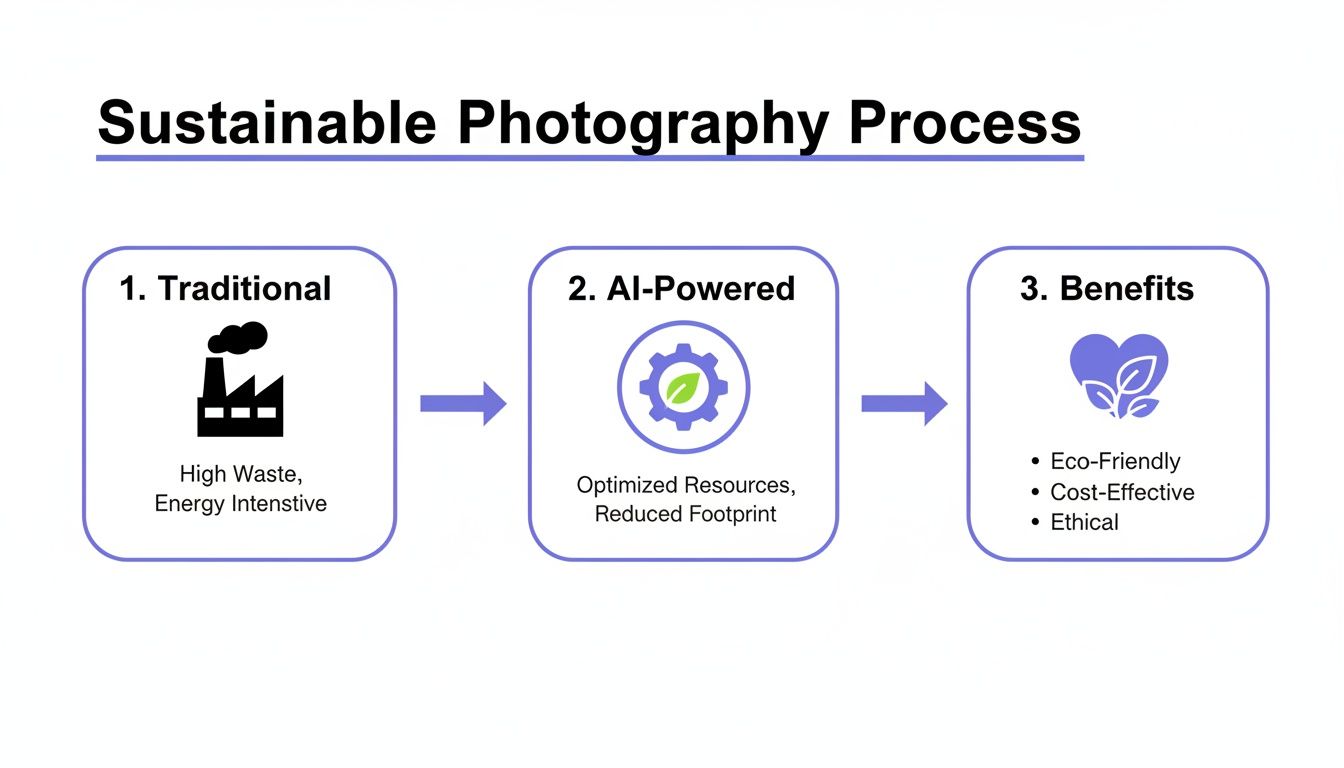
Today's shoppers buy into what a brand stands for. Sustainability is a critical part of your visual identity, especially in your backdrop product photography.
Look at Patagonia. They use natural textures, reclaimed wood, and rugged outdoor settings that reinforce their commitment to the planet. This is a savvy business move that forges a real connection with their audience.
The Business Case for Eco-Friendly Visuals
Weaving sustainability into your photography directly impacts customer loyalty and sales. According to a 2023 Vogue Business report, 60% of Gen Z consumers will stop buying from a brand that isn't sustainable.
E-commerce data also shows product pages featuring eco-friendly backdrops can see a conversion lift of up to 18%. This visual consistency reinforces an authentic, eco-aware identity that resonates with customers. You can explore how sustainability is reshaping photography trends at Chasing Stone.
AI: The Ultimate Sustainable Backdrop Solution
While recycled physical backdrops are a good start, AI-powered tools elevate sustainability and efficiency.
When you use a platform like Picjam to generate virtual backdrops, you eliminate the waste, shipping, and carbon footprint of physical sets. No more paper rolls, vinyl sheets, or transported props.
By switching to a virtual workflow, brands can create an infinite variety of on-brand, sustainable visuals without producing physical waste. This approach is better for the planet and dramatically more profitable.
This digital-first strategy allows your brand to be both genuinely eco-friendly and incredibly agile. You can test dozens of sustainable-themed backdrops — from a sun-dappled forest floor to a minimalist recycled-concrete wall — in minutes.
Your Action Plan for Better Product Images
It’s time to put this knowledge to work. Let's distill everything into clear, immediate steps you can take today.
This plan will help you transform your backdrop product photography from a simple task into a powerful conversion tool. The goal is a smarter, more efficient content engine that directly impacts your bottom line.
Find Your Visual Edge
Start with a quick audit. Pull up your website alongside your top three direct competitors. How do your backdrops compare?
Maybe everyone else uses stark white. Could a soft, textured gray make your luxury knitwear from a brand like Allbirds feel more premium and cozy? This simple analysis will highlight opportunities and give you a clear direction.
Test and Measure with AI
Next, run a small experiment. Take one of your existing product photos and upload it to Picjam. Generate five different AI-powered backdrops based on your brand audit.
This test gives you a tangible sense of the creative variety you can unlock in minutes. It also provides a benchmark for production speed, showing how quickly you can generate campaign-ready assets compared to a traditional shoot.
From there, it's about the numbers. The Picjam savings calculator quantifies the financial benefits of an AI workflow, turning a creative decision into a data-backed one.
Takeaway
Audit your competitors: Analyze the backdrops of 3 competitors to find a unique visual angle for your brand. A simple shift from plain white to a subtle texture or color can create significant differentiation.
Run a low-risk AI test: Upload a single product photo to an AI platform like Picjam and generate 5–10 different background concepts. This immediately showcases the creative velocity and cost-saving potential of a virtual workflow.
Calculate your potential savings: Use your last physical photoshoot's expenses (location, crew, materials) as a baseline. Compare it to the cost of an AI-powered alternative to build a business case for modernizing your content production.
Ready to see exactly what you could be saving? Use the Picjam savings calculator to compare your current photography costs with our AI-powered solution.

Picjam team
The Picjam team blends AI, product, and creative expertise to eliminate the cost and delay of traditional photography for modern eCommerce brands.