10 Actionable Clothing Brand Marketing Strategies for 2025
Discover 10 actionable clothing brand marketing strategies. Learn how AI, community, and DTC models are shaping fashion with examples from top brands.
When DTC darling Reformation integrated AI to generate campaign variations for their new sustainable denim line, they cut content production timelines by 30%. This isn't an isolated case; it's the new benchmark. Effective clothing brand marketing strategies are no longer just about aesthetics — they are about agility, data, and authentic connection.
For brands looking to scale, the playbook has evolved. It now blends hyper-efficient content creation with deep community engagement and supply chain transparency. To understand the broader landscape, one can delve into the tactics used by top global clothing brands and their marketing strategies{:target="_blank"}. The core challenge remains: how to stand out and scale efficiently.
The answer lies in adopting smarter, tech-enabled workflows. AI studios like Picjam empower brands to generate entire on-model photoshoots in minutes, slashing traditional photography costs. This agility allows brands to test more creative, personalize campaigns at scale, and react to market trends instantly.
This article breaks down 10 proven clothing brand marketing strategies that leading brands are using to build lasting empires in a crowded market.
1. Activate Micro-Influencers for Authentic Reach
Influencer marketing is a foundational component of modern clothing brand marketing strategies, leveraging creators to introduce products to engaged audiences.
Instead of a direct sales pitch, brands collaborate with influencers to weave their apparel into authentic, story-driven content on platforms like Instagram and TikTok.
A micro-influencer (10–100k followers) with a deeply connected community often delivers a higher return on investment. According to a Sprout Social report, micro-influencers can have engagement rates up to 60% higher than macro-influencers.
Fashion Nova, for instance, built its empire by activating thousands of micro-influencers, creating a constant stream of user-style content that felt both aspirational and accessible.
How to Implement This Strategy:
- Focus on Alignment Over Audience Size: Partner with creators whose personal brand, aesthetic, and audience demographics mirror your ideal customer.
- Prioritize Engagement Rate: A high engagement rate indicates a loyal, active audience, which is far more valuable than a passive, large one.
- Structure Hybrid Deals: Combine a flat fee with a commission-based model using unique affiliate codes. This incentivizes creators to drive actual sales.
- Build Long-Term Partnerships: Shift from one-off sponsored posts to long-term ambassadorships. Brands like Zara and ASOS often work with the same group of influencers season after season.
2. Build Trust with Transparent, Ethical Marketing
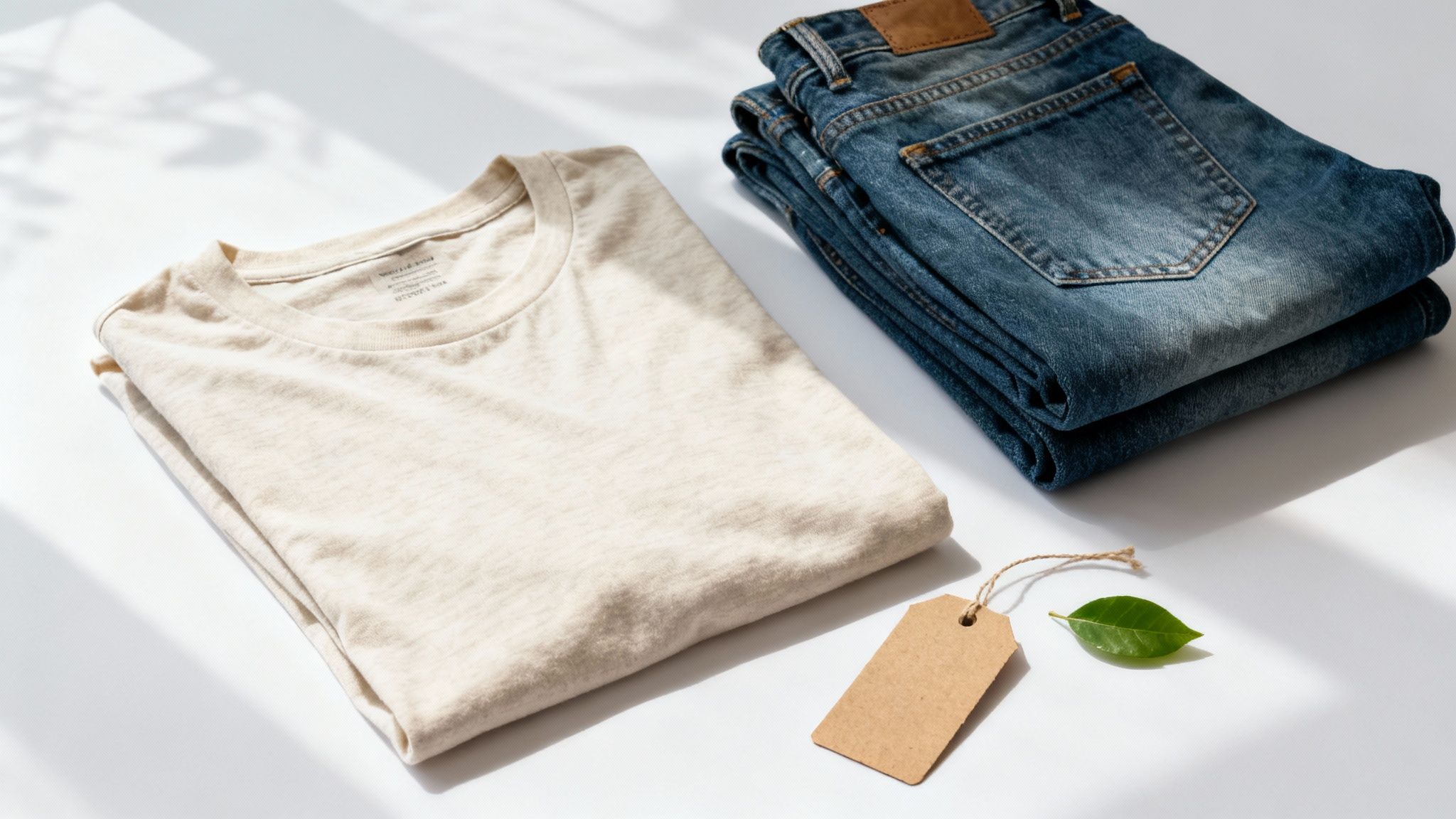
Sustainability and ethical production have become core pillars of modern clothing brand marketing strategies. This approach centers on environmental responsibility and transparent supply chains.
Instead of focusing solely on style or price, brands leverage their commitment to people and the planet as a key differentiator. A 2023 McKinsey report found that 2 out of 3 consumers will switch to a more sustainable brand.
Brands like Patagonia have built immense loyalty not by simply selling jackets, but by championing environmental activism and supply chain transparency.
How to Implement This Strategy:
- Earn Third-Party Certifications: Credentials like B-Corp, Fair Trade, or GOTS (Global Organic Textile Standard) provide credible, third-party validation of your claims.
- Practice Radical Transparency: Follow Everlane's model by sharing details about your factories, material sourcing, and even the cost breakdown of your products.
- Educate Your Audience: Use blog posts and social media to explain the benefits of sustainable materials. Teach consumers why your choices matter.
- Tell Compelling Origin Stories: Weave your sustainable mission into your brand's narrative. Storytelling that highlights artisans or environmental initiatives creates a powerful emotional connection.
3. Maximize Margins with a Direct-to-Consumer (DTC) Model
The Direct-to-Consumer (DTC) model eliminates the middleman, allowing brands to sell directly to consumers through their own branded websites.
This strategy grants complete control over the customer journey, from the first ad impression to the post-purchase experience.
This approach is one of the most powerful clothing brand marketing strategies because it combines higher profit margins with invaluable first-party data.
Brands like Allbirds and Gymshark built their empires on this model, using their e-commerce platforms as a central hub for community building and brand storytelling.
How to Implement This Strategy:
- Invest in a High-Performance Website: Prioritize user experience (UX), fast page load speeds, and mobile-first design. High-quality visuals are non-negotiable. Learn more about optimizing visuals for your DTC storefront{:target="_blank"}.
- Implement Robust Analytics and Data Collection: Use tools like Google Analytics 4 and Shopify Analytics to track every step of the customer journey.
- Create a Frictionless Post-Purchase Experience: A seamless, easy-to-understand return policy builds trust. Automate shipping notifications and follow-up emails.
- Leverage Email and SMS Marketing Automation: Use the first-party data you collect to build powerful automated flows for abandoned carts, welcome series, and post-purchase feedback.
4. Drive Urgency with Exclusive Collections and Limited Drops
This strategy hinges on exclusivity and hype, creating high-demand moments that drive both sales and brand relevance.
By partnering with artists, designers, or celebrities, you can create limited-edition collections that feel like cultural events.
These "drops" leverage scarcity to generate urgency, encouraging customers to purchase immediately for fear of missing out (FOMO).
Iconic examples range from Supreme's near-weekly collaborations to H&M's annual designer partnerships that bring high fashion to the masses. The key is merging two distinct audiences to create something unique and temporary.

How to Implement This Strategy:
- Choose Partners for Brand Synergy: Select collaborators whose audience and values align with yours. The partnership between Adidas and Kanye West for Yeezy worked because it authentically merged sneaker culture with high-fashion.
- Build Anticipation with Teaser Campaigns: Use social media to leak behind-the-scenes content, share design sketches, and post countdowns for weeks leading up to the release.
- Create FOMO Through Strict Scarcity: Clearly communicate that the collection is limited in quantity and will not be restocked.
- Reward Your Core Community: Grant early access to your most loyal customers, such as email or SMS subscribers. This rewards them and generates initial buzz.
5. Build Brand Equity with Content Marketing and Storytelling
Effective clothing brand marketing strategies go beyond the product; they sell a story, a lifestyle, and an identity.
Content marketing uses blogs, videos, and guides to build an emotional bond with consumers. This approach attracts an audience by providing genuine value.
This strategy establishes your brand as an authority in the fashion landscape. According to Vogue Business, 72% of Gen Z consumers make purchasing decisions based on a brand's values and story.
Patagonia has mastered this by producing environmental documentaries that have little to do with their jackets but everything to do with their core values. This attracts a loyal community that buys into the brand’s mission.
How to Implement This Strategy:
- Build an Editorial Calendar: Align your content (blogs, videos, social posts) with product launches, seasonal trends, and cultural moments.
- Focus on Your 'Why': Share stories about your brand’s mission, the artisans who craft your products, or the community you serve.
- Invest in High-Quality Video: Create tutorials, lookbooks, or mini-documentaries that capture your brand’s essence. You can visualize a concept of what this looks like, for instance, by imagining a short film showcasing the journey of a single garment from sketch to finished product, highlighting the craftspeople involved.
- Repurpose Content Intelligently: A single long-form blog post can be transformed into an infographic, a series of TikTok videos, and a segment for an email newsletter.
6. Increase LTV with Community Building and Loyalty Programs
Effective clothing brand marketing strategies extend beyond acquisition to focus on retention. Community building and loyalty programs are invaluable for this.
The goal is to create a sense of belonging and reward customers for their engagement, not just their purchases, fostering an ecosystem that drives significant lifetime value.
The most successful programs make customers feel like insiders. Lululemon built a global movement by creating local communities around fitness, connecting customers through its Ambassador program and in-store events.
Similarly, Nike’s SNKRS app isn't merely a retail platform; it's a hub for sneaker collectors to connect, share their passion, and gain exclusive access.
How to Implement This Strategy:
- Reward Engagement, Not Just Purchases: Structure your loyalty program to offer points for activities like writing reviews, sharing user-generated content, or referring friends.
- Create Exclusive Experiences: Offer top-tier members genuine value beyond discounts, like early access to new collections or invitations to exclusive digital or physical events.
- Gamify the Member Experience: Introduce tiers, badges, and challenges. Sephora’s Beauty Insider program is a masterclass in this, with its tiered structure motivating customers to spend more.
- Enable Peer-to-Peer Interaction: Use platforms like Discord or a private Facebook Group to give your community a space to connect with each other.
7. Boost Conversions with Micro-Targeting and Personalization
Micro-targeting and personalization use data analytics and AI to treat each customer as an individual, delivering tailored product recommendations and marketing messages.
This strategy moves beyond broad demographic segments to address a customer’s specific behaviors, preferences, and purchase history.
Stitch Fix built its entire business model on an AI styling algorithm that learns a user's taste over time. "The more data a client gives us, the better our fixes get," noted founder Katrina Lake in an interview.
This level of detail makes customers feel understood, transforming a transactional relationship into a personal one.
How to Implement This Strategy:
- Invest in a Centralized Customer Data Platform (CDP): Combine first-party and behavioral data into a single, unified profile for each customer.
- Segment Your Audience Dynamically: Use AI-powered tools to create dynamic segments based on real-time behavior. For instance, group users who have recently viewed winter coats and send them a targeted email.
- Leverage AI for Product Recommendations: Implement a recommendation engine on your product pages. ASOS excels at this, showing shoppers items "You Might Also Like," which can lift average order value by over 15%.
- Be Transparent and Comply with Regulations: Clearly communicate how you use customer data. Ensure full compliance with regulations like GDPR and CCPA to build trust.
8. Create a Seamless Journey with Omnichannel Retail
Omnichannel retail creates a unified, seamless shopping experience for customers across all channels, both online and offline.
It moves beyond a multi-channel approach to an integrated system where the digital and physical worlds merge.
The goal is to eliminate friction and make the transition between touchpoints invisible. To deliver a seamless journey, a strong omnichannel experience{:target="_blank"} is paramount.
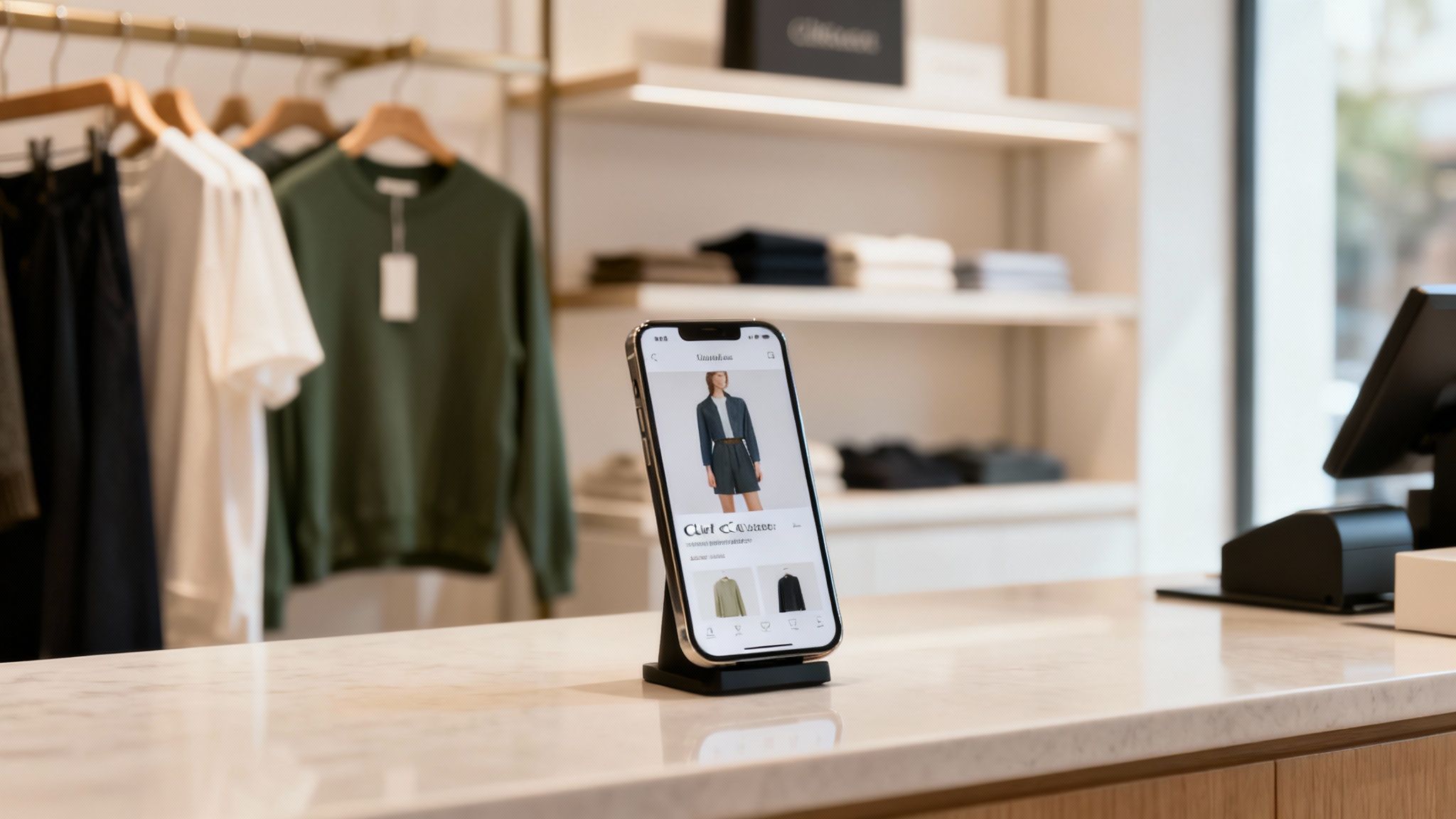
Brands like Nike have perfected this with experiential flagship stores that integrate their app for exclusive content and streamlined checkouts, turning shopping into an immersive event.
How to Implement This Strategy:
- Integrate Your Systems: Your e-commerce platform, POS system, and inventory management software must communicate in real-time.
- Offer Flexible Fulfillment: Provide customers with multiple delivery and return options, such as "buy online, pick up in-store" (BOPIS) or in-store returns for online purchases.
- Create Consistent Brand Experiences: Ensure your branding, messaging, and customer service standards are identical whether a customer is on your website, your app, or in a physical store.
- Leverage Technology In-Store: Enhance the physical retail space with digital tools. Brands like Uniqlo use interactive displays and mobile app integrations.
9. Scale Efficiently with Performance Marketing
Performance marketing shifts the focus from broad brand awareness to measurable, action-oriented results.
This strategy utilizes highly targeted digital advertising where success is judged by specific metrics like cost-per-acquisition (CPA) and return on ad spend (ROAS).
This data-first approach is the engine behind many of the fastest-growing e-commerce fashion brands.
Gymshark, for example, scaled rapidly by meticulously tracking campaign performance and re-investing in the channels and audiences that delivered the highest returns.
How to Implement This Strategy:
- Implement Robust Conversion Tracking: Ensure your analytics are correctly set up with tools like the Meta Pixel and Google Ads conversion tracking.
- Segment and Test Audiences: Move beyond broad targeting. Create and test granular audience segments based on demographics, interests, and past purchase behavior.
- Optimize for Lifetime Value (LTV): Don't just focus on the first purchase. A successful performance marketing strategy considers the long-term value of a customer.
- Use UTM Parameters for Granular Tracking: Tag all campaign URLs with unique UTM parameters to precisely track performance across different channels, campaigns, and ad creatives.
10. Stay Relevant with Trend-Jacking and Real-Time Marketing
Trend-jacking is the art of injecting your brand into existing cultural conversations, viral moments, and trending topics.
This real-time marketing approach moves at the speed of social media, allowing agile brands to capture massive visibility.
Zara’s entire fast-fashion model is a form of product-based trend-jacking, translating runway looks to retail in weeks.
On social media, brands like ASOS and Boohoo excel at this by creating content that directly references a viral TikTok sound or a trending meme, generating massive organic reach.
How to Implement This Strategy:
- Establish a Monitoring System: Use social listening tools to constantly monitor trending hashtags, sounds, and news. Speed is your primary advantage.
- Create a Rapid Response Team: Designate a small, empowered team that can brainstorm, create, and get approval for content within hours, not days.
- Maintain Brand-Safe Boundaries: Define your brand's values and no-go topics in advance. Know which conversations to join and, more importantly, which to avoid.
- Participate Authentically, Don’t Force It: The content should feel like a natural extension of your brand’s personality. If a trend doesn't align with your voice, sitting it out is better than forcing it.
Takeaway: 3 Actionable Steps to Elevate Your Strategy
The most effective clothing brand marketing strategies are not siloed tactics but integrated systems that reinforce one another. Here are 3 actionable takeaways you can implement immediately.
- Cut Content Costs with AI-Powered Visuals: Traditional photoshoots are costly and slow. Use an AI studio like Picjam to generate an entire campaign’s worth of on-model imagery from a single product photo. This approach not only slashes production costs — in some cases by up to 90% — but also provides the agility to test dozens of creative concepts for your paid ad campaigns.
- Launch a "Brand Council" from Your Top Customers: Identify your top 50–100 customers based on purchase history. Create an exclusive group for them on Discord or a private Instagram account. Grant them early access to new collections and solicit their direct feedback on designs. This transforms your best customers into an invaluable, in-house focus group.
- Commit to a Single, Powerful Story: In a saturated market, clarity is your superpower. Review your current marketing messages. Choose one core value — whether it's radical sustainability, inclusive sizing, or artisanal craftsmanship — and make it the hero of your brand story. Consistency in storytelling is what builds trust and makes a brand unforgettable.
Ready to transform your content production and cut photography costs? The first step in optimizing your clothing brand marketing strategies is ensuring your visuals are both stunning and scalable. See how much you could save and reinvest into growth by using our savings calculator.

Picjam team
The Picjam team blends AI, product, and creative expertise to eliminate the cost and delay of traditional photography for modern eCommerce brands.