How to Create Product Videos: A Fast Guide for Fashion Brands
Discover how to create product videos that showcase your fashion brand. A concise, practical guide to planning, shooting, editing, and distribution.
When you see a new dress on Reformation’s site, you don’t just get a flat picture. You see exactly how the fabric moves, how it catches the light, and how it drapes on a real person. That’s the magic of a good product video, and it’s what shoppers now expect.
Let's be honest, a simple photo just doesn't cut it anymore. Knowing how to create product videos is no longer a bonus — it’s a baseline for any serious fashion brand.
Why Product Videos Drive More Sales Than Static Images
Static images show what a product looks like, but video shows what it feels like. For fashion brands, video is a core part of the digital storefront. It closes the gap between the online cart and the physical fitting room, giving a customer the closest possible experience to trying on the garment before they click "buy."
This guide will walk you through creating product videos that sell and build a loyal following. We'll also dive into how AI tools like Picjam are letting brands create incredible video content at scale, turning existing photos into dynamic assets without the eye-watering cost of a traditional video shoot.
Moving Beyond the Static Image
Put yourself in your customer’s shoes. They’re wondering how that silk skirt flows when they walk or how a leather jacket actually moves with the body. A flat photo can’t answer those questions. Brands that nail their video content answer these unasked questions upfront, building confidence and crushing last-minute hesitation at checkout.
This isn’t just a hunch; the data is screaming it. Video is expected to make up a staggering 82% of all internet traffic by 2025. And if that’s not enough, 87% of consumers say they’ve been convinced to buy a product after watching a brand's video.
Building Trust Through Motion
To understand why product videos are so powerful, it helps to understand what is branded content. At its heart, it’s about telling a story that converts, and for fashion, video is the ultimate storytelling tool. It lets you communicate quality, fit, and your brand's entire vibe in just a few seconds.
A great video doesn’t just show off a product; it sells an experience, a lifestyle, a feeling.
A product video is your silent salesperson, working 24/7 on your product page to show value, answer questions about fit and fabric, and ultimately, drive sales.
In the past, the cost and complexity of video shoots were huge barriers, especially for smaller brands. But new tech is leveling the playing field, making high-quality video production something any brand can tap into.
Key Elements of a High-Converting Product Video
Getting these elements right is the difference between a video that just gets views and one that gets sales.
Ready to see how much AI can simplify your content workflow? Compare your current photography costs with the Picjam savings calculator.
How to Plan a Video That Sells (Before You Hit Record)
Before you ever hit record, a solid plan can save you thousands. The product videos that actually convert aren’t just beautiful — they’re strategic. This is where you figure out your primary goal. Are you trying to highlight the intricate beadwork on a jacket, or show the flowy, effortless silhouette of a new summer dress?
Your core objective drives every decision that follows. For a brand like A.P.C., known for its minimalist staples, a video might zero in on the quality of the denim and the precision of the stitching. On the other hand, a brand like Zimmermann would use video to capture the romantic, ethereal movement of its ruffled dresses.
Having a clear blueprint from the start ensures every second of footage serves a purpose, making the entire production process smoother.
Define Your Core Message and Goal
First things first: what’s the one thing a customer should feel or know after watching this video? Don't try to cram everything in. Pick one key benefit or feature that makes the product truly special.
Is it the versatility of a trench coat? The incredible softness of a cashmere sweater? Or maybe the way a specific pair of jeans creates the perfect silhouette? This core message becomes your creative north star.
Every choice you make from here on out — from the model’s actions to the camera angles — should support that single goal. This is how you avoid a final video that feels cluttered or, worse, confusing.
Create a Simple Shot List
A shot list is basically just a checklist of every angle you need to capture. A simple spreadsheet or a note on your phone works perfectly. This is a critical step in learning how to create product videos without wasting time or money.
For a typical fashion product video, you'll want to include these essentials:
- The Establishing Shot: A full-body view showing the model wearing the garment.
- The Movement Shot: Get the model walking, turning, or sitting to show how the fabric drapes.
- The Detail Shot: A close-up on a unique feature — think a custom button or the texture of the fabric.
- The Styling Shot: Show the item paired with other pieces from your collection to give styling inspiration.
Thinking through these shots beforehand means you won't miss anything on shoot day, saving you from the massive headache and cost of reshoots. You can find more details in guides for setting up an e-commerce shoot studio.
Storyboard Your Key Scenes
A storyboard is just a visual outline of your video, showing the sequence of your shots. You don't need to be an artist. Simple stick figures or even just descriptive text boxes will do the trick. The whole point is to map out the video's flow from beginning to end.
To really stay organized, it helps to plug your video creation schedule into a content calendar. This helps you see the bigger picture, making sure your videos align perfectly with new product drops and marketing campaigns.
This visual journey, from the first watch to the final purchase, shows just how powerful compelling video can be in driving sales.

This simple flow confirms that a well-planned video can guide a customer seamlessly from casual interest to a confident purchase.
Your storyboard should also be tailored to the platform you're targeting. A snappy 15-second TikTok video is going to have a much faster pace and fewer shots than a detailed 60-second video destined for your main product page.
A 30-minute planning session can easily cut your production time in half and ensure your final video nails its sales goals. It’s the highest-ROI activity in the entire video creation process.
This kind of meticulous planning is the secret behind brands that consistently churn out high-quality, on-brand video content without a massive in-house team or an eye-watering budget.
How to Shoot Professional Video With Any Camera
You don’t need a Hollywood budget or a high-end RED camera to create polished, compelling product videos. The real secret is mastering the fundamentals of lighting, composition, and movement. With the right techniques, even a modern smartphone can produce visuals that stop the scroll and drive sales for your fashion brand.
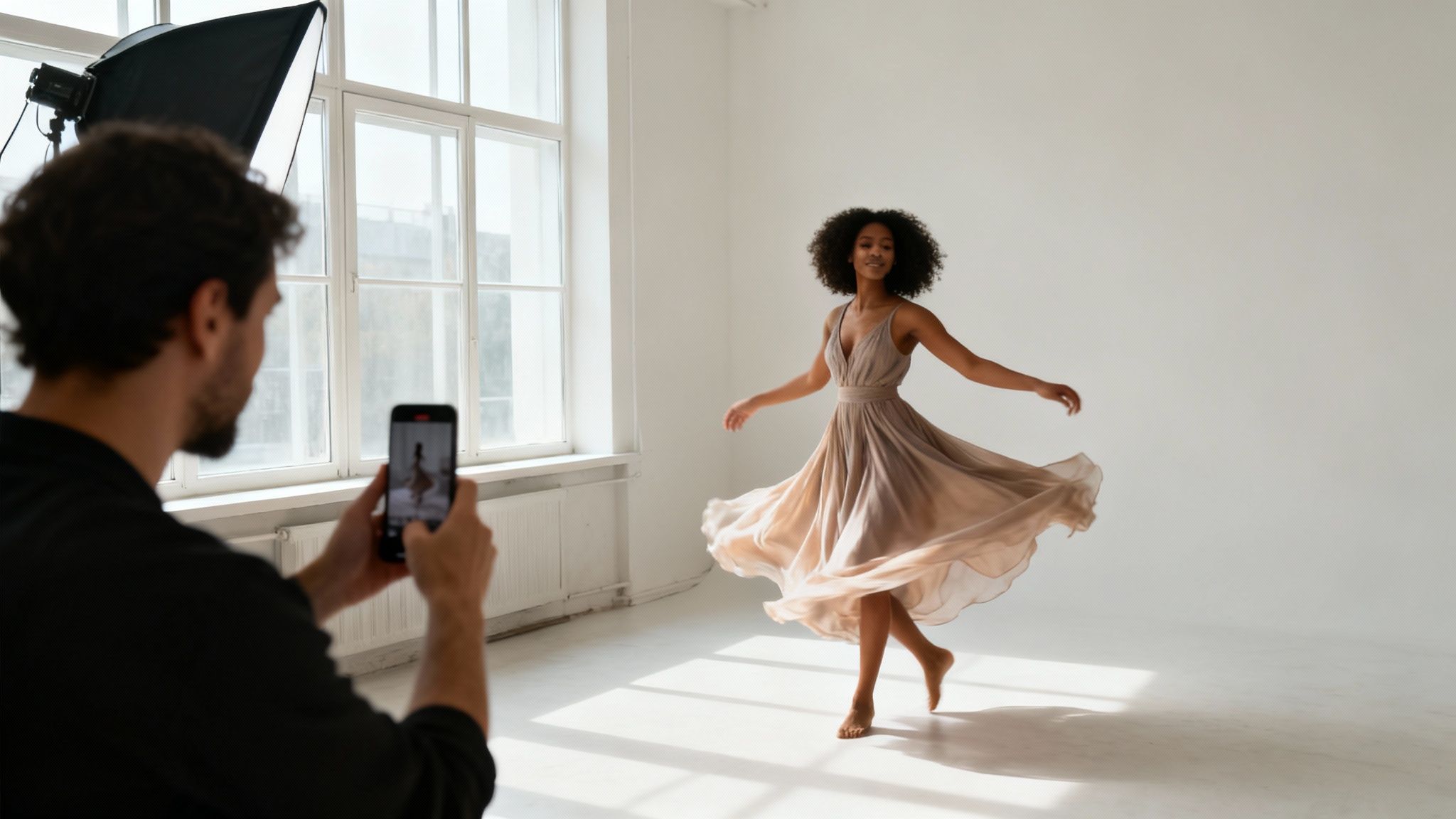
This focus on execution over expensive gear is how savvy brands create content that feels authentic yet looks professional. If you want to dive deeper into equipment, check out our guide on the best camera for product photography, but remember that the principles we’ll cover here apply no matter what you're shooting with.
Harness Natural Light for Authentic Color
Lighting is, without a doubt, the most crucial element of any shoot. Get it wrong, and you can distort colors and hide the texture of your fabrics — two of the most important details for an online shopper. The good news? The best light source is often free.
Natural light from a large window creates a soft, diffused look that is incredibly flattering for both models and apparel. Position your model near the window, but try to avoid direct, harsh sunlight, which creates unflattering shadows and blows out details.
Getting this right is critical for building customer trust. When the dress that arrives matches the color they saw in the video, you’ve not only made a sale but also created a happy, loyal customer.
Directing Models for Natural Movement
A great product video shows how a garment lives and moves in the real world. Stiff, awkward posing just won’t cut it. Your job is to direct your model to interact with the clothing in a way that feels genuine and conveys the mood of your collection.
Instead of static poses, try these simple actions:
- Have them walk towards and away from the camera.
- Ask them to gently twirl to show the drape of a skirt or dress.
- Encourage interaction with the garment, like putting hands in the pockets of a jacket.
This is where a brand like Universal Standard really excels. They consistently show their garments on diverse body types in natural, relatable movements, which builds an immediate connection with their audience. The goal isn't to create a perfect runway walk but to show a real person comfortably living in your clothes.
Essential Camera Angles for Every Garment
Your camera angles tell a story. A full-body shot communicates the overall fit, while a close-up highlights the craftsmanship your brand is proud of. A thoughtful mix of different angles provides a complete picture, answering customer questions before they even think to ask them.
An incredible 83% of consumers want more videos from brands. When a business delivers, the results are clear: 64% of users are more likely to buy a product online after watching a video, and 94% of businesses report that video improves customer understanding of their offerings. You can discover more video marketing statistics that confirm just how vital this content has become.
To capture everything you need, make sure your shot list includes these three core angles:
- The Full-Body Shot: Start here to establish the silhouette and overall look.
- The Mid-Shot: Framed from the waist up, this angle is perfect for showing how the top half of an outfit coordinates.
- The Detail Shot: This is your chance to get up close. Zoom in on unique buttons, intricate stitching, or the texture of the fabric.
By combining these three angles, you create a dynamic and informative video that gives shoppers the confidence to click "add to cart." This simple approach ensures your videos are not just beautiful but are functional sales tools, too.
How AI Slashes Post-Production Time and Costs
Post-production has always been the biggest bottleneck in video creation. It’s where hours turn into days, and budgets get completely blown out of the water. But that’s changing, fast. AI is stepping in to handle the grunt work, automating all those tedious tasks so brands can get more content out the door without breaking the bank.
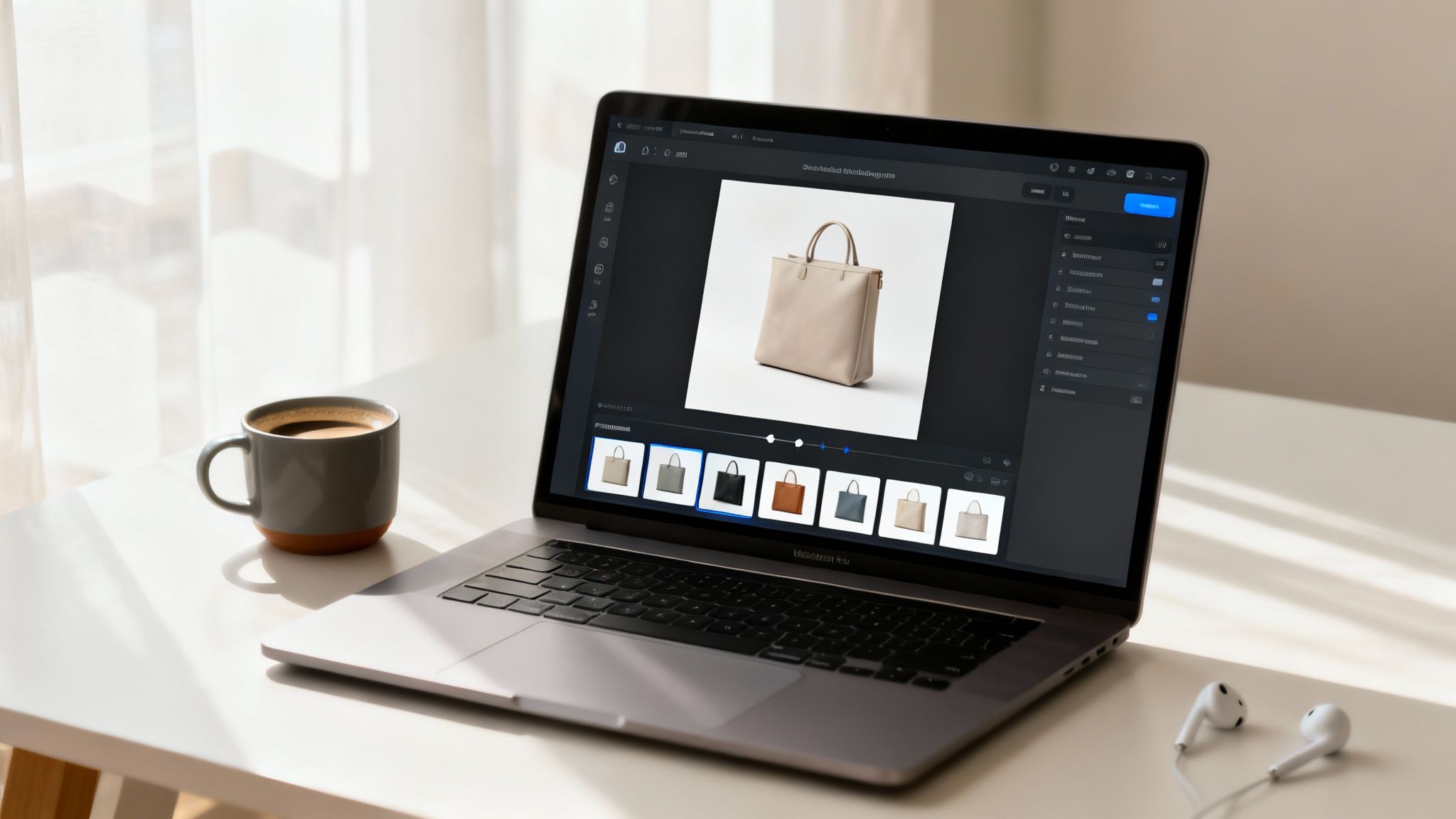
Tools like Picjam are completely flipping the script by turning your high-resolution product photos into polished video assets. This means you can skip the costly and complicated video shoots entirely. Imagine creating a full lineup of video ads for a new collection using only the e-commerce shots you already have.
This isn’t just about saving a few bucks. It’s about giving growing brands the speed and agility to go toe-to-toe with giants like Alo Yoga, who dominate social feeds by pumping out a high volume of consistent, slick visuals.
Putting Tedious Editing Tasks on Autopilot
All those hours spent manually editing — painstakingly color-correcting every single clip, masking backgrounds frame by frame, and building smooth transitions — they add up. AI tools can now knock out these jobs in seconds, not hours.
Take color grading, for instance. To get that consistent look across an entire campaign used to be a real chore. Now, an AI can look at a reference image and apply that exact same color profile to hundreds of video clips, giving you perfect brand consistency without any manual fiddling.
For smaller teams, this kind of automation is a total game-changer. It frees up your creative people to think about strategy and storytelling instead of getting stuck in the weeds of technical, repetitive work.
Turning Static Photos into Dynamic Video
One of the most powerful ways AI is shaking up fashion content is by animating still images. This is the secret weapon for brands figuring out how to create product videos without the massive expense of a live-action shoot.
Platforms like Picjam are designed to take your standard, high-res product photos and spin them into eye-catching videos.
- Product Pans and Zooms: AI can generate smooth camera movements, like a slow pan across a handbag.
- Animated Elements: Simple touches, like subtle motion in the background or clean text overlays, can bring a static shot to life.
- Slideshows and Carousels: The AI can intelligently sequence your product shots into a dynamic video carousel — perfect for social media ads.
With this approach, a brand like Ganni could test dozens of different video ad concepts for a new drop using only the photos they already shot for their product pages. The cost savings are immediate and massive.
Virtual Models and Digital Backdrops
Hiring models, scouting locations, booking studios — these are the big-ticket items in any traditional video production budget. AI provides a powerful way around this by creating hyper-realistic virtual models and digital sets. Suddenly, you can place your product on any model, in any location you can dream up, without ever leaving your desk.
With Picjam, you can swap a product onto different AI-generated models, adjust the fit, and drop them into a scene — whether that's a Parisian café or a clean, minimalist studio. You get endless creative options without spending a single dollar on a physical shoot.
This tech isn't just about cutting costs; it's about being fast and responsive. If a certain aesthetic starts trending on TikTok, you can generate a whole new set of video assets that match that trend in minutes. You can learn more about what's possible in our guide to using an AI product photo generator.
The Growing Reliance on AI in Video Marketing
The industry’s move toward video is clear, and AI is what’s making it possible to keep up. By 2025, an overwhelming 95% of marketers will consider video a core part of their strategy, and 54% are already using AI to make production more efficient. This trend makes sense when you see the massive 263% jump in video uploads over the last 5 years alone. Discover more insights on video marketing trends.
The data doesn't lie. The brands that are winning are the ones adopting smarter, AI-driven workflows right now. It's all about creating more content, faster, without ever having to compromise on quality.
Ready to see exactly how much AI can slash your content production costs? Use the Picjam savings calculator to run the numbers.
How to Distribute Your Videos for Maximum Impact
Making a great product video is only half the battle. If nobody sees it, all that creative effort is for nothing. Smart distribution is just as vital as the shoot itself, ensuring your video connects with customers wherever they are, from a quick scroll on Instagram Reels to a deep dive on your product page.
A one-size-fits-all approach to video just doesn’t cut it. What works for a polished YouTube deep-dive will fall flat in the fast-paced, vertical world of TikTok. Brands that really get this, like Gymshark, create a cohesive brand story that still feels perfectly native to each platform. They don’t just dump the same video everywhere; they intelligently adapt it.
That might sound like a ton of extra work, but this is where AI tools are changing the game. Instead of spending hours manually re-cutting a hero video for five different channels, you can now use AI to instantly resize aspect ratios, auto-generate captions, or even pull shorter, punchier clips from your main video. It's a massive time-saver.
Speak the Language of Each Platform
Every social network has its own vibe and unspoken rules. To really get seen, your video has to fit in. This isn't just about the technical specs; it’s about matching the tone and energy people expect when they're scrolling that specific app.
For instance, a cinematic, polished video might be perfect for building confidence on your product detail page. But on Instagram Stories, that same video might feel jarringly corporate. A raw, behind-the-scenes look often performs much better there.
Write Titles and Descriptions That Get Clicks
Your video’s title and description are your first shot at grabbing someone's attention. They're also incredibly important for SEO, telling platforms what your video is about so they can show it to the right people. Put yourself in your customer's shoes: what would they type into a search bar to find your product?
Weave those keywords into your titles and descriptions naturally. For a video showcasing a new linen blazer, something like "How to Style Our Versatile Linen Blazer for Summer" is miles more effective than just "New Linen Blazer."
An Amazon study revealed that product pages featuring shoppable videos saw sales jump by an average of 23.8%. That lift comes from the video itself, but also from its visibility in search results — something that good titles and metadata directly influence.
Why Captions Are Non-Negotiable
A staggering 85% of social video is watched with the sound off. If your video depends on a voiceover to explain why your product is amazing, most of your audience will miss the message entirely. Adding clear, easy-to-read captions isn't just a nice-to-have; it's essential for getting your point across.
Thankfully, this is another spot where AI can step in. Instead of the tedious task of manually transcribing and timing every line, AI-powered tools can generate accurate captions in minutes. This ensures your message lands, sound on or off.
Video Format Specifications for Key Fashion Platforms
To save you from the headache of pixelated videos or awkward, cropped-off shots, you have to format your content correctly for each channel. Think of this table as your cheat sheet for the most important platforms in fashion e-commerce.
Getting these specs right from the start makes your content look more professional and signals to the platform's algorithm that you know what you're doing, which can help with reach.
Takeaway: 3 Actionable Steps to Improve Your Videos
Learning how to create product videos that convert is a process, but there are a few things you can do right now to see a real difference.
Storyboard Every Single Video. A focused 30-minute planning session can genuinely cut your production time in half. This simple step prevents wasting hours on set with aimless shooting and makes sure your final video is laser-focused on its goal.
Use AI to Get to Scale, Fast. Traditional video shoots are expensive and slow. Use AI tools like Picjam to spin your existing high-resolution product photos into compelling video content. It’s a game-changer for your budget and timelines, allowing a brand like Reformation to generate video ads from just their catalog photos.
Repurpose Your Hero Content. Create one killer "hero" video, then slice and dice it for at least 3 different platforms. That one piece of content can become a punchy Instagram Reel, a quick YouTube Short, and a detailed product page video. Work smarter, not harder.
The future of fashion content isn't about who has the biggest budget. It's about who has the smartest workflow. Plan meticulously, use AI to your advantage, and repurpose content like a pro.
Ready to see exactly how much AI can slash your content production costs? Compare your current photography costs.
Still Have Questions? Let's Clear a Few Things Up.
Diving into fashion video production can feel like a lot at first. Here are some of the most common questions we hear from brands, with practical answers.
How Long Should My Fashion Product Videos Be?
This depends on where you're posting it.
For the endless scroll of Instagram Reels or TikTok, the sweet spot is around 15 to 30 seconds. Anything longer and you risk losing their attention.
But on your actual product page, shoppers are willing to invest more time. Aim for 45 to 60 seconds to dive into the fit, fabric, and details that build the confidence they need to hit "add to cart."
Can I Get Away with Using My Smartphone?
Absolutely. The cameras in modern smartphones are incredibly powerful and more than enough to create video that looks professional and converts.
It's not about the gear; it's about how you use it. To make your smartphone footage shine, just nail these three basics:
- Find Great Lighting: Soft, natural light from a big window is your best friend.
- Keep it Steady: A simple, inexpensive tripod is one of the best investments you can make.
- Think About Composition: Be mindful of your angles and what's in the background.
What's the One Video Metric That Really Matters?
Views are great for your ego. Likes feel nice. But neither of them pays the bills.
The single most important metric you should be tracking is your add-to-cart rate or the conversion rate coming directly from people who watched your video.
This is the number that connects the dots between your creative efforts and actual sales. It shows you, in black and white, what's working.
Ready to streamline your video production and slash costs? Use the Picjam savings calculator to compare your current photography expenses and discover your potential savings.

Picjam team
The Picjam team blends AI, product, and creative expertise to eliminate the cost and delay of traditional photography for modern eCommerce brands.