How Product Photography Automation Cuts Content Costs for Fashion Brands
Discover how product photography automation helps fashion brands scale visual content, cut costs, and get to market faster. A practical guide by Michael Pirone.
By Michael Pirone, Founder of Picjam & Vidico
When fast-fashion giant Zara began testing AI-generated model imagery, they cut their content production costs by an estimated 40%. For any brand juggling hundreds of SKUs, the traditional photoshoot is a massive bottleneck. The cycle of booking studios, models, and photographers delays launches and bloats budgets. Product photography automation is the answer, giving brands the power to create studio-quality visuals on demand.
Moving Past the Traditional Photoshoot Bottleneck
In modern fashion, speed to market is everything. Yet, the old way of creating imagery — planning seasonal photoshoots months in advance — is fundamentally broken. It’s slow, expensive, and inflexible.
This old model leaves brands unable to react to a hot trend or quickly restock a bestseller with fresh visuals. It creates a gap between having inventory ready and having the assets needed to sell it online.
Think about the manual steps:
- Coordinating schedules for photographers, models, and stylists.
- Booking and paying for expensive studio time.
- Shipping products back and forth for the shoot.
- Waiting weeks for post-production and retouching.
This entire workflow can take anywhere from 2 to 4 weeks — an eternity in e-commerce. The costs add up fast, with brands often spending $50 to $200 per image.
The Shift to Agile, On-Demand Content Creation
Product photography automation dismantles this outdated model. Instead of a long, rigid process, it creates an agile, on-demand workflow. Platforms like Picjam were built to solve this exact problem, letting brands finally move at the speed of retail.
The demand for this solution is a direct response to market trends. The global automated product photography market is growing rapidly, mirroring an e-commerce boom where online retail sales are projected to hit $8.1 trillion by 2026. Automation can slash image costs by up to 90% — a game-changer for brands of any size.
Automation transforms content creation from a costly project into a scalable, in-house function. It’s about creating assets in minutes, not months.
By bringing automation in-house, brands can turn a few simple product shots into a complete, on-brand campaign. A single flat lay of a sweater can become a full set of e-commerce images on a diverse range of AI-generated models, complete with different backgrounds and lighting.
This new approach frees up creative teams from logistical nightmares, allowing them to focus on big-picture strategy. The result is a faster, more cost-effective way to generate the high-quality visuals that drive online sales.
When most fashion brands hear product photography automation, they picture a single piece of software. The reality is more powerful — it’s an end-to-end system designed to take the manual tasks out of creating visual content.
Think of it less as a single tool and more as an automated assembly line for your e-commerce images.
It all starts with the simplest input: a single, flat photo of your garment. From there, an intelligent system takes over. This is where platforms like Picjam connect different AI technologies to deliver a finished, on-brand asset without human intervention.
How the Automated Assembly Line for Visuals Works
The concept is easy to grasp. Just like a car is built on a factory line, your final product image is assembled through a sequence of automated actions.
This workflow typically includes:
- Intelligent Analysis: The system first looks at the product photo, identifying the garment and its features.
- Automated Processing: Next, it handles background removal, color correction, and shadow generation.
- AI Model Application: A virtual model is generated and the garment is fitted to them realistically.
- Scene and Styling: Finally, the system applies your brand's pre-defined settings for backgrounds and lighting.
This is a complete departure from the old way. Instead of a linear, manual process, automation creates a parallel system that works at machine speed.
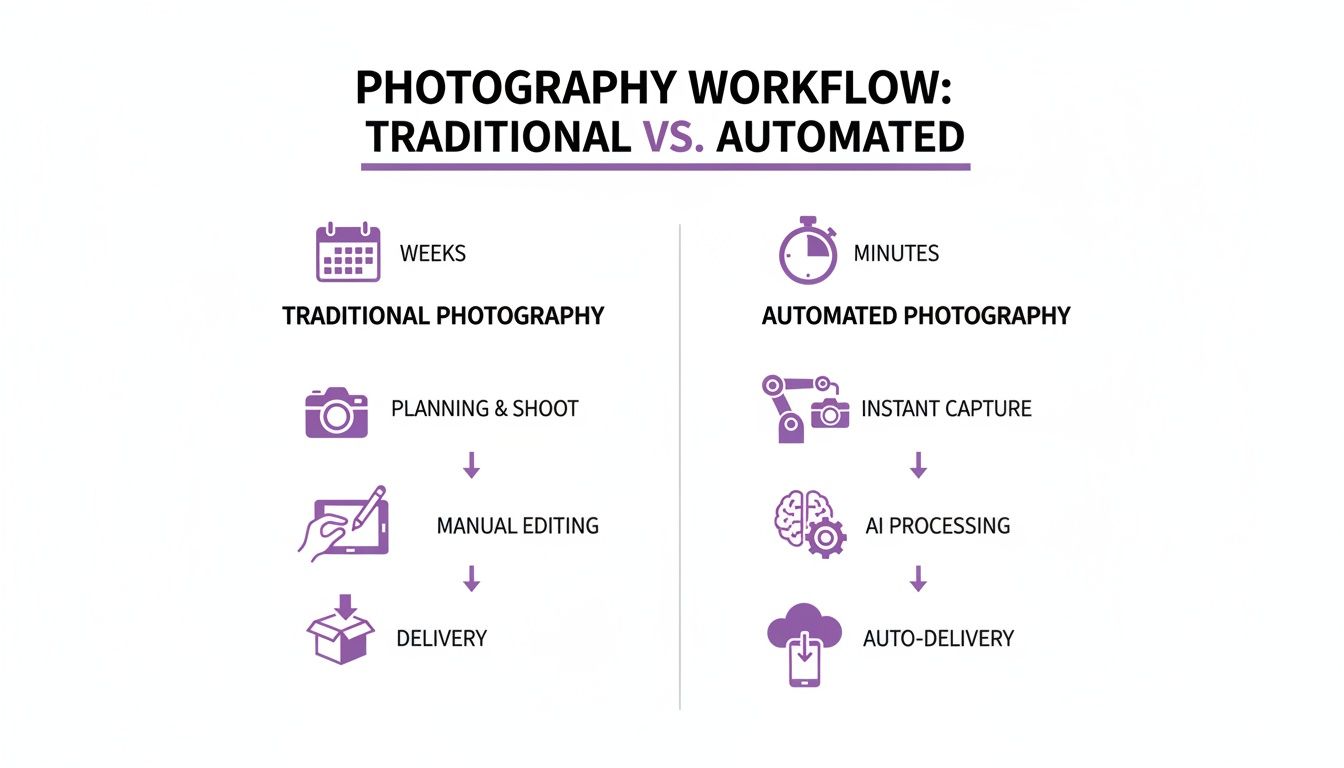
The difference in time and effort is staggering. Let’s compare a traditional photography workflow to an automated one.
Traditional vs. Automated Photography: A Workflow Comparison
| Stage | Traditional Workflow (2–4 Weeks) | Automated Workflow (Under 5 Minutes) |
|---|---|---|
| Capture | Coordinate a full-day photoshoot with models, photographers, and stylists. | Take a simple flat-lay photo of the garment. |
| Selection | Manually review hundreds of photos to select the best shots. | AI validates the single input image. |
| Retouching | Outsource images for background removal, color correction, and touch-ups (days of waiting). | AI automatically removes the background, adjusts color, and adds shadows. |
| Model/Styling | N/A (locked into the shots from the photoshoot). | AI generates on-model images from the flat lay. |
| Formatting | Manually resize and format images for different channels (e.g., website, social media, ads). | Images are automatically generated and delivered in all required formats. |
| Delivery | Manually upload final assets to the e-commerce platform and marketing channels. | Final assets are auto-delivered directly to your product catalog or DAM. |
As you can see, automation collapses a multi-week headache into a streamlined operation that’s over in minutes.
The following infographic drives this point home, visualizing just how dramatic the time savings really are.
To understand product photography automation, it helps to understand the broader goal: to streamline business processes using AI automation. You find repetitive, high-volume tasks and let technology execute them faster and more consistently than any human team.
For a fashion brand, this means transforming a flat lay into a full gallery of on-model e-commerce photos, lifestyle shots, and campaign images — all from one source file, all in about a minute.
This approach doesn’t just save time; it creates value. Brands are no longer stuck with a handful of shots from one expensive photoshoot. Suddenly, they have a system that can generate endless creative variations on demand.
This agility defines the next generation of fashion retail. The ability to quickly test and deploy new visual content is a massive competitive advantage.
Core Automation Workflows That Replace Manual Tasks
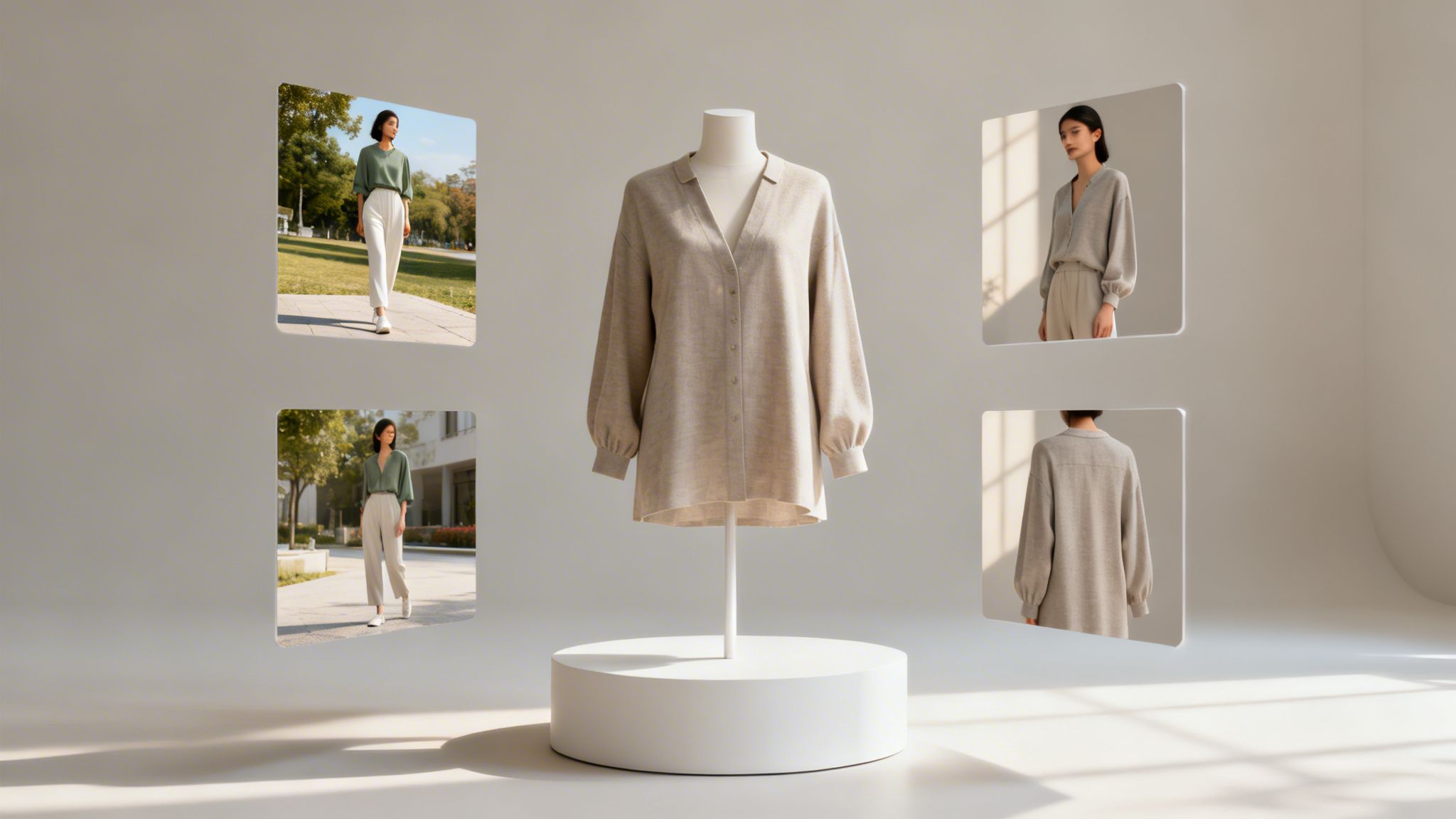
Real product photography automation isn't just about removing a background. It's a chain of connected workflows designed to eliminate the most expensive parts of creating fashion imagery.
Think about the old way: paying a freelancer for hours of meticulous Photoshop work. Now, automation gets it done in seconds. By automating foundational tasks like background removal and color correction, you get your images prepped for the creative work.
Automated Background Replacement
The first win is automated background replacement. For years, getting a clean, consistent look across a catalog was a manual slog. Automation makes it instant, giving your store a uniform, professional feel with zero effort.
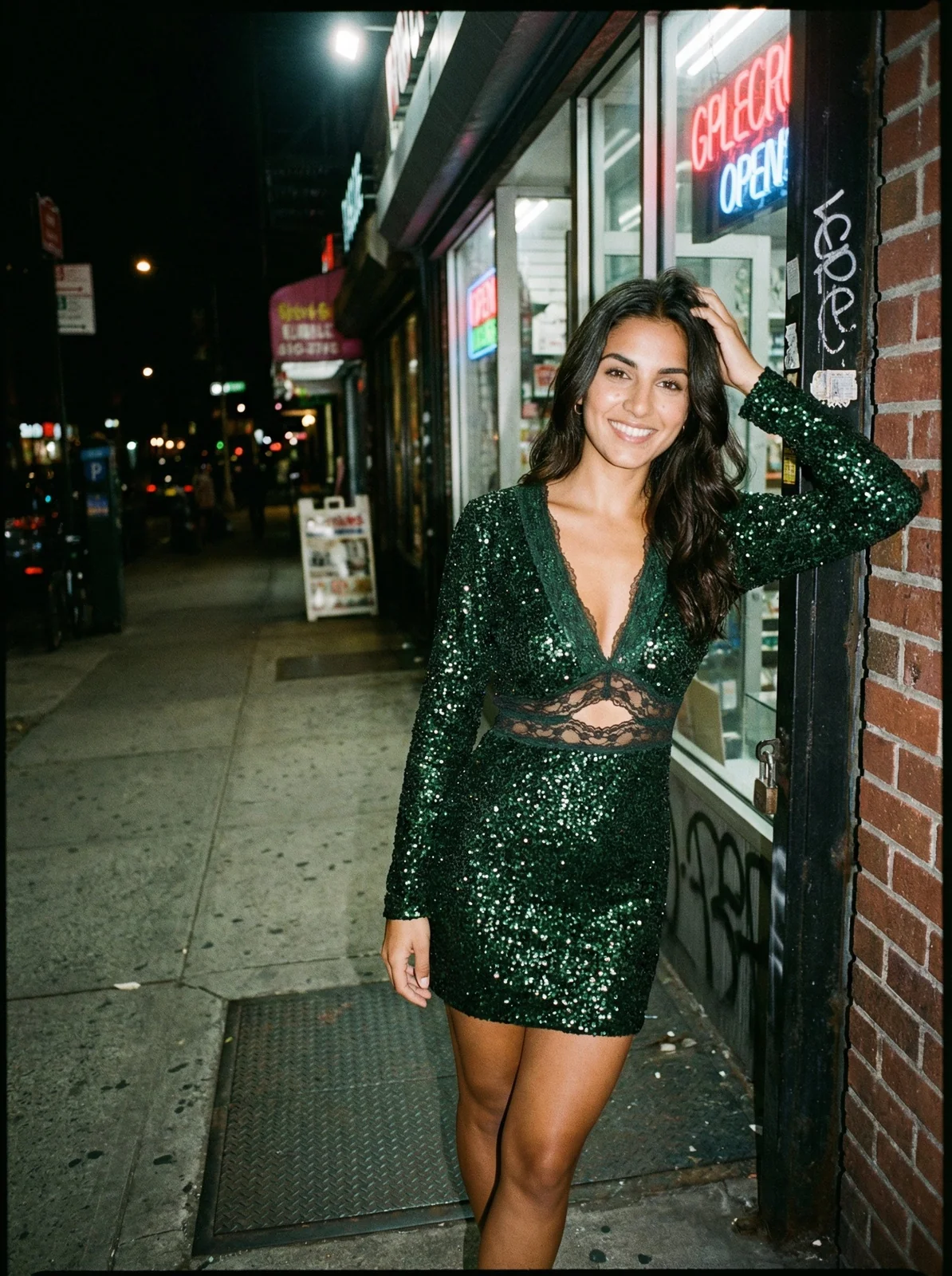
But it’s not just about plain white backgrounds. A direct-to-consumer brand can instantly generate on-brand lifestyle scenes. Imagine placing your new dress in a Parisian café or on a sandy beach at sunset — without booking a flight.
Virtual Model Generation
Let’s be honest: one of the biggest line items in any fashion shoot is the model. Virtual model generation completely sidesteps this cost. By feeding the system a simple flat lay shot, these platforms can generate a nearly infinite variety of on-model images.
This gives creative directors new levels of control. You can hand-pick models that perfectly match your target audience, showcasing apparel on a wide spectrum of body types, ethnicities, and ages. A global brand can show a single jacket on 10 different models to resonate with customers from Tokyo to Toronto, all generated in minutes.
This isn't about replacing human models entirely; it's about augmenting creative possibilities. Brands can now create inclusive, representative imagery at scale — a task that was previously logistically impossible.
AI-Powered Content Variation
This is where product photography automation becomes a creative partner. Using a single source image, the system can generate dozens of unique visual assets by tweaking key variables.
This is a game-changer for A/B testing. An e-commerce brand, for instance, can create 5 different main images for a single t-shirt to see what converts best:
- Lighting: One shot with bright lighting; another with dramatic, moody shadows.
- Angles: A classic front-on view, a 45-degree angle, and a close-up on the fabric's texture.
- Styling: One image showing the shirt neatly tucked in, another styled for a casual, untucked look.
Trying to produce this variety manually would have been unthinkable. Now, a creative director can generate options instantly, test them in ad campaigns, and double down on what drives sales. It gives teams more creative control, turning one garment into a limitless source of high-performing marketing assets.
How Automation Delivers a Measurable ROI for Brands
Switching to an automated workflow isn’t just a tech upgrade — it’s a business strategy with a measurable return on investment. The value of product photography automation boils down to three things: massive cost savings, faster speed-to-market, and increased sales.
The most immediate win is cost savings. A single traditional photoshoot can easily run $20,000 or more. Automation wipes those costs off the board.
Instead of a huge upfront bill, platforms like Picjam let you turn simple flat lays into a full catalog of on-model images for a fraction of that cost. That's capital you can now pump into marketing or product development.
From Weeks to Minutes
This is where automation gives you a competitive advantage: speed. A traditional shoot locks you into a production cycle that can drag on for weeks. By then, the trend you were chasing might be over.
Automation collapses that timeline. A process that once took a month can now be done in under 5 minutes. That agility means you can get new products live the day they hit the warehouse or jump on a viral trend instantly.
For a fast-fashion brand, this means getting a new dress online 4 weeks faster than a competitor. That’s a month of sales you would have otherwise lost waiting for photos.
The ROI is simple: faster content means faster cash flow. You stop losing sales to production delays and start maximizing the selling window for every product.
Boosting Conversions With Better, Smarter Visuals
Ultimately, an e-commerce visual's only job is to drive a purchase. Automation helps by letting you create higher-quality, more consistent, and more diverse images.
There's a reason AI-powered visual tools are exploding — they work. Research firm Statista reports that AI in the fashion market is projected to reach $4.4 billion by 2029. With visuals influencing up to 75% of a purchase decision, the quality of your images is everything.
Think about how this impacts your core metrics:
- Higher Engagement: Generate lifestyle shots that look like your target customer, creating a connection that leads to more clicks.
- Constant A/B Testing: Generate 5 different hero images for one product and test them to see which one converts, letting data guide your decisions.
- Ironclad Consistency: An automated system ensures every photo follows your brand guidelines, building trust and professional polish.
When you connect better visuals to sales, the ROI is a no-brainer. If a software subscription lets you generate images that bump your conversion rate, the investment pays for itself almost immediately. This approach turns your product photography from an expense into a revenue-generating machine.
How to Implement Automation Without Losing Your Brand Identity

Bringing product photography automation into your creative process can feel intimidating. The key is to roll it out in smart phases, integrating the tech smoothly while enhancing your brand's visual identity.
It all starts with clean inputs. Your final automated images will only be as good as the source photos. Before any AI magic, you need simple, well-lit, distortion-free photos of your garments laid flat or on a mannequin.
Establish Your AI Style Guide
The number one fear brands have about automation is losing their unique visual signature. The solution? Create a dedicated style guide for the AI. This is a set of creative rules that teaches the software to think like your brand director.
Your AI style guide should define:
- Model Aesthetics: Define the look and feel of your ideal models. Are they energetic and smiling, or stoic and editorial? Specify the range of ethnicities, ages, and body types.
- Background Styles: Do you use clean backgrounds or aspirational lifestyle scenes? Give the AI examples of approved settings, whether urban streets or calm studios.
- Lighting and Mood: Specify your lighting signature. Is it bright and high-key, or more dramatic and moody? Consistency here is critical for brand recognition.
By setting these creative guardrails up front, you’re not just automating a task; you’re automating your specific brand vision.
Start Small and Measure Everything
Don't try to automate your entire catalog on day one. Start with a small pilot project. Pick a single product line or a new collection to test the workflow.
This controlled experiment lets you:
- Refine Your Workflow: Perfect the process for shooting source images and tweak your AI style guide without pressure.
- Measure Results: Track production time, cost per image, and conversion rates on automated images versus your old photos.
- Build Team Confidence: A successful pilot shows your team the real-world value of automation, making it easier to get buy-in for a wider rollout.
The financial incentive is huge. For many apparel brands, a manual photoshoot can run $20,000 to $50,000. By contrast, AI studios can deliver high-converting images in minutes, with some brands reporting 30-50% conversion lifts.
Once you have hard data proving the ROI, you can confidently expand product photography automation across your brand. This step-by-step approach removes the risk, turning a tech shift into a strategic and profitable move.
Takeaway: Your Action Plan for Automation
Switching to product photography automation isn't about firing your creative team; it's about unlocking them. By removing tedious work, you give your brand the freedom to move faster, think bigger, and become more profitable.
Here’s how to get started.
1. Audit Your Current Content Costs
First, get an honest look at what you’re really spending on photoshoots. Tally everything — studio time, models, photographers, and retouching.
Once you put a number on those costs and delays, you'll immediately see where automation can make the biggest impact.
This isn't just a cost-cutting exercise. Every dollar you save on a traditional photoshoot is a dollar you can pour back into marketing, product development, or customer experience.
2. Start Small With Your Bestsellers
Don't overhaul your entire catalog at once. Pick a single, high-volume product line for a pilot test. Bestsellers are perfect because they get enough traffic to show you how better visuals affect your conversion rate.
This small-scale test lets you dial in your automated workflow and build an AI style guide in a low-risk environment. Once you have data showing faster production and a bump in sales, you’ll have proof to scale the system.
3. Use Automation For Creative A/B Testing
Once your system is running, it's time to play. This is where automation becomes a creative engine. Take one product and use a platform like Picjam to generate 5 different creative concepts. Test them in your social media ads.
You can finally get real data on questions you've only guessed at:
- Which model look connects with your target audience?
- What background drives more clicks?
- Is there a specific angle that makes the product impossible to ignore?
This kind of rapid, data-backed testing was a logistical nightmare with traditional photography. Automation lets you turn creative hunches into measurable wins.
Ready to see what automation can save you? Use the Picjam savings calculator to compare our automated solution with your brand's current photography costs and uncover your potential ROI.
Frequently Asked Questions
Whenever we talk to fashion brands about automating their product photography, a few key questions always pop up. It’s a new way of working, so skepticism is natural. Let's tackle some of the most common concerns we hear.
But Will It Capture the Texture of My Fabrics?
This is probably the number one question we get, and for good reason. For fashion, texture is everything. The good news is, the final image quality comes down to the quality of your source photo.
Automation platforms like Picjam work with high-resolution, well-lit shots of your garments on a mannequin or hanger. When you feed the system a sharp, detailed photo, its AI is remarkably good at preserving—and even accentuating—those critical details.
This means the subtle weave of a linen shirt, the fuzzy texture of a mohair sweater, or the delicate sheen of a satin dress all come through. The AI has been trained on countless images to understand how different materials hang, fold, and catch the light, so the on-model result is a true-to-life representation of your actual product.
Can I Really Use This for Social Media and Ads?
Absolutely. In fact, this is where the real creative power comes in. This isn’t just about making clean, white-background shots for your product pages. It's about generating a ton of on-brand lifestyle content for your social feeds and ad campaigns, fast.
Imagine taking one photo of a new jacket and, in a few minutes, generating 10 different lifestyle scenes. You could place it in a bustling city street, a cozy coffee shop, or against a vibrant, abstract background. This lets you quickly A/B test ad creative to see what your audience clicks on, all without a single reshoot. You’re turning one product shot into a nearly endless stream of content.
Is This Going to Be a Huge Technical Headache to Set Up?
Not at all. The latest platforms are built for busy founders and marketers, not software developers. We know you don’t have time for a steep learning curve, so the whole process is designed to be as simple as possible.
Honestly, the setup is incredibly straightforward. All you need is a decent photo of your product. From there, the interface guides you through the rest. Generating a new on-model image is just a matter of a few clicks. If you can upload a photo to Instagram, you can do this.
Ready to see what this looks like for your brand's bottom line? Compare your current photoshoot budget against the cost of Picjam with our savings calculator and find out how much you could be reinvesting into growth.

Picjam team
The Picjam team blends AI, product, and creative expertise to eliminate the cost and delay of traditional photography for modern eCommerce brands.