
10 Props Photography Ideas to Elevate Your Fashion Brand
Discover 10 actionable props photography ideas to transform your fashion content. Learn how brands use props and AI to create high-converting images.
How to start saving money
Lorem ipsum dolor sit amet, consectetur adipiscing elit lobortis arcu enim urna adipiscing praesent velit viverra sit semper lorem eu cursus vel hendrerit elementum morbi curabitur etiam nibh justo, lorem aliquet donec sed sit mi dignissim at ante massa mattis.
- Neque sodales ut etiam sit amet nisl purus non tellus orci ac auctor
- Adipiscing elit ut aliquam purus sit amet viverra suspendisse potent i
- Mauris commodo quis imperdiet massa tincidunt nunc pulvinar
- Adipiscing elit ut aliquam purus sit amet viverra suspendisse potenti
Why it is important to start saving
Vitae congue eu consequat ac felis placerat vestibulum lectus mauris ultrices cursus sit amet dictum sit amet justo donec enim diam porttitor lacus luctus accumsan tortor posuere praesent tristique magna sit amet purus gravida quis blandit turpis.

How much money should I save?
At risus viverra adipiscing at in tellus integer feugiat nisl pretium fusce id velit ut tortor sagittis orci a scelerisque purus semper eget at lectus urna duis convallis. porta nibh venenatis cras sed felis eget neque laoreet suspendisse interdum consectetur libero id faucibus nisl donec pretium vulputate sapien nec sagittis aliquam nunc lobortis mattis aliquam faucibus purus in.
- Neque sodales ut etiam sit amet nisl purus non tellus orci ac auctor dolor sit amet
- Adipiscing elit ut aliquam purus sit amet viverra suspendisse potenti
- Mauris commodo quis imperdiet massa tincidunt nunc pulvinar
- Adipiscing elit ut aliquam purus sit amet viverra suspendisse potenti
What percentage of my income should go to savings?
Nisi quis eleifend quam adipiscing vitae aliquet bibendum enim facilisis gravida neque. Velit euismod in pellentesque massa placerat volutpat lacus laoreet non curabitur gravida odio aenean sed adipiscing diam donec adipiscing tristique risus. amet est placerat imperdiet sed euismod nisi.
“Nisi quis eleifend quam adipiscing vitae aliquet bibendum enim facilisis gravida neque velit euismod in pellentesque massa placerat”
Do you have any comments? Share them with us on social media
Urna ut fermentum imperdiet lacus, elementum etiam maecenas libero nunc, suspendisse massa, nisl, elit curabitur feugiat in quis ut nibh enim in tristique aliquam sed vitae dui, dis adipiscing pharetra aliquam turpis turpis nibh rhoncus enim, pellentesque leo laoreet neque in sed bibendum fermentum suspendisse tempus non purus adipiscing suscipit fringilla adipiscing convallis dolor nulla fermentum facilisis ullamcorper ut vehicula tortor libero metus donec velit, tristique fermentum, dictum euismod diam scelerisque enim non pharetra tristique lectus habitant pharetra est id
When direct-to-consumer brand Cuyana showcases its classic leather tote, it doesn’t just show the bag — it’s styled next to a pair of sunglasses and a travel journal on a marble cafe table. This isn't just styling; it's storytelling. Effective props photography ideas are crucial for transforming a simple product listing into an aspirational narrative that connects with customers and drives sales.
Sourcing physical props, booking locations, and hiring stylists for every collection is a major cost center that slows down campaign launches. This is why brands are using AI tools like Picjam to generate endless contextual variations for their product shots. According to McKinsey, AI can reduce content production costs by up to 30%, a significant saving for agile fashion brands.
This guide breaks down 10 essential prop strategies used by top fashion brands to create compelling imagery. We'll explore actionable ways to implement these concepts, both in traditional studios and through more efficient, AI-powered workflows.
1. How Lifestyle Props Cut Photoshoot Costs
The most effective props photography ideas often create an aspirational world around your product. Lifestyle props move beyond a sterile white background to place apparel in a relatable context. This approach helps customers visualize themselves wearing the garment, transforming a product shot into a narrative. Brands like Everlane master this by showcasing cashmere sweaters in minimalist, sunlit home offices.
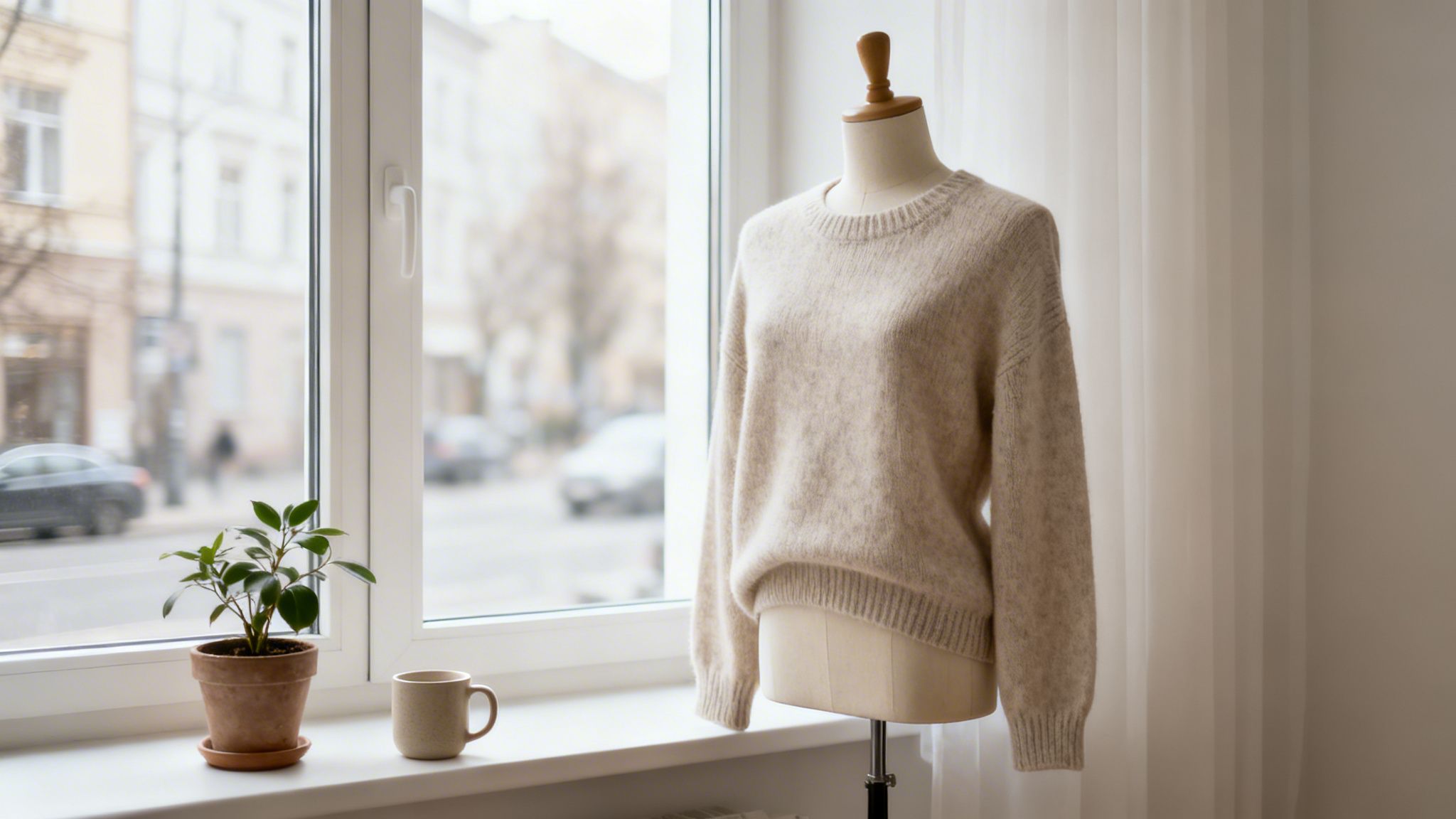
This method builds brand identity and connects with a target audience on an emotional level. A silk dress feels more luxurious in a chic apartment setting, and a linen shirt appears more relaxed on a coastal balcony. These curated environments contextualize the garment, answering unspoken customer questions about its feel and occasion.
Actionable Insights:
- Match Complexity: Use simple, clean backgrounds for detailed or patterned garments. A busier environment works better for solid, minimalist pieces.
- Maintain Cohesion: Apply a consistent color grade across all lifestyle shots to ensure a unified aesthetic on your website and social media.
- Test and Optimize: Generate 3-5 different environmental contexts (e.g., cafe, park, home) for a single product to test which scenes drive the highest conversion.
For brands seeking flexibility without the expense of location shoots, AI tools offer a powerful alternative, creating endless lifestyle scenes at a fraction of the cost.
2. Complementary Styling Props That Boost AOV
Styling props and accessories are the secondary items that complete an outfit narrative. By strategically adding items like handbags, jewelry, or footwear, you provide crucial context and demonstrate versatility. This approach is one of the most effective props photography ideas because it helps customers envision the entire ensemble. Brands like J.Crew and Banana Republic excel at this, staging complete outfits that feel both aspirational and immediately shoppable.
This method directly answers the customer's question: "How would I wear this?" A simple top is elevated when paired with a statement necklace. These additions communicate a specific occasion and lifestyle, increasing the perceived value of the main product.
Actionable Insights:
- Apply the 60-30-10 Rule: Dedicate 60% of the visual focus to the main garment, 30% to complementary accessories, and 10% to small accent props.
- Avoid Obscuring Details: Ensure accessories enhance, not hide, key features. A belt should highlight a waistline, not cover intricate embroidery.
- Showcase Versatility: Create 3-5 distinct styled looks for a single garment by swapping accessories to demonstrate its range.
For brands aiming to create numerous styled variations efficiently, AI tools can apply different accessories to a core image, allowing for extensive testing without reshoots.
3. Scale Reference Props That Reduce Returns
One of the most powerful props photography ideas for eCommerce directly addresses size uncertainty. Scale reference objects are props included in a shot to give an intuitive sense of a product's dimensions. By placing a familiar item like a smartphone or a coin next to a product, brands can visually communicate scale far more effectively than a measurements chart, reducing customer hesitation.
This technique builds trust and provides practical value. Jewelry brands like Mejuri often feature hands wearing rings, not just for lifestyle context but to provide an instant understanding of the piece's delicateness. According to Statista, "wrong size or fit" is a top reason for fashion returns, making this a critical tactic.
Actionable Insights:
- Choose Wisely: Select universally recognized objects (e.g., credit cards, keys, smartphones) that your audience will instantly understand.
- Stay Neutral: Use neutral-colored hands and reference objects to prevent them from clashing with the product’s design.
- Integrate Naturally: Have a hand hold the item, or place it adjacent in a way that feels organic rather than staged.
For brands looking to show scale without the logistical challenges of live model shoots, AI offers a seamless solution. Tools like Picjam can generate images with AI models holding your products, providing an accurate sense of scale while eliminating model costs.
4. How Fabric Props Justify Premium Pricing
Props that showcase texture and detail are crucial for communicating quality online. This props photography idea focuses on the tangible elements that customers can't physically touch: the weave, the stitching, and the material. These close-up shots build consumer confidence by providing transparent proof of craftsmanship, transforming a product listing into a tactile experience. Brands like Patagonia excel at this by highlighting the technical innovation in their fabrics through detailed macro shots.
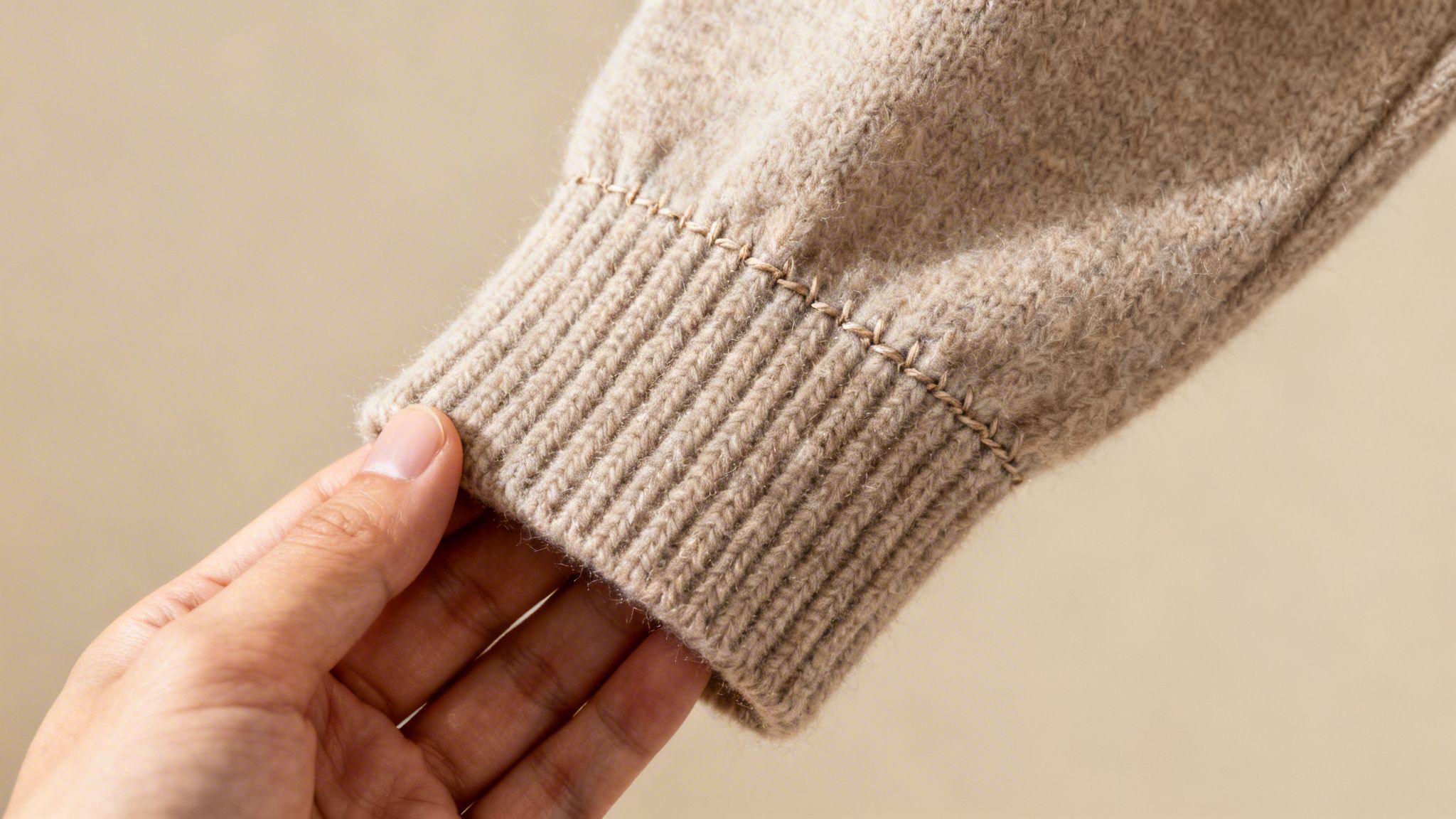
This approach is highly effective for any brand whose value is tied to material quality. For photography that emphasizes textile qualities, understanding materials, such as what is Jacquard fabric, can significantly enhance your detail showcase. These shots answer customer questions about feel, durability, and texture before they're even asked.
Actionable Insights:
- Use Strategic Lighting: Position your light source at a 45-degree angle to the fabric. This side lighting creates subtle shadows that reveal the texture.
- Showcase Key Features: Dedicate 2-3 images per product to specific details like custom buttons, reinforced seams, or unique knit patterns.
- Create Context: Macro shots work best alongside full product and lifestyle images. Pair them with technical specifications in the product description.
5. Using Seasonal Props to Drive Timely Sales
Tapping into seasonal trends and special occasions is a powerful way to create relevant and urgent product narratives. Seasonal props photography ideas situate garments in specific contexts, like placing a wool coat in a snowy landscape. This strategy helps customers visualize the product in their immediate future. Retail giants like H&M and Zara master this by constantly rotating their visuals to align with the current season, making their collections feel fresh.
This approach is highly effective for driving impulse purchases. A swimsuit appears more appealing in a poolside setting in June, just as a cashmere scarf feels essential when styled for a crisp autumn day. These thematic environments align the brand with the customer's lifestyle and calendar.
Actionable Insights:
- Plan Ahead: Create seasonal content at least 2-3 months in advance to ensure images are ready for timely marketing campaigns.
- Layer for Functionality: Use weather-appropriate layering to demonstrate a garment's versatility, such as showing a trench coat over a sweater for fall.
- Adapt Core Products: Use AI to generate 3-4 seasonal variations for a core product and test them to see which visual themes resonate most with your audience.
For brands needing to rapidly produce seasonal variations, AI tools offer a game-changing solution. Platforms like Picjam can generate endless seasonal backdrops, allowing you to adapt your product imagery instantly and affordably.
6. How Fit Demonstration Props Lower Return Rates
Beyond aesthetics, product photography must answer a crucial question: “How will this fit me?” Fit and silhouette demonstration is less about physical objects and more about strategic posing that communicates a garment's drape and shape. This approach builds shopper confidence and reduces return rates by managing expectations. Size-inclusive leaders like Universal Standard and Aerie excel here, showcasing items on a diverse range of body types.
This method transforms a point of friction into a selling tool. By featuring full-body, side, and back views, and including poses that show movement, brands highlight key fit details. It’s one of the most effective props photography ideas for building trust for online-only brands.
Actionable Insights:
- Standardize Poses: Photograph each size in the exact same pose and lighting to create a clear, direct comparison for customers.
- Show Garments in Motion: Capture shots of models walking or stretching to demonstrate the garment’s functional fit, crucial for activewear.
- Offer Comprehensive Views: Always include front, side, and back shots to give a complete 360-degree understanding of the silhouette.
For brands aiming to showcase fit across multiple sizes without the complexity of coordinating numerous models, AI tools provide a streamlined solution. Picjam’s Fit to Model feature can generate accurate size variations on demand, reducing production time and costs.
7. Color Swatch Props That Increase Conversion
Displaying every available color option clearly and accurately is crucial for driving conversions. Using color swatch props is an effective photography idea to manage customer expectations. This technique involves photographing all product colorways under consistent lighting and often includes physical color swatches in the frame to provide a true-to-life reference. Brands like Everlane excel at this, presenting each color variant with pristine accuracy.

This method directly addresses a major online shopping pain point — color uncertainty. By showcasing a deep navy t-shirt next to its fabric swatch, you eliminate guesswork and build trust. This reassures customers that what they see is precisely what they will get.
Actionable Insights:
- Calibrate for Accuracy: Use a white balance card in every shoot. This creates a reliable baseline for post-production, ensuring colors are consistent.
- Maintain Consistency: Photograph all color variations in the exact same setting, using identical lighting and camera angles for easy comparison.
- Provide Context: Add descriptive color names in your product copy, such as 'warm ivory' instead of just 'white', to complement the visual information.
For brands looking to showcase an extensive color range without a physical shoot for every variant, AI offers a streamlined solution. Tools like Picjam can generate every colorway from a single product image, ensuring consistency while drastically reducing production time and costs.
8. How Use-Case Props Create an Emotional Connection
Moving beyond static environments, the most impactful props photography ideas show your garments in motion. Lifestyle activity and use-case props demonstrate how apparel performs in real-world scenarios, answering questions about durability, fit, and functionality. This approach builds a powerful connection by showing customers how a product will integrate into their lives. Brands like Lululemon and Patagonia excel at this, featuring activewear during a yoga class or a jacket on a mountain trail.
This method is essential for performance-oriented apparel, as it provides visual proof of the product’s value. A commuter jacket is more compelling when shown braving a city downpour. By grounding your product in authentic activities, you transform it from a simple item into an indispensable tool for your customer’s lifestyle.
Actionable Insights:
- Align Activity to Function: Choose activities that authentically highlight the product’s key features. Showcase stretch fabric in a yoga pose.
- Mix Aspiration with Reality: Balance aspirational scenarios (e.g., hiking a remote peak) with everyday activities (e.g., walking the dog).
- Focus on the Benefit: Ensure the activity clearly communicates a product benefit, such as comfort, flexibility, or protection from the elements.
AI-powered platforms are a game-changer for producing diverse lifestyle content without high costs. Tools like Picjam allow you to generate countless activity-based scenes on-demand, enabling you to test which use-cases drive the most engagement.
9. Packaging Props That Boost Brand Identity
The unboxing experience is a powerful marketing moment and one of the most effective props photography ideas for building brand affinity. Featuring branded packaging, custom tissue paper, and thoughtful presentation in your product photos transforms the sale into a story. It communicates value and a premium feel. DTC brands like Glossier built empires on their iconic, shareable pink packaging, turning a delivery into a social media event.
This strategy is crucial for creating a memorable brand identity. When customers see high-quality packaging on your website, it elevates the perceived value. For luxury brands like Hermès, the orange box is as iconic as the product inside. Sustainable brands can showcase eco-friendly packaging to reinforce their values.
Actionable Insights:
- Create a Signature Look: Design packaging with a distinct color, pattern, or logo that is instantly recognizable on camera.
- Showcase the Sequence: Use Instagram Reels or TikTok to create short, satisfying unboxing videos that build anticipation.
- Integrate into Product Shots: Include a beautifully wrapped box or branded tag in your main eCommerce photos to hint at the premium experience.
10. How Measurement Props Improve Sizing Transparency
Beyond aesthetics, effective props photography ideas solve practical customer problems. Measurement reference props transform a standard photo into a functional tool, visually communicating critical fit information to reduce returns. This approach moves sizing details from a separate guide into the primary product gallery. Brands like COS excel at this, integrating detailed garment measurements alongside their editorial shots.
This method is crucial for online-first brands where customers cannot try items on. By overlaying measurement graphics onto a flat-lay photo, you proactively answer common sizing questions. Technical apparel brands like Arc'teryx use this technique to demonstrate precision fit, lowering purchase friction and improving customer satisfaction.
Actionable Insights:
- Standardize Your Process: Use a consistent method for flat-lay photography and measurement points (e.g., pit-to-pit) across all products.
- Design Clear Overlays: Create clean, easy-to-read graphic overlays that clearly label each measurement without cluttering the image.
- Show, Don't Just Tell: Include a reference photo in your gallery that shows how you measure each garment, building trust in your accuracy.
For brands needing to create hundreds of these measurement graphics, AI can automate the process. Standardized measurement overlays can be applied across entire collections in minutes, ensuring every product listing is equipped with clear, helpful sizing information.
Takeaway
Prioritize Clarity on Fit and Fabric: The most effective props communicate tangible product attributes. Use fit demonstration tools and texture-enhancing surfaces to tackle the primary reasons for online returns — poor fit and unexpected material quality. This focus on transparency directly impacts customer satisfaction and your bottom line.
Contextualize to Create Aspiration: Use environmental props and accessories to show the life your product inhabits. Whether it’s a pair of hiking boots on a mossy rock or a cocktail dress next to a clutch, context creates desire. It shifts the customer’s mindset from “What is this?” to “Who could I be with this?”
Scale and Test with AI to Save Costs: The traditional approach to prop photography is expensive and slow. Modern fashion brands are leveraging AI to achieve creative diversity without the logistical overhead. A single product photo can be transformed into dozens of distinct scenes using a tool like Picjam. This allows you to test which props photography ideas resonate most with your audience for a fraction of the cost, accelerating your entire content production pipeline.
Ready to transform your content workflow? See how Picjam generates stunning, on-brand lifestyle and studio shots in seconds. Calculate your potential savings and elevate your brand imagery today.

Picjam team
The Picjam team blends AI, product, and creative expertise to eliminate the cost and delay of traditional photography for modern eCommerce brands.

