A Fashion Brand’s Guide to Flat Lay Photography That Sells
Discover the secrets of flat lay photography. Learn practical styling, lighting, and composition tips to create images that sell and captivate your audience.
When the minimalist fashion brand Cuyana styles its leather totes for an Instagram post, they don’t just show the bag — they create a story. A pair of sunglasses, a leather-bound notebook, and a single gold bracelet sit nearby. This is flat lay photography, and it’s the visual language of modern eCommerce.
Shot from directly above, a flat lay presents products and props on a flat surface. It’s a clean, organized, bird's-eye view that has become essential for selling apparel and accessories online.
Great flat lays do more than just display a product; they communicate a lifestyle. For brands looking to scale their visual content without scaling their budget, AI tools like Picjam are transforming the entire process.
How Great Flat Lays Boost Sales and Slash Return Rates
When a shopper can't physically touch a garment, your product photos must bridge the trust gap. High-quality flat lay photography isn’t just a trend — it’s a powerful sales tool that moves customers from browsing to buying.
Brands like Everlane have mastered this. Their crisp, minimalist layouts communicate quality and sophistication, often without the cost of a model photoshoot. These clean, detailed flat lays let the product’s texture and design pop on a mobile screen.
The Real Impact on Your Bottom Line
For fashion brands, the line between great imagery and sales is direct. According to a report from Justuno, high-quality images can increase conversion rates by as much as 30%. Why? They give shoppers a clear, detailed look at textures, fit, and styling potential.
This clarity also reduces headaches. When customers know exactly what they're getting, they're less likely to make a return. This is crucial, as reducing product returns by just 10% can significantly impact a brand's profit margins.
A well-executed flat lay is a core piece of any successful ecommerce content marketing strategy that drives real traffic and boosts sales. You’re not just taking a picture; you’re creating an asset that fuels your entire sales funnel. Learn more in our guide on what is flat lay photography.
Why AI Is the New Standard for Content Production
Here’s the challenge: creating high-quality flat lays at scale is traditionally expensive and slow. Producing unique, styled shots for hundreds of products requires significant investment in studio time, props, and styling.
AI tools are changing this equation. Platforms like Picjam make studio-quality visuals affordable and incredibly fast. Take one clean shot of your product and let AI generate dozens of unique, on-brand flat lay scenes. This streamlines the creative process, saving thousands in production costs and getting products online faster.
Lay the Groundwork: Your Pre-Shoot Checklist
Great flat lay photography is made long before you pick up a camera. The most compelling shots are the result of deliberate planning that ensures every element tells your brand’s story.
Pre-production is where you build the narrative. Think about how Allbirds signals sustainability with earthy tones and natural props. Or how a brand like Saint Laurent projects luxury with sharp, geometric lines and minimal styling. Your goal is to develop a visual language your customers recognize instantly.
Build Your Visual Blueprint
Before you unfold a single t-shirt, you need a mood board. This isn't just pinning pretty pictures; it’s about defining your visual strategy. Use Pinterest to collect images that capture your desired color palette, textures, and overall feeling. This blueprint ensures every shot feels intentional.
With a clear vision, prepare your garments. Wrinkles, dust, and stray threads are the fastest way to look unprofessional.
- Steam or Iron: Always press garments right before shooting. A tiny crease becomes a glaring distraction under studio lights.
- Lint Roll Everything: Go over every inch of the fabric. A high-resolution camera picks up everything.
- Use Clips and Tape: A few binder clips or fashion tape, hidden on the underside, can create crisp, clean lines.
Nail Your Props, Backgrounds, and Colors
Props should support the hero — your product — not steal the show. Choose items that add context and feel authentic. Shooting a cozy knit sweater? A ceramic mug makes sense. A sleek activewear set? A minimalist water bottle.
Getting this right isn't just about aesthetics; it directly impacts your bottom line. A visually clear and trustworthy presentation guides a shopper from browsing to buying.
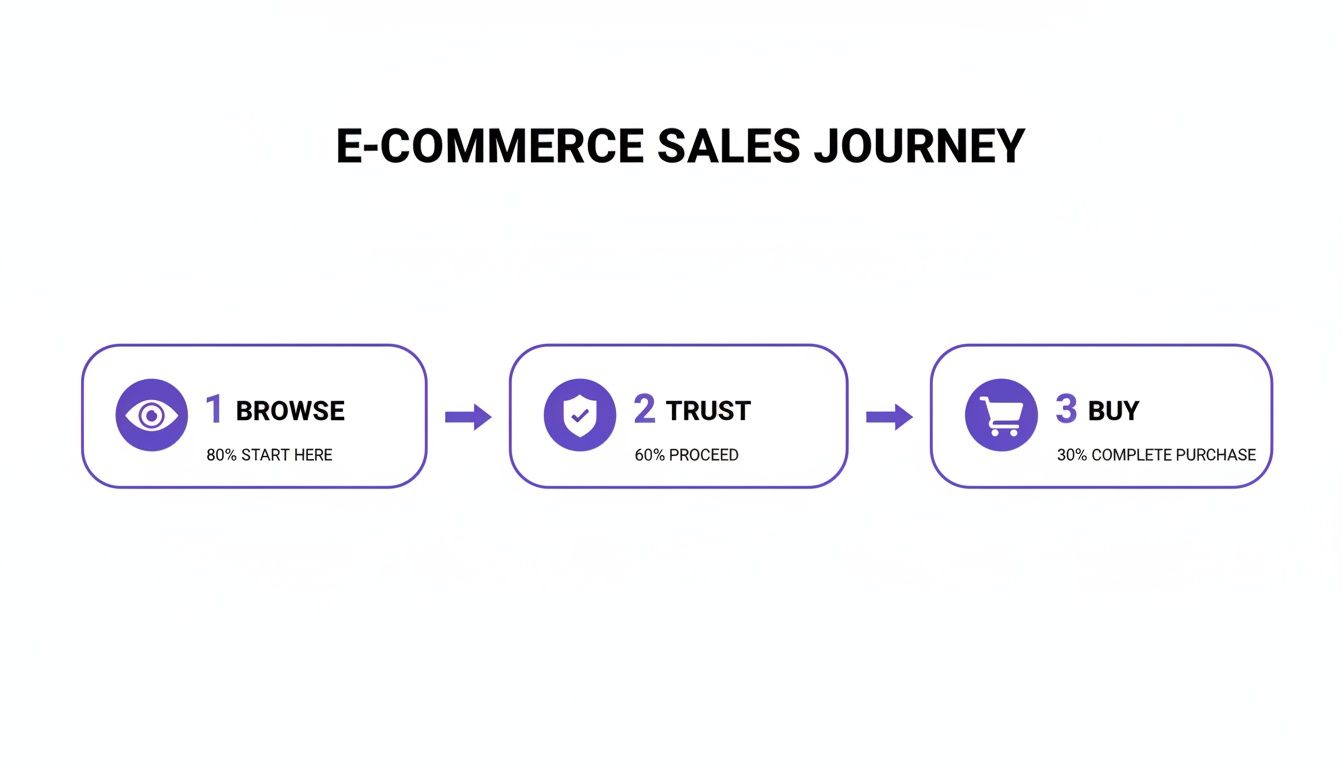
This journey shows that a well-planned image does more than display a product — it builds the trust needed for a sale. For more on the right tools, check our guide on the essential equipment for product photography.
The Essential Flat Lay Photography Toolkit
Choosing the right gear can feel overwhelming, but it doesn't have to be. This table breaks down the essentials for a killer flat lay setup.
Ultimately, the best gear is the gear you know how to use. Start simple, master the fundamentals, and invest as your business grows.
Styling and Composition That Actually Converts
Styling is where art and commerce collide in flat lay photography. It’s the difference between a pretty picture and an image that convinces a customer to click “add to cart.” The secret is using visual cues to guide the shopper’s eye.
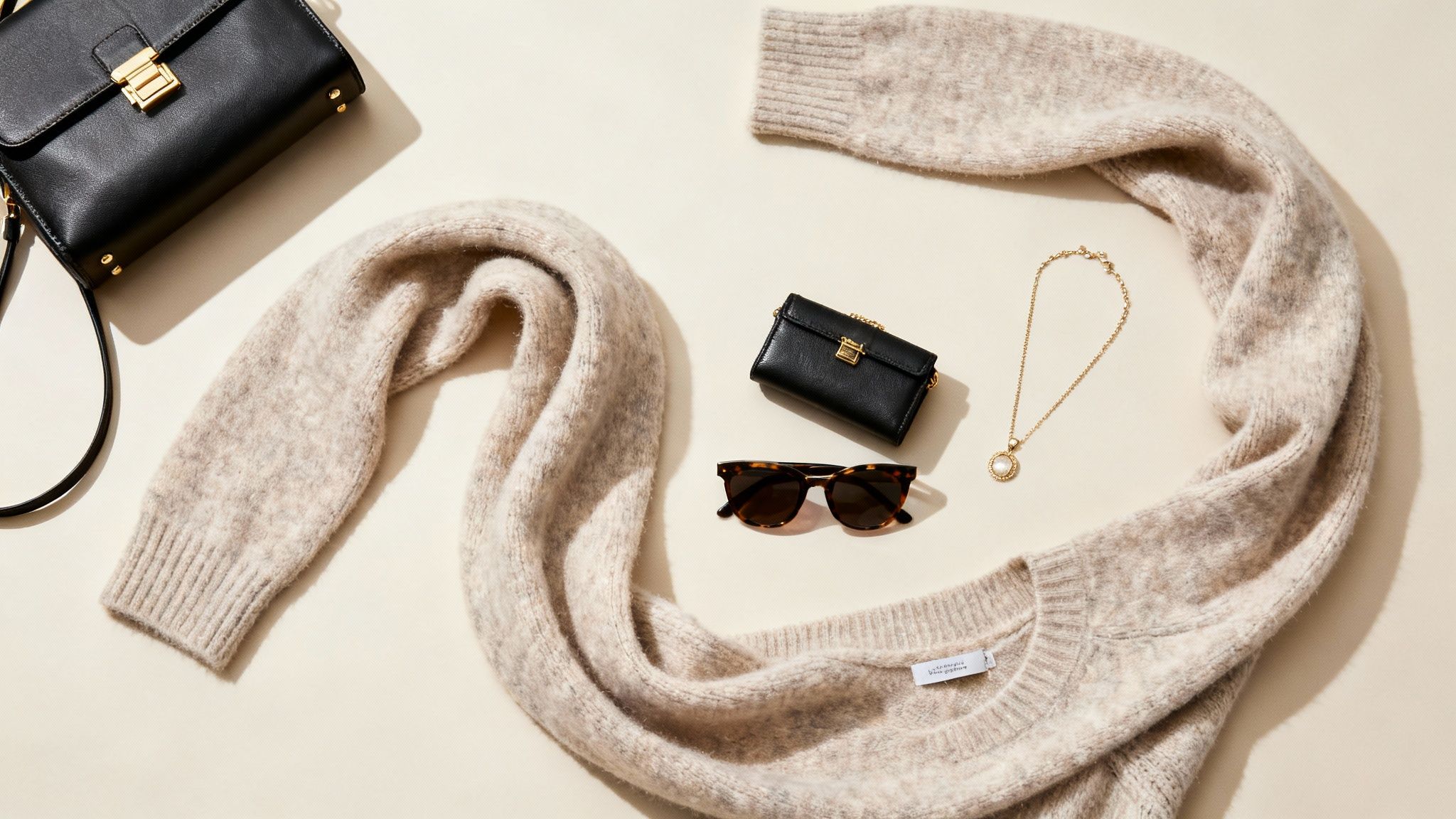
Consider the subtle messages brands send. Madewell often uses a slightly "undone" look — a casually draped sweater — that feels approachable and real. This styling invites you to imagine the pieces in your own life.
In contrast, a luxury house like Saint Laurent uses perfect symmetry and sharp lines. This communicates exclusivity, precision, and a higher price point. These choices are deliberate, shaping how you feel about the brand.
Guiding the Eye with Composition
Great composition makes an image feel balanced and draws attention to the product. Instead of centering an item, use simple principles to create a more dynamic shot.
A classic trick is creating an ‘S’ curve with a garment. Gently shaping a sweater or pants into a soft 'S' creates a natural path for the viewer’s eye, adding movement to a static photo.
Another powerful tool is negative space. Leaving empty areas around your product is key to avoiding a cluttered look. It gives the image breathing room and makes the product the undeniable hero.
Using Props and Groupings Strategically
Styling isn’t just about the main product; the supporting cast matters. The props you choose and how you arrange them can make or break your flat lay.
A classic styling trick is to group items in odd numbers — usually 3 or 5. This creates a more dynamic and visually interesting composition. Even-numbered groups can often feel too static.
For example, when styling a handbag, you might pair it with sunglasses and a lipstick. This small grouping tells a story and helps the customer visualize how the bag fits into their lifestyle.
Traditional styling takes time. Generating dozens of unique compositions for a single product used to be a massive expense. Now, with AI tools like Picjam, brands create countless on-brand variations in minutes, saving time and money on reshoots.
Mastering Light and Shadows for Professional Shots
Lighting isn't just a part of good flat lay photography — it's everything. It’s what separates an amateur snap from a professional, high-converting product image. The right light can make a simple t-shirt look premium, while bad light can make a silk blouse look cheap.
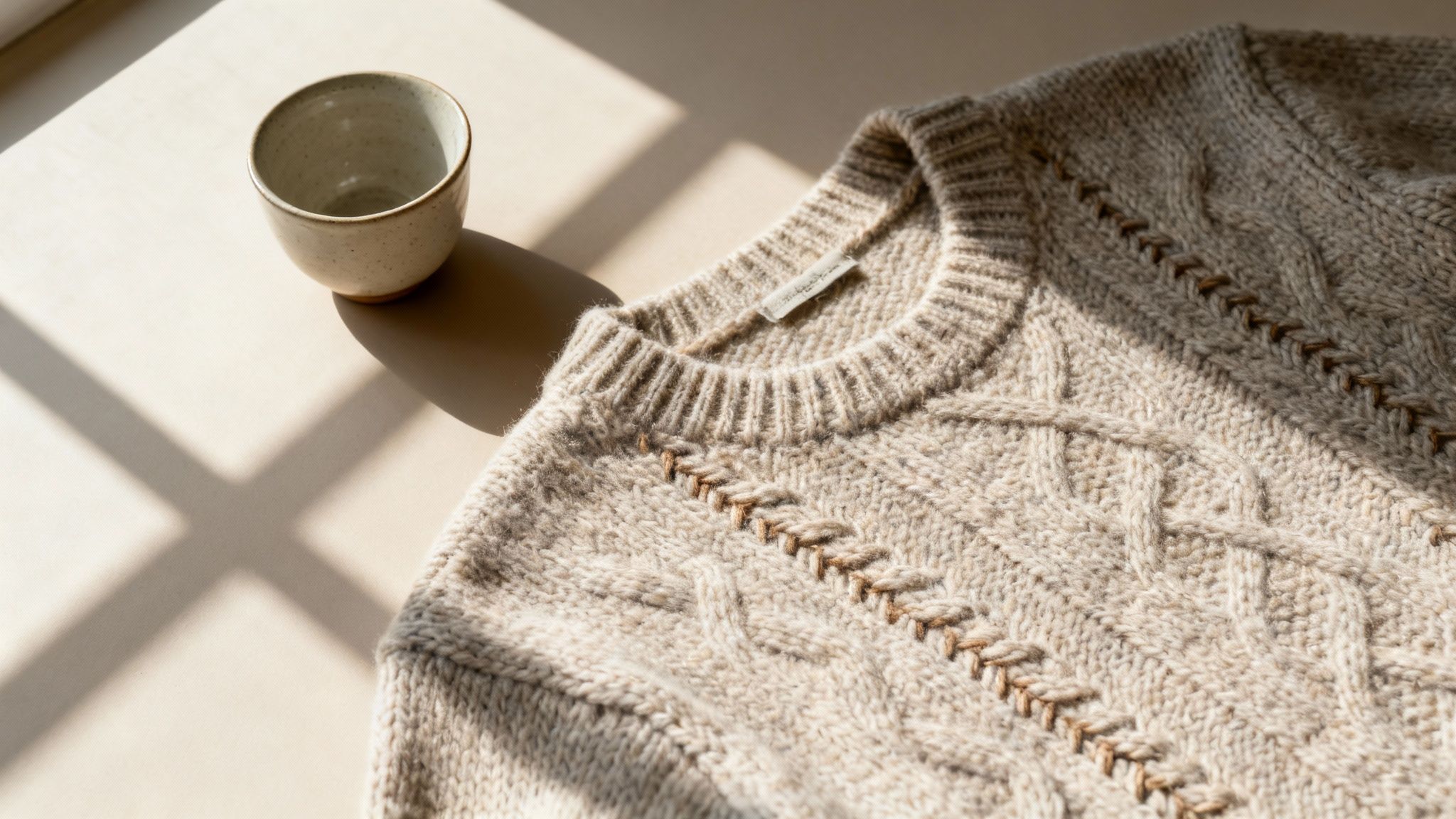
You can see this with brands like Cuyana. They use soft, natural light to create a warm, approachable feel that matches their "fewer, better things" philosophy. The gentle light highlights texture and quality without harsh glares.
Natural Light: Your Most Powerful Tool
The best and cheapest light source is right outside. Shoot next to a large, north-facing window for soft, diffused light that’s flattering for almost any product. It minimizes harsh shadows and brings out true colors.
To nail your natural light shots:
- Shoot on an Overcast Day: Bright sun creates hard, distracting shadows. Clouds act as a giant, free softbox.
- Use a Reflector: A simple piece of white foam core is a game-changer. Place it opposite your window to bounce light back, filling in shadows for a bright, even look.
- Turn Off Indoor Lights: Don't mix light sources. The warm light from lamps clashes with the cool light from the window.
Taking Control with Artificial Light
Natural light isn’t always reliable. For brands needing absolute consistency, artificial lighting is the only way. This is how major retailers like ASOS maintain a uniform look across thousands of listings.
A single light source, like a softbox or LED panel, gives you complete control. Position your light at a 45-degree angle to your layout to mimic window light and create soft, dimensional shadows.
The Right Camera Settings for Crisp Shots
Your camera settings are what make or break the sharpness of your final image. For top-down flat lays, you want everything in focus.
Set your camera to a mid-range aperture like f/8 or f/11. This creates a deep depth of field, ensuring every part of your product is perfectly sharp. Keep your ISO low — around 100-200 — to get clean, grain-free images.
How AI Elevates Imperfect Lighting
Even with the best setup, mistakes happen. A shadow might fall in the wrong place, or a color might be slightly off. In the past, this meant a frustrating and expensive reshoot.
This is where AI platforms like Picjam become a massive time-saver. Upload a shot with a minor issue, and the AI can correct exposure, balance colors, or remove an unwanted shadow. It’s a safety net that stops brands from wasting time and money.
The demand for high-quality, scalable visual content is driving major industry growth. The global eCommerce product photography market, valued at $163.91 million in 2023, is projected to hit $342.27 million by 2031, according to Verified Market Research.
How AI Slashes Flat Lay Photography Costs and Delays
The biggest challenge with traditional flat lay photography has always been scale. Creating unique visuals for hundreds of products is a massive drain on resources. This friction point is where AI is turning a logistical headache into a creative advantage.
Imagine a fast-fashion brand like Zara, which drops new styles weekly. Manually styling and shooting unique flat lays for every item is an operational nightmare. The costs for props, studio time, and stylists pile up, creating a bottleneck that slows the entire go-to-market strategy.
From a Single Shot to an Entire Campaign
With a platform like Picjam, a brand can take one clean product photo and generate dozens of on-brand variations in minutes. This efficiency is transformative. Shoot one pair of jeans and instantly place it into countless scenes.
- For Product Pages: Generate clean, minimalist backgrounds that make garment details pop.
- For Social Media: Create lifestyle scenes that put the product in a real-world context, making it far more relatable.
- For Ad Creatives: Instantly create a dozen visual concepts to A/B test on platforms like Meta and optimize for conversions without a reshoot.
This process eliminates the need for expensive props, studio rentals, and hours of manual editing. It’s about producing more high-quality content, faster, and for a fraction of the cost.
The Tangible Savings of an AI-Powered Workflow
These savings are real. A 2023 McKinsey report noted that generative AI could add up to $275 billion to the operating profits of the apparel, fashion, and luxury sectors. A huge portion of that value comes from marketing and content creation efficiencies.
When a brand can generate 10 flat lay variations from one photo in under 5 minutes, the cost per image plummets. This is how emerging DTC brands can compete visually with established giants — by replacing manual labor with intelligent automation. This approach also de-risks creative experiments, allowing brands to test new concepts at virtually no cost. For a deeper look at this technology, check out our guide to AI product photography.
Takeaway
The future of fashion content is about empowering creators with tools that multiply their output. The key for brand founders is to stop viewing flat lay photography as a series of one-off tasks and start seeing it as a scalable system.
By integrating AI into your workflow, you can slash production costs, get products online faster, and generate a wider variety of creatives to discover what truly connects with your audience.
Ready to run the numbers for yourself? Compare your current photography spend with an AI workflow using the Picjam savings calculator.
Takeaway: Your Game Plan for Better Flat Lays
To elevate your brand's visual strategy, focus on these actionable learnings.
Plan Before You Shoot. Your success starts before you pick up a camera. Develop a clear mood board and styling guide to ensure every flat lay feels intentional and on-brand. A brand like J.Crew doesn't achieve its consistent, preppy aesthetic by accident; it's the result of a meticulously planned visual language.
Master Natural Light. A simple, natural light setup near a large window will do more for your photos than an expensive camera. Use a white foam board to bounce light and fill in shadows. Good light makes any camera better.
Leverage AI for Scale and Savings. Instead of costly and time-consuming reshoots, use AI tools like Picjam to generate dozens of on-brand visual variations from a single product photo. This turns your content workflow from a budget drain into a strategic advantage, allowing you to test what converts without the high cost.
Curious what that looks like for your bottom line? Pop your numbers into Picjam’s savings calculator and see how an AI-powered workflow stacks up against your current spending.

Picjam team
The Picjam team blends AI, product, and creative expertise to eliminate the cost and delay of traditional photography for modern eCommerce brands.