Understanding Product Photography Cost in 2026
Confused about product photography cost? This 2026 guide breaks down pricing models for freelancers, studios, and AI to help you budget effectively.
When Crocs tested AI-generated photos for their spring collection, they discovered a 60% faster campaign rollout. For fashion brands, it's a question that directly impacts the bottom line: what's the real product photography cost? The answer isn't a simple per-image fee. You might see quotes for a basic white background shot ranging from $25 to $75, while a lifestyle image with models can easily jump to $100–$500. But those numbers are just the tip of the iceberg. The real cost shows up when you factor in all the production overhead.
That's why forward-thinking brands are turning to platforms like Picjam to transform a huge variable expense into a predictable, low-cost subscription. It allows them to generate unlimited on-model and lifestyle imagery without the logistical or financial drain of traditional shoots.
Author: Michael Pirone, Founder of Picjam & Vidico
What Is the True Product Photography Cost?

Before you can build a smart content budget, you have to understand what you're actually paying for. The sticker price of a photoshoot often hides a much larger financial commitment. To get an accurate forecast, you need to look past the simple per-image quotes and see the whole picture.
This means getting familiar with the different pricing structures out there and, more importantly, the hidden fees that inflate your final bill. Only then can you figure out the 'effective cost per image' — the true price you pay for every single asset you get.
Deconstructing Traditional Pricing Models
When you're working with freelancers or studios, you'll usually run into one of three pricing models. Each has its own way of calculating your final bill.
- Per-Image Pricing: This seems straightforward. You pay a set rate for each finished, edited photo. It's a common setup for simple e-commerce shots, but it gets expensive fast if you have a large product catalog.
- Per-Hour or Day Rate: Here, you're paying for the photographer's time, no matter how many images they produce. This is typical for creative or lifestyle shoots where the process is less predictable and more involved.
- Project-Based Fee: You and the photographer agree on a flat fee for the whole project. This gives you budget certainty, but it demands a crystal-clear scope of work upfront to avoid any nasty surprises.
While these models give you a starting point, they almost never tell the full story. A per-image quote of $50 can quickly double or triple once all the extra costs pile on.
For a mid-sized apparel brand, the real expense often balloons when accounting for hidden costs. A brand with 500 SKUs can easily face an annual photography budget of $125,000 to $250,000, with an effective cost per image soaring to $84 for studio shoots.
These figures show just how much the "extra" expenses change the entire financial equation. Research shows these hidden costs include professional retouching (around $330,000 annually for 500 SKUs), studio rentals (adding another $25,000), and logistics (tacking on $3,750).
Before settling on a photography method, it's worth mapping out the potential costs. Here's a quick look at what you can generally expect to pay per image.
| Photography Method | Typical Cost Per Image | Best For |
|---|---|---|
| DIY Photography | $0–$20 | Startups, small catalogs, or brands with very tight budgets. |
| AI-Generated | $1–$5 | Scalable lifestyle and on-model imagery without physical shoots. |
| Freelance Photographer | $25–$150 | Small to medium-sized projects needing a specific creative style. |
| Professional Studio | $75–$500+ | High-volume e-commerce, complex products, and large campaigns. |
As you can see, the numbers vary wildly. The key is to find the approach that delivers the quality you need without destroying your budget.
The Rise of a New Cost Model
Modern solutions like Picjam are flipping the script entirely. Instead of paying for time, labor, and physical resources, you invest in a platform that puts you in control of the output. When you're evaluating the true product photography cost, it's worth seeing exactly what a platform-based approach looks like in practice — you can explore Picjam's pricing plans to see how it compares to traditional photography costs.
With AI, you can generate an entire photoshoot from a single, simple product image. This model gets rid of the variable and often unpredictable overheads of traditional photography. Suddenly, there are no studio rentals, model fees, or endless, costly retouching cycles to worry about.
The investment shifts from a lumpy, per-project expense to a predictable, scalable subscription. This lets brands generate hundreds of on-model and lifestyle scenes without the logistical headaches or financial strain of a physical shoot, dramatically cutting both the direct and effective cost per image. It's a change that's making high-quality, diverse content accessible to brands of all sizes.
Exploring Your Options: Freelancers vs. Studios vs. AI

Picking the right creative partner is a huge business decision, and it has major ripple effects on your budget. For most brands, the choice boils down to three paths: hiring a freelance photographer, going with a full-service studio, or using an AI-powered platform.
Each route has a completely different impact on your product photography cost, how fast you can move, and how much creative control you really have. Let's break down the trade-offs.
Hiring Freelance Photographers
Freelancers are often the first stop for startups or brands hunting for a very specific look. They offer flexibility and can be more affordable than a studio, especially for smaller projects. You can find someone who specializes in exactly what you need, whether it's clean, minimalist e-commerce shots or edgy campaign work.
But that flexibility comes with its own set of headaches. You're the one managing the entire project, from scheduling and logistics to creative direction. Consistency can also become a problem if you're using different photographers over time — you risk ending up with a jumbled brand image across your website and social media.
Key Considerations for Freelancers:
- Cost: Day rates can run anywhere from $500 to over $5,000, and that's before you factor in retouching and equipment rentals.
- Speed: Turnaround can be unpredictable. It all depends on the photographer's schedule and how complex your shoot is.
- Control: You get direct creative input, but you're also the project manager for the whole thing.
Partnering with Professional Studios
Full-service studios are the traditional route for established brands that need a high volume of consistent images. They handle everything — model casting, styling, shooting, and all the post-production work. It's an all-in-one approach that saves your team a ton of time and guarantees a polished, professional look every single time.
You can get a better sense of what to expect by reading our detailed guide on the product photography studio experience.
The big catch here is the price tag. Studio overhead is steep, and those costs get passed directly to you. A single day in the studio can easily cost tens of thousands of dollars, making it a serious investment. On top of that, studio timelines are often slow and rigid, which can become a major bottleneck when you're trying to launch new products quickly.
For many growing brands, the high cost of studio photography becomes a barrier to scaling content. A brand like Ganni might spend $20,000 on a single campaign shoot, only to realize they need dozens of additional assets for social media and ads that weren't in the original scope.
Adopting AI-Powered Platforms
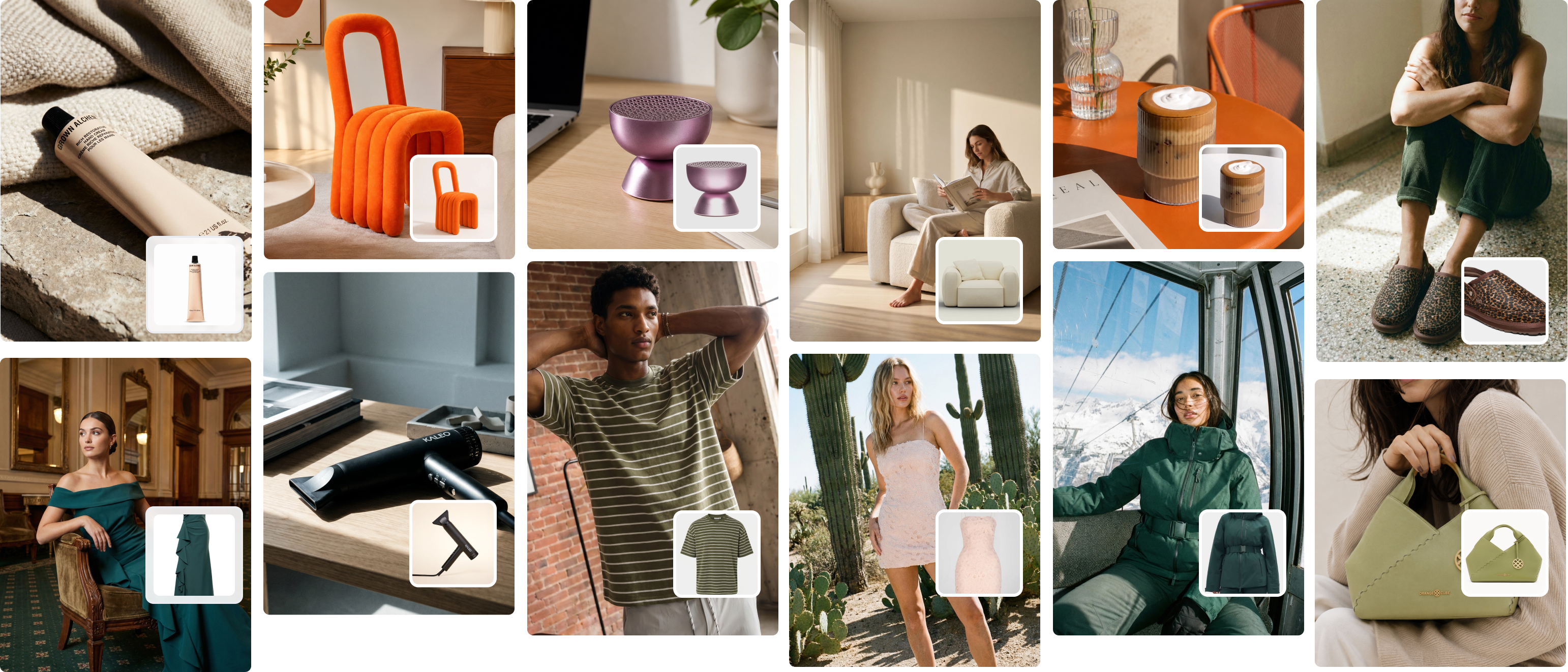
AI tools like Picjam introduce a powerful third option that completely changes the game on cost, speed, and quality. Instead of orchestrating a physical photoshoot, you just upload a basic image of your product — think a flat lay of a dress or a simple shot of a sweater on a mannequin.
From that one photo, you can generate an entire library of on-model images. You can pick from a diverse cast of AI models, test out different backgrounds, and play with various lighting setups in minutes. This model completely bypasses the enormous logistical and financial weight of a traditional shoot. No model fees, no studio rentals, and zero travel expenses.
This is a game-changer for brands that need to create content at scale. Imagine a global retailer needing localized campaigns for 10 different markets. Traditionally, that would mean 10 separate, incredibly expensive photoshoots. With Picjam, they could generate all those variations from just one set of product images, saving an immense amount of time and money.
AI vs. Traditional: A Quick Comparison
| Factor | Freelancer/Studio | AI Platform (Picjam) |
|---|---|---|
| Cost Model | Per-image, day rate, or project fee | Low, predictable subscription fee |
| Speed to Market | Days or weeks | Minutes |
| Scalability | Nearly infinite creative variations | Limited by budget and resources |
| Creative Control | High but requires management | High with instant adjustments |
Ultimately, the best choice hangs on your specific needs. But for any brand focused on growth, efficiency, and creative agility, AI offers a compelling way to sidestep the old bottlenecks and produce high-quality content for a fraction of the cost.
The Iceberg of Photoshoot Expenses
That per-image quote you just got? It's only the starting point. To get a real handle on your product photography cost, you have to look past that initial number and factor in all the easily overlooked expenses that make budgets spiral.
A simple quote rarely tells the whole story. It's a bit like buying a house; the list price is one thing, but the property taxes, insurance, and surprise maintenance bills are where the real costs start to pile up. A photoshoot works the exact same way. That price per image is just the down payment.
A Breakdown of Hidden Costs
What you see in a proposal is often just the tip of the iceberg. Underneath, a dozen other line items are waiting to pop up on your final invoice. These so-called "hidden" costs are standard in traditional production, but they frequently catch brands off guard, turning a manageable project into a major financial headache.
Here's a quick checklist of the expenses that most often get missed:
- Model Sourcing and Fees: Finding and hiring professional models can run anywhere from $100 to $500+ per hour, for each model. On top of that, you have agency fees and usage rights for ad campaigns, which add another layer of expense.
- Stylist and Assistant Wages: A great stylist is non-negotiable for making your products shine, but their day rates can range from $500 to over $2,000. You'll also need to budget for photo assistants who help manage lighting and equipment.
- Prop and Wardrobe Sourcing: If you're trying to create a specific mood or lifestyle scene, you'll need props, furniture, and the right wardrobe pieces. This can easily tack on hundreds or even thousands of dollars, depending on how ambitious your concept is.
- Location or Studio Rental: A professional studio can cost between $500 and $2,500 per day. Shooting on location? You'll also be dealing with permit fees, travel, and transportation costs. Our guide on equipment for studio photography digs into what goes into a full professional setup.
- Retouching and Post-Production: Basic edits are one thing, but the kind of extensive retouching needed for high-end campaigns is a significant cost in itself. This process can add $10 to $100+ per image. For a large catalog, that number can balloon into tens of thousands of dollars every year.
- Internal Team Coordination: Don't forget to account for your own team's time. The hours your people spend on planning, scheduling, shipping products, and managing the project are a real expense that hits your bottom line.
How Hidden Costs Reshape Your Budget
These extra expenses completely change the financial reality of a photoshoot. A 2022 McKinsey report noted that leading apparel companies create 2-3x more content than their peers, putting immense pressure on brands to create more, faster.
This pressure translates directly into higher costs. A mid-range shoot with styling might land you at $50–$150 per image, while premium lifestyle shots with models can easily soar past $250 per image. A simple shoot for 5 white-background images at $40 each totals $200. But switch that to 5 lifestyle shots at $375 each, and the cost jumps to $1,875 — scale that to just 25 images, and you could be looking at a $9,375 bill.
This is exactly where AI platforms like Picjam are creating a new path forward. By getting rid of nearly all these hidden variables — no models, no studios, no stylists — you can transform a complex, unpredictable expense into a simple, fixed cost. You can generate hundreds of on-brand scenes without worrying about the dozens of line items that drain traditional photography budgets, giving you complete control over your creative output and your spending.
How AI Can Cut Your Photography Costs by up to 80%
The conversation around AI's impact on content creation isn't just theory anymore — it's a budget line item. For fashion brands, the savings are especially stark, turning a messy, variable expense into a predictable, low fixed cost. The move from traditional photoshoots to AI-powered platforms is changing how brands even think about their product photography cost.
For a brand with a 500-SKU catalog, it's not unusual for the traditional photography budget to climb past $125,000 a year. With an AI subscription, you can get comparable (or frankly, better) results for just a few thousand dollars annually. This isn't a small trim; it's a completely different way to produce and budget for creative assets.
Wiping Out Entire Cost Categories
The biggest savings from AI don't come from negotiating better rates. They come from eliminating entire expense categories that have always been part of the deal. With a platform like Picjam, you simply stop paying for:
- Model Fees: Suddenly you have access to a massive cast of AI-generated models without worrying about hourly rates, agency fees, or thorny usage rights.
- Studio and Location Rentals: You can create any scene you can dream up — from a sterile white studio to a sun-drenched beach — without paying a dime for physical space.
- Stylists and Assistants: AI platforms take care of styling and composition digitally, which means you no longer need an on-set creative team to pull it all together.
- Travel and Logistics: Your products don't have to be shipped to a studio across the country. That means all the associated shipping and insurance costs just vanish.
This infographic gives you a quick visual of just how many hands are in the pot during a traditional photoshoot.

It's easy to see how quickly things like retouching, studio space, and coordination add up, often making the photographer's fee look like a minor expense.
Seeing the Financial Impact in Numbers
The numbers really speak for themselves. Recent analysis shows that AI alternatives are cutting product photography costs by 60-80% when stacked against old-school methods. For a mid-sized brand, this is a game-changer.
Let's look at a quick comparison for a brand with 500 SKUs, updating its imagery annually.
Cost Breakdown for a 500-SKU Brand: Traditional vs. AI
| Cost Item | Traditional Studio Shoot (Annual) | AI Platform (Annual) |
|---|---|---|
| Model Fees & Agency Costs | $30,000 | $0 |
| Studio & Location Rentals | $25,000 | $0 |
| Photography & Crew | $40,000 | $0 |
| Retouching & Post-Production | $25,000 | $0 |
| Logistics & Shipping | $5,000 | $0 |
| AI Platform Subscription | $0 | $1,200 |
| Total Estimated Cost | $125,000 | $1,200 |
This isn't an exaggeration. An annual spend that could easily hit $125,000–$250,000 can drop to just $600–$1,200 with an AI subscription.
A big reason for these savings is the death of massive variable costs. A brand could literally save an estimated $330,000 on retouching, $25,000 on studio fees, and nearly $4,000 on logistics each year by adopting an AI-first workflow.
This shift delivers a pretty incredible return on investment. The money saved can go straight into areas that actually move the needle, like performance marketing, product development, or opening up new markets. For brands with large physical product catalogs, the same principle applies — replacing expensive traditional shoots with AI-generated imagery is delivering dramatic cost savings across industries.
A New Kind of Creative Freedom
Beyond the direct savings, AI gives you a level of creative flexibility that was just too expensive to even consider before. Imagine this: you take a single flat-lay photo of a new dress and instantly generate hundreds of on-model versions.
You can A/B test ad creatives with different models, backgrounds, and styles to see what actually connects with your audience — all without a single reshoot. This lets brands react to trends in real-time and fine-tune campaigns for the best possible performance. We dive deeper into how brands are using these new tools in our guide to AI product photography.
At the end of the day, the lower product photography cost is just one piece of the puzzle. AI is building a more efficient, nimble, and financially sane model for content creation that helps brands grow faster and work smarter.
Building a Practical Photography Budget for Your Brand
Budgeting for photography isn't about pinching pennies — it's about being smart with your money. For a fashion brand, your photography budget isn't just a line item; it's the engine that creates the content you need to actually sell your products. To do it right, you have to think beyond a simple "cost per image."
A solid budget helps you squeeze the most impact out of every dollar. It's a balancing act, really. You need those jaw-dropping hero shots for your campaigns, but you also need a mountain of content for product pages, social media, and ads. The goal is to get all the visuals you need without the product photography cost completely swallowing your marketing funds.
Start by Defining Your Content Needs
Before you can even think about numbers, you need to take inventory of exactly what you need to create. Different channels have different appetites for content, and each comes with its own price tag. The best budgets always start with a detailed list.
Map out every single place a customer will see your product:
- Product Detail Pages (PDPs): These are the workhorses of your e-commerce store. You'll need clean, consistent on-model shots or flat lays that show every angle, detail, and color for every SKU.
- Social Media Content: Instagram, TikTok, and Pinterest demand a constant flow of fresh visuals. We're talking lifestyle shots, behind-the-scenes glimpses, and even images that mimic user-generated content.
- Paid Advertising: Your ads have one job: stop the scroll. This often means testing dozens of different images to see what works, which gets incredibly expensive with traditional photoshoots.
- Campaign and Hero Images: These are your big-ticket, high-impact shots. They're destined for your homepage, lookbooks, and major marketing campaigns. They set the tone for your brand but are almost always the most expensive to produce.
Once you have this list, you'll start to see exactly where your biggest content gaps — and your biggest costs — are hiding.
Calculate Your True Cost Per SKU
Your real cost is so much more than what the photographer bills you. It's the total investment it takes to get one product fully represented across every channel. When you calculate this on a per-SKU basis, you get a sobering look at the true financial weight of your content strategy.
Let's take a single new dress as an example. It might require:
- 5 white-background PDP shots.
- 3 on-model lifestyle photos for Instagram.
- 4 different ad creatives for A/B testing.
With traditional photography, that's 12 separate images, and you're paying for each one. If your average cost per image is $75, that's a $900 bill for just one SKU — and that's before you even get to hidden costs like studio time or model fees. Now, multiply that by your entire collection.
A brand launching 100 new SKUs for the season could easily be looking at a $90,000 bill just to get its products shot and online. This math makes it crystal clear why a hybrid approach — mixing traditional and AI photography — is becoming a game-changer.
Build a Hybrid Model for Maximum ROI
The smartest brands aren't choosing one method over another; they're using the right tool for the right job. A hybrid model gives you the best of both worlds: the artistic direction of a traditional photoshoot for your key moments, and the unmatched speed and scale of AI for everything else.
Here's how that works in practice:
- Invest in a Small, High-Impact Traditional Shoot: Set aside a part of your budget for a professional photographer to create your main seasonal campaign. These are your hero images, the ones that define your brand's entire vibe for the season.
- Use AI to Scale and Adapt: Now, take those amazing hero shots and your basic product photos and feed them into a tool like Picjam. You can instantly turn a single flat lay into hundreds of on-model PDP shots, social media posts, and ad variations for testing.
This completely transforms your budget. The upfront product photography cost of that traditional shoot becomes an investment in a creative foundation. Then, a low-cost AI subscription takes over to handle the high-volume, day-to-day execution.
When you frame it this way, the conversation shifts from "how can we cut costs?" to "how can we invest smarter?" AI doesn't just save you money; it gives you the creative agility and speed-to-market that modern fashion brands absolutely need to stay competitive.
Takeaway: 3 Steps to Lower Your Photography Costs Now
Alright, let's get down to business. You now have a much clearer picture of what goes into product photography cost, and that's the first real step toward getting it under control. This is how you shift from just reacting to invoices to building a strategic content plan that actually drives growth.
So, what do you do right now? Here are the immediate, practical steps to take everything we've talked about and put it into action. The goal here is simple: stop just paying for photos and start investing in a content engine that works smarter, not harder.
1. Audit Your True Photography Spend
Before you can fix your budget, you need to know where the money is really going. It's time to look past the per-image quotes and do a proper audit of your last few photoshoots.
Pull together all the receipts and invoices. Your audit needs to cover:
- Direct Costs: The obvious stuff — photographer fees, studio rentals, and model payments.
- Hidden Costs: This is where it gets interesting. Add up the stylist fees, prop sourcing, shipping, insurance, and every dollar spent on retouching.
- Internal Costs: Don't forget the value of your team's time. How many hours did they sink into planning, coordinating, and managing the whole project?
Once you have that total, divide it by the number of final images you got. That's your true cost per image. I guarantee it's a lot higher than you think.
2. Identify Your Best AI Opportunities
Here's the thing: not every piece of content needs a full-blown, traditional photoshoot. Go back to that content map you worked on and look for the low-hanging fruit. Where are the high-volume, fast-turnaround assets that are a perfect fit for AI generation?
Usually, this means your PDP images, endless social media variations, and all those creatives you need for A/B testing ads. Taking a hybrid approach lets you save the big-budget shoots for high-impact hero campaigns, while AI handles the day-to-day grind at a fraction of the cost.
3. See the Savings for Yourself
The last step is to model the financial impact. This is where theory gets real. A savings calculator is a great way to visualize the difference between what you're spending now and what a platform-based approach could look like.
Here's a peek at the Picjam savings calculator, which is built to help brands plug in their current numbers and see the potential savings instantly.
By putting in your own numbers, you get a clear, data-backed estimate of your potential ROI. It makes building a business case for a smarter, more scalable content strategy a whole lot easier.
Ready to see how your own numbers stack up? Use our savings calculator to compare your current product photography cost against Picjam's AI-powered solution and find out just how much you could be saving.
Frequently Asked Questions
Let's tackle the questions that always come up when we talk about product photography budgets. With new tech changing the game, it's easy to get tangled up in the details. Here are the most common questions we hear from brands trying to budget for content.
What Is a Reasonable Price for Product Photography?
Honestly, a "reasonable" price is all over the map and depends entirely on what you're shooting. For your standard, clean white background shots, you're typically looking at $25–$75 per image from a good freelancer or studio.
But if you need styled lifestyle photos with models and a specific vibe, that cost can jump to $100–$500+ per image in a heartbeat. The real shift today, though, is how we think about efficiency. AI platforms like Picjam are introducing a totally different cost structure. A single subscription can get you thousands of image variations, bringing your effective cost well below $1 per image. For brands needing a ton of content, it's becoming the most logical option.
How Do I Calculate Product Photography Costs for a Budget?
To figure out your real cost, you have to look past the per-image price tag. First, add up all the potential line items for a traditional shoot.
- The photographer's base fee
- Sourcing and paying for models
- Studio or location rental costs
- Hiring a stylist or assistants
- Your budget for props and wardrobe
- All the post-production and retouching work
Once you have that grand total, divide it by the final number of images you get back. That's your true cost per image. On the flip side, an AI solution gives you a predictable monthly or annual fee. You just divide that number by how many assets you create to get a clean, simple ROI.
Can AI Really Replace a Professional Photographer?
AI isn't here to replace photographers; it's here to augment what they do. Think of it as a new tool in the toolbox. For the high-volume stuff — product detail page (PDP) images, daily social media posts, and endless ad variations — AI can generate studio-quality photos much faster and at a fraction of the cost.
The smartest brands we see are using a hybrid approach. They'll still hire a top-tier photographer for their flagship campaign to set the brand's creative vision. Then, they use an AI tool like Picjam to scale that vision into the hundreds of different shots they need for every single digital channel. It's efficient, affordable, and keeps the brand looking consistent.
Is AI-Generated Photography High Enough Quality for My Brand?
Yes. We're not talking about the weird, experimental AI images from a few years ago. Today's AI platforms are built from the ground up to produce high-resolution, commercially-ready photos that are often indistinguishable from traditional studio work.
These tools give you incredible control over lighting, shadows, composition, and even the appearance of the models. This means every image can be tweaked to align perfectly with your brand's look and feel. The technology is mature and now delivers the professional quality that leading e-commerce and fashion brands demand.

Picjam team
The Picjam team blends AI, product, and creative expertise to eliminate the cost and delay of traditional photography for modern eCommerce brands.