10 Strategic Props for Pictures Ideas That Drive Fashion Sales in 2026
Elevate your photos with these 10 props for pictures ideas used by top brands. Discover actionable insights to create scroll-stopping fashion content.
How to start saving money
Lorem ipsum dolor sit amet, consectetur adipiscing elit lobortis arcu enim urna adipiscing praesent velit viverra sit semper lorem eu cursus vel hendrerit elementum morbi curabitur etiam nibh justo, lorem aliquet donec sed sit mi dignissim at ante massa mattis.
- Neque sodales ut etiam sit amet nisl purus non tellus orci ac auctor
- Adipiscing elit ut aliquam purus sit amet viverra suspendisse potent i
- Mauris commodo quis imperdiet massa tincidunt nunc pulvinar
- Adipiscing elit ut aliquam purus sit amet viverra suspendisse potenti
Why it is important to start saving
Vitae congue eu consequat ac felis placerat vestibulum lectus mauris ultrices cursus sit amet dictum sit amet justo donec enim diam porttitor lacus luctus accumsan tortor posuere praesent tristique magna sit amet purus gravida quis blandit turpis.

How much money should I save?
At risus viverra adipiscing at in tellus integer feugiat nisl pretium fusce id velit ut tortor sagittis orci a scelerisque purus semper eget at lectus urna duis convallis. porta nibh venenatis cras sed felis eget neque laoreet suspendisse interdum consectetur libero id faucibus nisl donec pretium vulputate sapien nec sagittis aliquam nunc lobortis mattis aliquam faucibus purus in.
- Neque sodales ut etiam sit amet nisl purus non tellus orci ac auctor dolor sit amet
- Adipiscing elit ut aliquam purus sit amet viverra suspendisse potenti
- Mauris commodo quis imperdiet massa tincidunt nunc pulvinar
- Adipiscing elit ut aliquam purus sit amet viverra suspendisse potenti
What percentage of my income should go to savings?
Nisi quis eleifend quam adipiscing vitae aliquet bibendum enim facilisis gravida neque. Velit euismod in pellentesque massa placerat volutpat lacus laoreet non curabitur gravida odio aenean sed adipiscing diam donec adipiscing tristique risus. amet est placerat imperdiet sed euismod nisi.
“Nisi quis eleifend quam adipiscing vitae aliquet bibendum enim facilisis gravida neque velit euismod in pellentesque massa placerat”
Do you have any comments? Share them with us on social media
Urna ut fermentum imperdiet lacus, elementum etiam maecenas libero nunc, suspendisse massa, nisl, elit curabitur feugiat in quis ut nibh enim in tristique aliquam sed vitae dui, dis adipiscing pharetra aliquam turpis turpis nibh rhoncus enim, pellentesque leo laoreet neque in sed bibendum fermentum suspendisse tempus non purus adipiscing suscipit fringilla adipiscing convallis dolor nulla fermentum facilisis ullamcorper ut vehicula tortor libero metus donec velit, tristique fermentum, dictum euismod diam scelerisque enim non pharetra tristique lectus habitant pharetra est id
When Zara's creative team tested AI-generated background props, they found images with subtle lifestyle cues — a coffee cup or a stack of books — increased add-to-cart rates by nearly 12%. This highlights a critical e-commerce truth: customers don't just buy a product; they buy an aesthetic. Strategic props for pictures ideas are no longer just set dressing; they are powerful tools for storytelling, context, and conversion.
In a crowded digital marketplace, the right prop can differentiate a simple garment from a must-have piece, transforming a standard product shot into an aspirational image.
Platforms like Picjam empower brands to test hundreds of prop combinations in minutes, transforming content production from a costly logistical challenge into a streamlined, data-driven creative process. This guide breaks down 10 categories of props that successful fashion brands use to elevate their visuals, complete with actionable insights for your own campaigns.
1. How Lifestyle Backgrounds Create an Emotional Connection
Placing your apparel in a believable, aspirational context is one of the most effective ways to build an emotional connection with your audience. Lifestyle props create a scene — a cozy home office, a bustling urban street, or a serene beach.
These props for pictures ideas aren't just about adding an object; they're about creating a story that helps customers visualize how an item fits into their own lives.
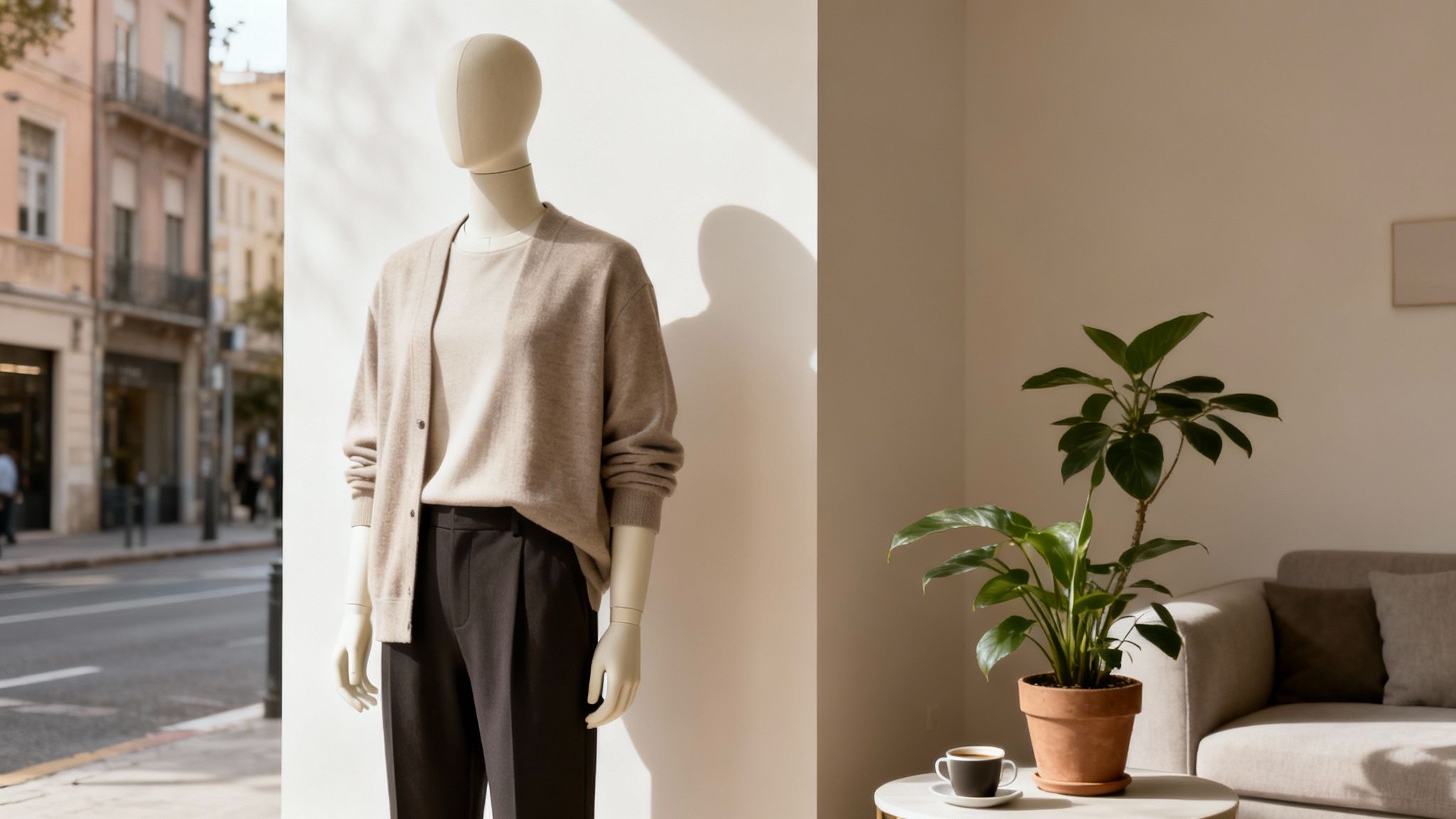
Brands like Everlane excel at this by using minimalist home settings to reinforce their clean aesthetic. Historically, achieving this required expensive location scouting. Today, AI allows brands to generate countless photorealistic lifestyle backgrounds, testing different scenarios to see what converts best — a massive savings in both time and budget. For an in-depth look, explore how to create compelling AI lifestyle photos that resonate with shoppers.
Actionable Tips for Implementation:
- Balance Complexity: Use a simple, clean background for a highly detailed garment. A busy background works better for solid, minimalist apparel to avoid visual clutter.
- Maintain Brand Cohesion: Ensure your chosen environments share a consistent color palette and aesthetic that aligns with your brand identity across all product photos.
- Test and Optimize: Create multiple lifestyle scenes for the same product — such as a home, an office, and a café setting — and use A/B testing to identify which context drives sales.
2. Drive Higher Order Values With Coordinated Styling Props
Beyond the background, building a complete, shoppable look is crucial. Color-coordinated styling props — accessories, footwear, and complementary garments — transform a single product into a full outfit story.
This technique helps customers visualize how to wear the featured item, demonstrating its versatility and inspiring them to purchase multiple pieces.
Fashion brands like J.Crew and Madewell masterfully use this approach by presenting complete, styled looks. Traditionally, sourcing and styling these additional props required a significant inventory and budget. Today, brands can digitally add complementary accessories, testing countless combinations to see which outfits resonate most without the physical overhead. This AI-driven styling allows for endless experimentation at a fraction of the cost.
Actionable Tips for Implementation:
- Apply the 70/30 Rule: Ensure the primary garment remains the hero by dedicating 70% of the visual focus to it, while coordinated props make up the remaining 30%.
- Create Prop "Kits": For new collections, assemble digital "kits" of cohesive accessories (e.g., a set of summer sandals, tote bags, and sunglasses) to streamline content creation.
- Test Styling Combinations: Use A/B testing on your product pages to see which styled outfits convert better. Test a sweater with jeans versus the same sweater with a skirt.
3. Reduce Returns by Showing Accurate Size and Scale
One of the biggest hurdles in online sales is the customer's inability to judge an item's size. Scale reference props address this by placing objects of known dimensions alongside garments, giving shoppers a tangible sense of scale.
This simple addition builds confidence and can significantly reduce size-related returns, which McKinsey reports can cost retailers up to 66% of an item's original price.
A hand placed in a pocket, a standard-sized phone next to a clutch, or even a simple measuring tape in a flat lay can provide invaluable information. These props contextualize everything from the width of a pant leg to the size of a handbag. This approach ensures customers feel informed and empowered, making them more likely to complete a purchase with certainty.
Actionable Tips for Implementation:
- Use Recognizable Objects: Choose consistent and universally understood reference items, such as a credit card for a wallet or a smartphone for a bag.
- Integrate Naturally: Position the reference prop so it looks like a natural part of the scene. A hand slipping into a glove feels more organic than a ruler laid next to it.
- Combine with Data: Supplement visual scale references with detailed size charts and fit guides. Use both close-up shots with the prop and full-garment views for context.
4. Communicate Premium Quality With Texture Close-Ups
Communicating the tactile quality of a garment through a digital screen is a major challenge. Texture and fabric close-up props are specialized tools and techniques used to capture the intricate details of a material — its weave, stitching, and finish.
By using props like magnifying glasses or specialized macro lenses with controlled lighting, you can create images that convey premium quality and justify a higher price point.
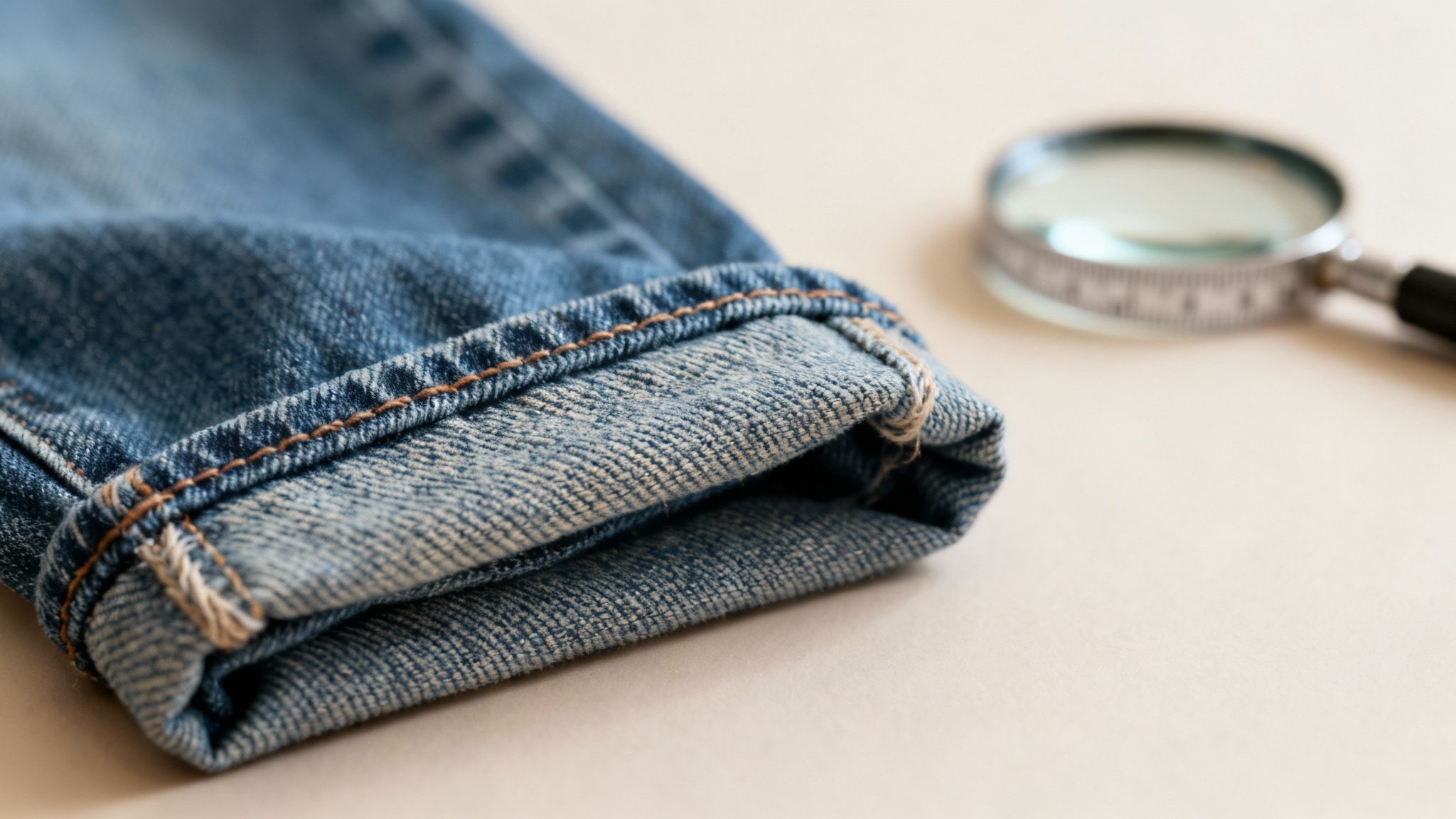
Brands like Patagonia and Allbirds use detailed fabric shots to highlight the high-performance materials central to their brand story. These close-ups act as a "digital swatch," giving customers purchasing confidence. Creating these shots traditionally requires dedicated studio time, but modern AI tools can now generate hyper-realistic detail shots, allowing brands to showcase material quality without the logistical overhead.
Actionable Tips for Implementation:
- Use Directional Lighting: Position a single, strong light source at an angle to the fabric. This creates small shadows that accentuate the texture of weaves and knits.
- Provide Full-Garment Context: Always pair a detailed macro shot with a standard photo of the full product. This helps customers connect the fine details to the overall look.
- Supplement with Information: Accompany your close-up images with specific details about the fabric composition, origin, or unique manufacturing process to reinforce the quality story.
5. Standardize Your Catalog With Human Pose References
While not a physical object, a well-defined pose is one of the most powerful props for pictures ideas, directly influencing how a garment’s fit, drape, and function are perceived.
Human pose references are positioning guides that ensure models — both real and AI-generated — adopt natural, flattering stances that effectively showcase apparel.
Brands like Uniqlo use a core set of simple, static poses to create a clean, uniform catalog that focuses attention on the product. Historically, directing models to achieve this consistency required significant time and expertise on set. Today, AI tools can apply predefined poses to virtual models with perfect accuracy, allowing brands to generate entire product catalogs with a cohesive look and feel, saving countless hours. Learn more about effective modeling techniques for a photoshoot that translate to AI generation.
Actionable Tips for Implementation:
- Develop a Pose Library: Create a core set of 3 to 5 signature poses that work across your primary product categories. Include a mix of static and gentle movement-based poses.
- Highlight Key Fit Areas: Select poses that specifically emphasize the garment's fit at crucial joints like the shoulders, waist, and hips. A hand-on-hip pose defines a waistline.
- Ensure Consistency: Use the exact same poses for different colorways of the same product to help customers compare options easily and make faster purchase decisions.
6. Drive Timely Purchases Using Seasonal Props
Placing apparel in a seasonal setting helps customers visualize when and how they would wear an item, making it an essential tactic for driving timely purchases.
Seasonal props — like autumn leaves, subtle holiday decor, or beach accessories — connect your products to specific times of the year and relevant life moments.
Brands like J.Crew and H&M master this by building entire lookbooks around seasonal themes. Traditionally, this required sourcing physical props and coordinating expensive seasonal shoots months in advance. Today, AI allows brands to generate these environments on-demand, creating endless contextual backdrops to test which seasonal themes resonate most with their audience without the logistical overhead.
Actionable Tips for Implementation:
- Plan Ahead: Align your photoshoots with the retail calendar by planning seasonal content 6 to 8 weeks in advance to ensure timely campaign launches.
- Subtlety is Key: Use subtle seasonal cues, like a pumpkin spice latte for fall, rather than overt decorations that can date the image quickly.
- Create Modular Scenes: Develop a set of versatile seasonal props and backgrounds that can be mixed and matched across different product collections.
7. Elevate Perceived Value With Lighting Modifiers
Lighting is more than just illumination; it's a powerful prop that sculpts fabric, creates mood, and guides the viewer's eye. Lighting props like softboxes, reflectors, and colored gels are essential tools for controlling how light interacts with apparel.
By strategically shaping light, you can emphasize texture, create depth, and convey a distinct brand aesthetic, transforming a flat product image into a dynamic photograph.
Luxury brands often use stark, high-contrast lighting to create a dramatic, sophisticated mood. In contrast, fast-fashion retailers use bright, even lighting to showcase products clearly. For powerful and versatile illumination, consider integrating tools like par can lighting to shape your environment. Mastering these props allows you to create visual consistency and elevate your product storytelling.
Actionable Tips for Implementation:
- Create Lighting Templates: Develop specific lighting setups for different product categories (e.g., soft, diffused light for knitwear vs. hard, direct light for denim) to maintain consistency.
- Master the Three-Point Standard: Use a key light (main light), fill light (to soften shadows), and backlight (to separate the product from the background) for professional results.
- Control Shadows with Reflectors: Use simple white or silver reflectors to bounce light back onto the product, softening harsh shadows under collars or sleeves.
8. Boost Social Engagement With Flat-Lay Compositions
Flat-lay photography, a top-down perspective that showcases an entire outfit, is a dominant format on social media and e-commerce platforms.
The success of this style hinges on carefully chosen props where background elements and complementary items build a narrative. These props are compositional tools that create context and guide the viewer's eye.
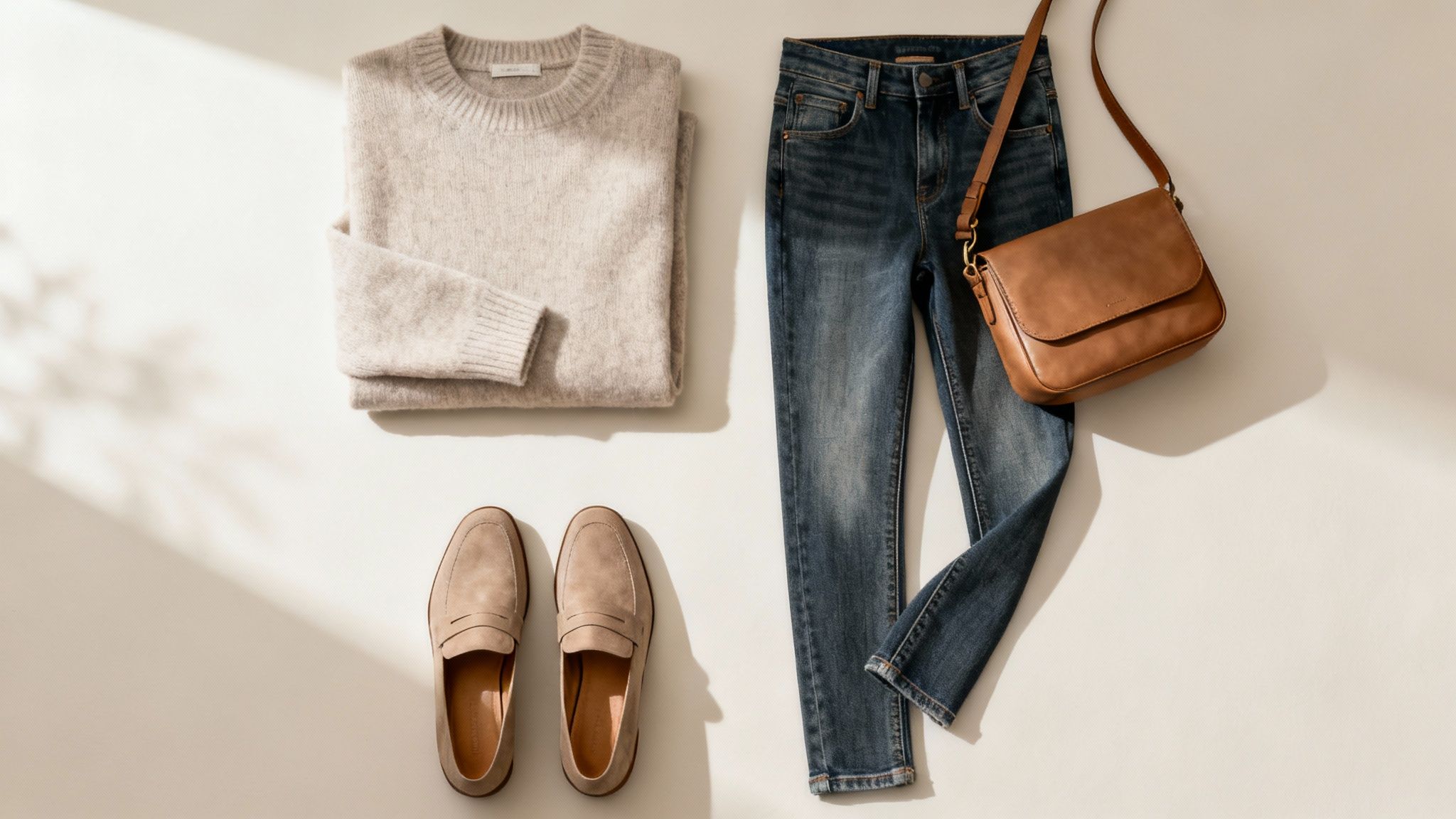
Popularized by fashion influencers, flat-lays transform products into an aspirational lifestyle snapshot. This technique traditionally requires extensive time for styling each shot. Today, brands can generate high-quality, perfectly styled flat-lays using AI, testing various prop combinations and layouts to see what resonates most without the manual effort. For a deeper guide, you can find more information about effective flat-lay photography.
Actionable Tips for Implementation:
- Follow the Rule of Odds: Group props in odd numbers, such as 3 or 5, as these arrangements are often more visually appealing and dynamic than even-numbered groupings.
- Create Depth and Movement: Layer items slightly, such as tucking a corner of a wallet under a pair of jeans, to add dimension and prevent the composition from looking static.
- Maintain Background Simplicity: Choose a neutral, non-distracting background like wood, marble, or a solid color mat to ensure the apparel remains the focal point.
9. Reduce Purchase Friction Using Digital Props
Not all props need to be physical. Digital props are graphical elements, overlays, and text added during post-production to communicate key information directly on the image.
This technique transforms a standard product photo into an information-rich asset, providing customers with details like sizing, materials, or special offers at a glance.
Brands selling on competitive marketplaces like Amazon and Etsy use digital props to stand out. An overlay highlighting "100% Organic Cotton" or a badge indicating "Bestseller" can instantly capture attention. This approach merges the visual appeal of a lifestyle photo with the clarity of a product specification sheet, creating a highly effective sales tool without the cost of physical prop sourcing.
Actionable Tips for Implementation:
- Establish a Design System: Use consistent fonts, colors, and icon styles for all digital props to maintain a cohesive and professional brand image.
- Prioritize Clarity Over Clutter: Position overlays and text strategically so they don't obscure important details of the garment. The prop should enhance, not hide, the product.
- Optimize for All Devices: Test your designs on both mobile and desktop views to ensure text is legible and overlays are properly aligned on every screen size.
10. Build Deeper Loyalty With Brand Storytelling Props
Props can do more than just style a scene; they can tell your brand’s entire story. Brand and storytelling props are carefully selected items that visually communicate your values, heritage, or mission.
These thematic elements create an emotional connection by showing customers what you stand for, transforming a product photo into a piece of your brand’s narrative.
Brands like Patagonia effectively use props that evoke environmental activism and durability. In the past, conveying these narratives required complex photoshoots. Today, brands can generate scenes with custom storytelling props using AI, allowing them to test which narratives best connect with their audience without the logistical overhead. This approach builds authenticity and trust.
Actionable Tips for Implementation:
- Ensure Authenticity: The props you choose must genuinely reflect your brand’s practices. If you highlight sustainability, use props that represent actual materials you employ.
- Maintain Visual Consistency: Use a consistent visual language across all storytelling images to build a cohesive brand narrative on your website and social media.
- Combine Product with Narrative: Feature your apparel prominently alongside the storytelling props to create a balanced, compelling composition.
The Takeaway
The right props for pictures ideas are more than just background decoration; they are strategic assets that can drive sales, reduce returns, and build a stronger brand identity. Here are 3 actionable learnings for your brand.
1. Prioritize Context Over Clutter: The best props support the product’s story without stealing the spotlight. For your next shoot, challenge yourself to use 50% fewer props. Focus on high-impact items that reinforce your brand identity and provide contextual value, like a specific type of furniture or a color-coordinated accessory that highlights a product feature.
2. Use Props to Reduce Returns: According to Shopify, a leading cause of returns is the product not matching customer expectations. Incorporate simple scale-reference props — such as a hand holding a purse or a smartphone next to a wallet — to give customers an accurate sense of size. This simple step can significantly boost buyer confidence.
3. Leverage AI to Scale Creative Testing Affordably: Sourcing and shooting dozens of prop variations is expensive. AI-driven platforms like Picjam allow you to generate hundreds of high-quality, on-brand lifestyle images in minutes. You can A/B test a new handbag against a Parisian cafe backdrop versus a minimalist studio setting without leaving your office, turning creative ideation into a data-backed process that slashes production costs.
Ready to see how AI can transform your content production? Use the Picjam savings calculator to compare your current photography expenses and discover how much you can save.

Picjam team
The Picjam team blends AI, product, and creative expertise to eliminate the cost and delay of traditional photography for modern eCommerce brands.