How to Optimize Etsy Listings and Cut Your Content Costs
Discover how to optimize Etsy listings for your fashion brand. Our guide covers SEO, photography, and conversion strategies to boost visibility and sales.
When sustainable fashion brand Christy Dawn names a new product, they balance a romantic brand voice with searchable terms like “farm-to-closet floral maxi dress.” This strategy is key to how to optimize Etsy listings — a data-backed approach that gets your fashion and apparel in front of the right shoppers.
It’s a straightforward method: figure out what your buyers are searching for, use their exact words, and pair them with images they can't help but click. This turns casual browsers into loyal fans.
Find High-Intent Buyers with Smart Keyword Research

Before you think about photos or copy, you need to nail your keywords. This is the language your customers speak, and getting it right is the difference between page one and page 10.
For apparel brands, this means going deeper than generic terms. Think about the difference between a shopper looking for a "shirt" versus one searching for a "vintage oversized band tee."
The first person is browsing; the second knows exactly what they want. Your job is to capture that person.
Use Long-Tail Keywords to Find Your Niche
Long-tail keywords — those longer, super-specific search phrases — are your secret weapon. They might get fewer searches, but the people using them are much more likely to buy.
Take a minimalist apparel shop like Linenfox. They don’t just target "dress." They target "natural linen wrap dress" or "sustainable minimalist clothing," which speaks to a specific taste.
Etsy’s search algorithm is about making the perfect match. When you use specific, long-tail keywords, you're telling the algorithm, "Hey, my product is the perfect fit for this very specific search."
To find these golden keywords, you can't just guess. You need the right tools. Platforms like Marmalead and eRank are non-negotiable for serious Etsy sellers. They give you data on search volume, competition, and engagement.
How AI Can Cut Your Keyword Research Time by 90%
Manually researching keywords for hundreds of styles takes forever. This is where AI shines, turning hours of tedious work into a few minutes of smart strategy.
Instead of drowning in spreadsheets, you can use AI platforms like Picjam to analyze product images and instantly get SEO-friendly keyword suggestions. It looks at a garment's style, color, and pattern.
For example, upload a photo of a floral maxi dress and get back ideas like:
- Boho floral maxi dress
- Cottagecore summer sundress
- Long sleeve wedding guest dress
- Romantic floral print gown
This not only saves a massive amount of time but also ensures your photos and keywords tell the same story. While Etsy has its own quirks, understanding foundational SEO knowledge and keyword research principles will give you a major leg up. Many of these tactics work across platforms; seeing how to increase Amazon sales can spark ideas for your Etsy shop.
Write High-Converting Titles That Capture Clicks
Once you've got your keyword list, you need to weave those words into titles and tags that get clicks. Your title is the first thing a shopper sees. Get it right, and you’ll stand out.
The structure of your title is everything, especially when you consider that 66% of Etsy traffic comes from mobile, according to Statista. On a tiny phone screen, titles get cut off.
That means your most important, descriptive keywords have to be right at the beginning. A shopper should know exactly what you're selling from the first few words.
The Anatomy of a Perfect Etsy Title
Think of your title less like a sentence and more like a string of mini-phrases. Weak, generic titles like "Nice T-Shirt" are a complete waste of digital real estate.
A powerful title is packed with information, answering a shopper's questions about style, material, and fit before they even have to ask.
To show you what I mean, let’s look at how a weak title can be transformed into an SEO powerhouse.
Title Optimization From Weak to Strong
Here’s a breakdown of how to build a title that works hard for you, using the example of a simple graphic tee.
The optimized version — "Vintage Graphic Tee, Retro Band T-Shirt, Oversized Cotton Concert Shirt for Women, Gift for Music Lover" — tells a complete story within the 140-character limit.
Use All 13 Tags to Maximize Your Reach
Tags are your secret weapon. Etsy gives you 13 of them, and using every single one is non-negotiable. Think of each tag as another chance to show up in a search.
Your strategy here should be to cast a wide net by mixing broad and niche keywords.
- Broad Keywords: These are your general, high-volume terms like "Graphic Tee" or "Womens Shirt."
- Niche Keywords: These are the super-specific, long-tail phrases you found. Think "Indie Band Merch" or "70s Rock and Roll Shirt."
- Synonyms and Variations: Cover your bases by including variations like "T Shirt" and "Tee."
A brand that nails this is Christy Dawn. Their product naming is a masterclass in balancing brand voice with searchability. They’ll use a romantic name like "The Dawn Dress" but describe it with searchable terms in their marketing.
Elevate Your Listings with Scroll-Stopping Visuals
Keywords might bring a shopper to your listing, but your photography is what convinces them to click "add to cart." On a platform as visually crowded as Etsy, scroll-stopping photos aren't just a nice-to-have; they're an absolute must.
High-quality images directly pump up your click-through rates and visibility. Etsy’s algorithm pays close attention to how shoppers interact with your listings — tracking clicks, favorites, and purchases — to assign a "listing quality score."
When the algorithm shifted to focus more on this shopper behavior, many sellers who leveled up their visuals saw traffic boosts of 30-50%.
The process of refining your visuals is a lot like optimizing your titles. You take something weak and, with a bit of strategy, make it powerful.
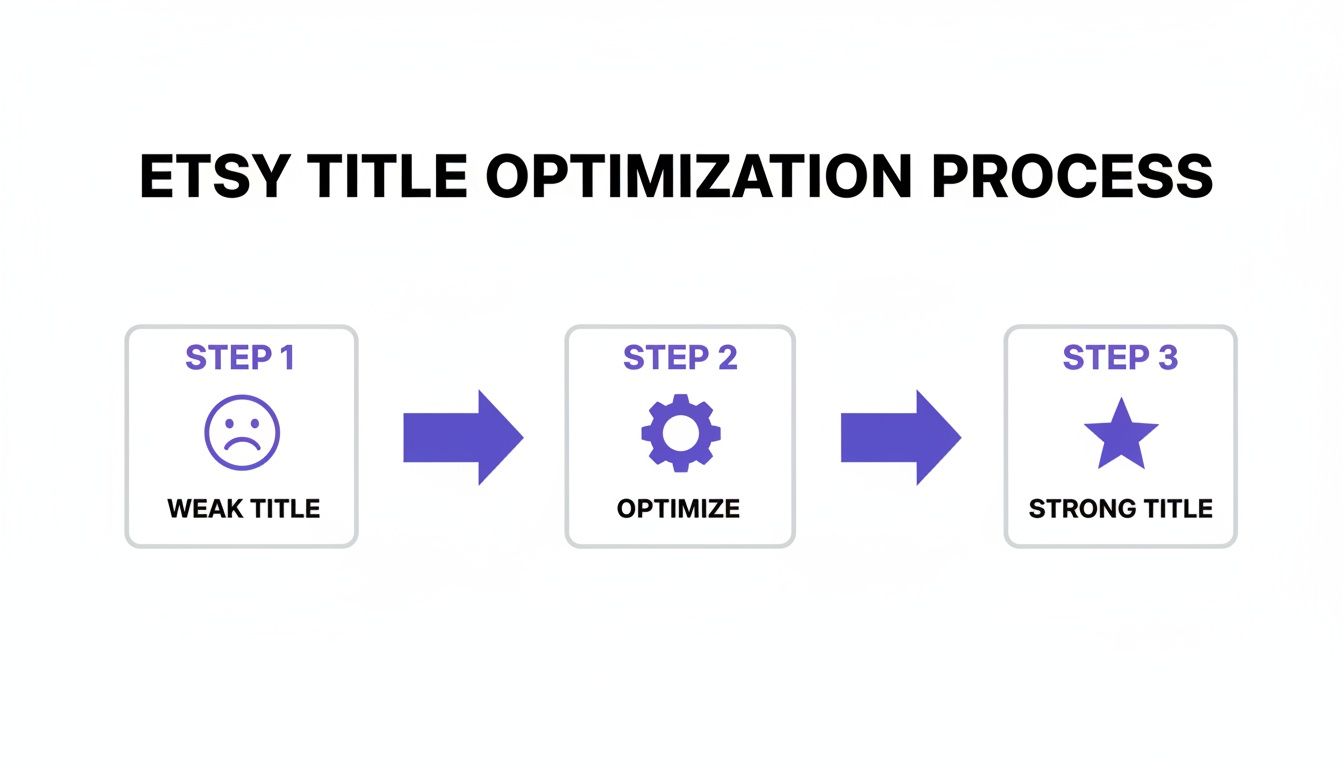
Just as you'd swap generic words for descriptive keywords, you need to swap generic photos for a compelling visual story that grabs the right person's attention.
The Essential Shots Every Fashion Listing Needs
To build trust and answer a buyer's questions, you need a strategic mix of photos. Each shot has a specific job to do.
- The Clean Studio Shot: This should be your main image. A crisp, well-lit photo of the garment on a simple background.
- The Lifestyle Image: Show your item in motion, styled in a real-world setting that resonates with your ideal customer’s vibe.
- Detailed Close-Ups: What makes your product special? Zoom in. Show off the texture of the fabric, a unique seam, or a high-quality zipper.
- The Size & Fit Reference: Help shoppers understand scale. A shot of the same item on a few different body types is gold.
For a small brand, pulling this off for every product can feel overwhelming and expensive. That’s where AI can be a game-changer.
How AI Can Cut Your Photography Costs by 75%
Imagine creating a full set of on-brand lifestyle photos without ever booking a studio or hiring a model. That's the power AI brings to the table.
Platforms like Picjam let you take one simple product photo and spin it into an entire campaign in just minutes.
Think about a boutique label like the size-inclusive brand ‘Sotela’. To photograph a new dress on 10 different models would normally require a massive investment. With AI, they could generate those on-model images from a single flat lay, saving thousands of dollars and weeks of time.
This isn't just about cutting costs. It's about giving your brand a visual identity that punches way above its weight.
“AI allows us to test what resonates with our audience without the risk of a four-figure photoshoot. We can swap backgrounds, models, and styles instantly, giving us data on what our customers actually want to see.” - Paraphrased insight from a boutique founder.
You can whip up dynamic videos from still images and make sure every single visual feels cohesive. It opens the door to experimenting with 3 easy tips for generating high-quality product photos without the traditional overhead.
Craft Product Descriptions That Close the Sale
Your photos got the click. Your title drew them in. Now, your product description has one job: to close the sale.
A great description is more than a list of features. It’s a conversation with your customer. You're telling a story and anticipating their questions.
In fashion, shoppers want to know how a fabric feels, how a dress drapes, and how a piece will fit into their life.
Just saying "100% cotton" is a missed opportunity. Instead, paint a picture: "Made from a soft, breathable 100% Pima cotton that feels incredible against your skin — perfect for all-day comfort."
This is your chance to build trust and manage expectations, which is a core part of learning how to optimize Etsy listings for long-term success.
Start with a Compelling Hook
Those first one or two sentences are your most valuable real estate, especially on mobile. You need an opening line that grabs their attention and captures the product's vibe.
Don't lead with a dry list of materials. Start with the benefit, the feeling, the why.
For a flowy sundress, a brand like Reformation sells an emotion: "Your search for the perfect effortless summer dress ends here. The Juliette is designed to be flattering and easy, taking you from brunch to a sunset stroll."
Make Key Details Easy to Scan
Nobody wants to read a wall of text. After you've hooked them, break down essential info into scannable bullet points or short, punchy paragraphs.
Structure your details logically to answer common questions:
- Fit & Sizing: Be crystal clear. Provide measurements or a size chart. But also describe the fit — "Features a relaxed, oversized fit; we recommend sizing down for a more tailored look."
- Materials & Care: Get specific. Instead of "wool," say "100% Merino wool, known for its softness." And always include clear care instructions.
- Unique Features: What makes your item special? Call out those details! Is it the "hand-stitched embroidery," the "ethically sourced fabric," or the "deep, functional pockets"?
This structured approach also gives you more opportunities to weave in keywords without sounding like a robot.
Fill Out Every Single Attribute
This is one of the most overlooked yet powerful parts of Etsy SEO. The attributes section — where you select style, sleeve length, neckline, etc. — acts as a set of powerful search filters for buyers.
When a shopper filters for "bohemian" style dresses with "long sleeves," your listing will only show up if you've filled out those attributes.
Think of each attribute as another keyword tag that tells Etsy's algorithm exactly what your product is. Leaving these fields blank is like hiding your product from shoppers who are telling Etsy what they want to buy.
Win the Algorithm with Smart Pricing and Shipping
Getting your listing seen on Etsy goes way beyond the visible parts. The algorithm weighs the entire customer journey, making your pricing, shipping, and service powerful SEO tools.
Great photos and keywords get shoppers to the door, but your price and shipping policies convince them to buy.
According to McKinsey, a whopping 70% of US online shoppers now expect free shipping on every order. Etsy knows this and gives a noticeable ranking boost to sellers who offer it.
The Magic of the Free Shipping Guarantee
Offering a “free shipping guarantee” isn't just a customer perk; it’s a direct signal to the Etsy algorithm that you’re a serious, competitive seller.
Smart fashion brands, like the accessory shop Beaded Amulet, have mastered this by rolling the shipping cost into the item's price.
The shopper sees one clear, final price — no surprise fees at checkout. That removes one of the biggest reasons people abandon their carts.
Learning how to optimize Etsy listings means thinking about the entire path to purchase, and unexpected shipping costs are a notorious conversion killer.
The math is simple: figure out your average shipping cost and add it to your retail price. You protect your profit margins while gaining a competitive edge.
Price Your Fashion Items Strategically
Pricing your apparel is a delicate art. You’ve got to cover your material costs, your time, Etsy's fees, and still make a healthy profit. Start with market research.
Take a look at other successful shops in your niche. What are they charging for items of similar quality? This isn’t about a race to the bottom. It’s about understanding the market’s perceived value.
Remember, price sends a message. A higher price can signal premium materials and expert craftsmanship, which is what you want if you’re building a high-end fashion brand.
Your shop's reputation is a direct SEO factor. Etsy keeps a close eye on your customer service metrics, from how quickly you reply to messages to your average review score. A high score tells the algorithm your shop is trustworthy, earning you a better spot in search.
Customer Service Is an SEO Tool
Every message you answer, every positive review you earn — it all builds your shop's standing with Etsy. That positive feedback loop is something the algorithm is designed to reward.
That "Star Seller" badge isn't just for show. It’s a powerful trust signal for both shoppers and the search algorithm.
To get there, you need clear communication, transparent policies, and reliable fulfillment. It's worth exploring inventory optimization techniques to manage costs and ensure you always have bestsellers on hand.
A well-run shop with happy customers will always rank better in the long run. For a deeper dive, check out our guide on how to improve ecommerce conversion rates.
Use Data to Refine Your Listing Strategy

Getting a listing live is just the beginning. The real work comes from understanding what happens next. Optimizing your Etsy shop isn't a one-and-done task; it's a continuous cycle of testing, learning, and tweaking.
Your Etsy Stats dashboard is your command center. It’s easy to get overwhelmed by the numbers, but you only need to focus on a few key metrics to see what’s working.
Master Your Key Metrics
Don't get lost in vanity metrics. Zero in on the data that directly impacts your sales.
- Visits vs. Views: Views just tell you how many times your listings were seen. Visits, on the other hand, represent individual shoppers. A huge gap might mean your products are showing up, but your main photo and title aren't compelling enough to earn a click.
- Orders: The clearest indicator you have that a listing is a winner.
- Conversion Rate: The most powerful metric. Calculated as (Orders / Visits) x 100, it tells you what percentage of shoppers who land on your listing actually buy. According to recent eCommerce benchmarks, a "good" conversion rate is between 1% and 3%.
If you have a listing with tons of visits but a dismal conversion rate, you know your SEO is working. The problem is in the listing itself — the price, photos, or description is turning buyers away.
Run Simple A/B Tests to Find What Converts
The fastest way to improve your conversion rate is to stop guessing and start testing. "A/B testing" sounds technical, but on Etsy, it can be simple. The idea is to change just one variable at a time and see what happens.
Let's imagine a sustainable fashion brand like Noctu wants to test their product photos.
Test Idea: For their best-selling organic cotton pajama set, they could run a test for 30 days.
- Version A (Control): Use their standard, styled flat lay as the primary image.
- Version B (Test): Switch the primary image to a lifestyle shot of a model wearing the pajamas.
After a month, they can jump into their stats and compare conversion rates. Did the on-model shot lead to more sales? If it did, they now have hard data proving this style of photography resonates better.
This systematic approach is a core part of learning how to optimize Etsy listings for long-term growth.
This is also where AI can help you test faster without the cost. Instead of a new photoshoot for Version B, the brand could use Picjam to generate that on-model lifestyle shot in minutes, saving hundreds or even thousands on content creation.
Your Top Etsy Optimization Questions, Answered
Once you start digging into Etsy optimization, a few common questions always seem to pop up. Let's tackle the ones I hear most from fashion and apparel sellers.
How Often Should I Update My Listings?
This isn't something you need to obsess over daily. A quarterly health check is a great rhythm to get into. Hop into your Etsy Stats and look for listings with hardly any views or, worse, decent views but no sales.
Often, a stagnant listing just needs a quick refresh. Try swapping out the main photo, tweaking a few keywords, or rewriting your tags.
And for seasonal pieces? Think ahead. If you have a linen dress that’s perfect for summer, you’ll want to update its keywords 4-6 weeks before the warm weather hits. That's when early shoppers start searching.
Can I Use the Same Keywords Across Multiple Listings?
Yes, but you need to be smart about it. For very similar items, like the same graphic tee in five different colors, it’s fine to share core keywords like "oversized graphic tee."
The trick is to vary your long-tail keywords and tags for each one. This helps you capture different types of buyers.
For example, one t-shirt listing could target "vintage concert shirt," while another goes after "retro band merch gift." You're casting a wider net instead of having your products compete for the exact same niche search term.
One of the biggest mistakes sellers make is copy-pasting the exact same title and tags for all similar items. It feels efficient, but it's limiting your reach. A little keyword diversification goes a long way.
How Many Photos Are Enough for a Listing?
Simple answer: Use all 10 photo slots. Every single one. Your customer can’t hold the fabric or try on the fit, so your photos have to do all that work for them.
Your photo lineup should always include:
- A crisp, clean shot of the product on a simple background.
- Lifestyle photos showing the item being worn by a model.
- Close-up shots of the details — fabric texture, stitching, a unique button.
- A picture of your size chart or a shot that helps show scale.
Filling all 10 slots with unique, high-quality shots can feel like a massive chore. This is where a tool like Picjam can be a game-changer. It lets you generate a range of on-model lifestyle photos without the time and expense, making it easier to create a compelling visual story for every listing.
Takeaway
To elevate your Etsy shop, focus on these 3 actionable steps.
- Think Like a Buyer: Use long-tail keywords (3+ words) in your titles and tags that describe your item in detail. Use data from tools like Marmalead or eRank, not guesses.
- Elevate Visuals Affordably: A full suite of 10 photos — studio, lifestyle, and detail shots — builds buyer confidence. Use AI tools to generate high-quality on-model images to cut costs and production time.
- Focus on Conversion Rate: This single metric tells you how well your listings are performing. Run simple A/B tests on your photos and titles for low-converting, high-traffic listings to see what moves the needle.
Ready to see how much your brand could save on photography? Compare your current costs with Picjam’s savings calculator.

Picjam team
The Picjam team blends AI, product, and creative expertise to eliminate the cost and delay of traditional photography for modern eCommerce brands.