Lifestyle Product Photography: A Complete Guide for Fashion Brands in 2026
Learn what lifestyle product photography is, how much it costs, and how AI tools like Picjam are helping 1,200+ fashion brands generate on-model lifestyle images at scale — without expensive studio shoots.
Your product page has two jobs: show what the product looks like, and make someone want to own it. Standard packshots handle the first. Lifestyle product photography handles the second — and for fashion brands in 2026, it's increasingly non-negotiable.
As of 2026, lifestyle images placed alongside standard packshots lift conversion rates 15–30% over white-background-only listings. That data point keeps appearing across A/B tests run by brands in every category. The challenge: lifestyle photography has always been expensive, time-consuming, and hard to scale. This guide covers what it is, what it costs, and how modern fashion brands are solving the scale problem.
Table of contents
- What is lifestyle product photography?
- Lifestyle vs. standard product photography: what's the difference?
- Types of lifestyle photography for fashion brands
- How to plan and execute a lifestyle photoshoot
- The cost math: why lifestyle photography breaks at scale
- How Picjam generates lifestyle photos from your flat lays
- Frequently asked questions
- Bottom line
What is lifestyle product photography?
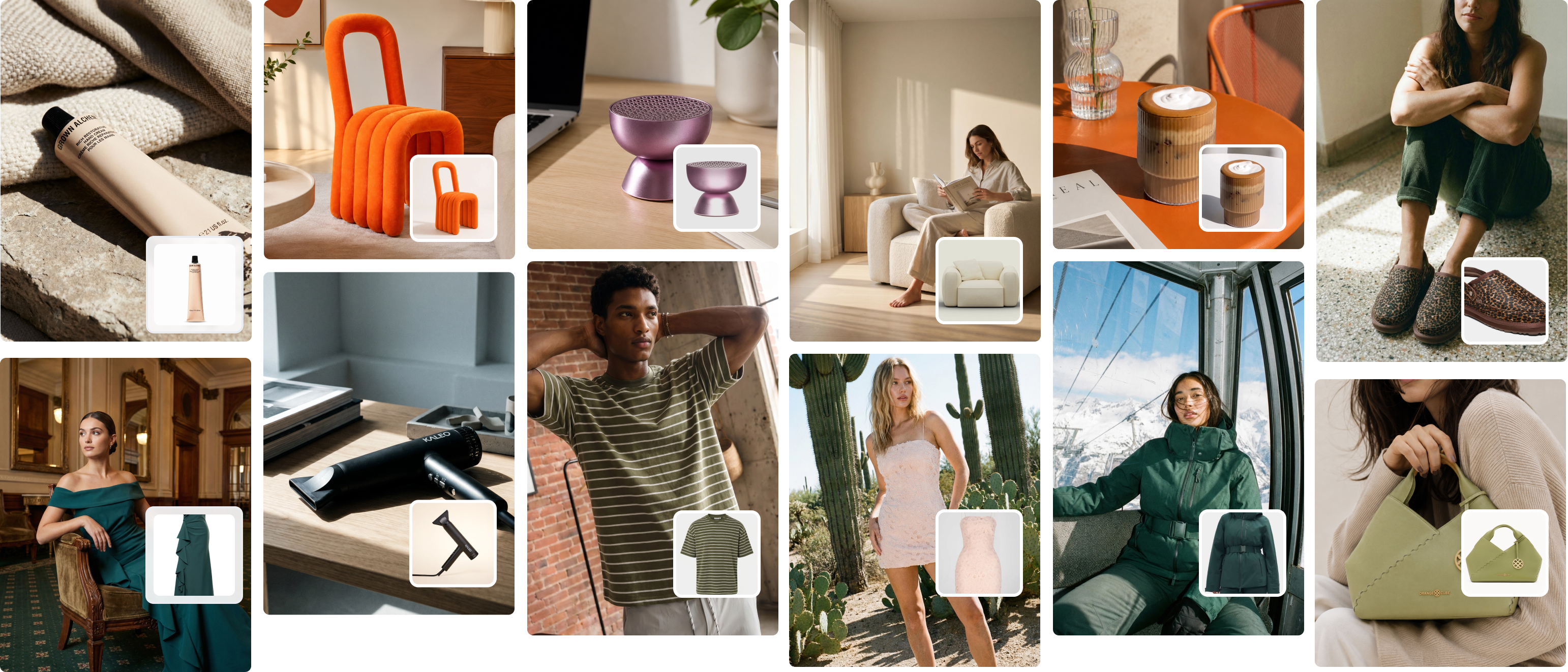
Lifestyle product photography is a commercial photography style that shows products in real-world contexts — worn by models, used in natural settings, or styled alongside props that reflect the buyer's life and aspirations. Unlike standard packshots (product alone on a white background), lifestyle images tell a story. They show how the clothing fits into the customer's world, not just what it looks like in isolation.
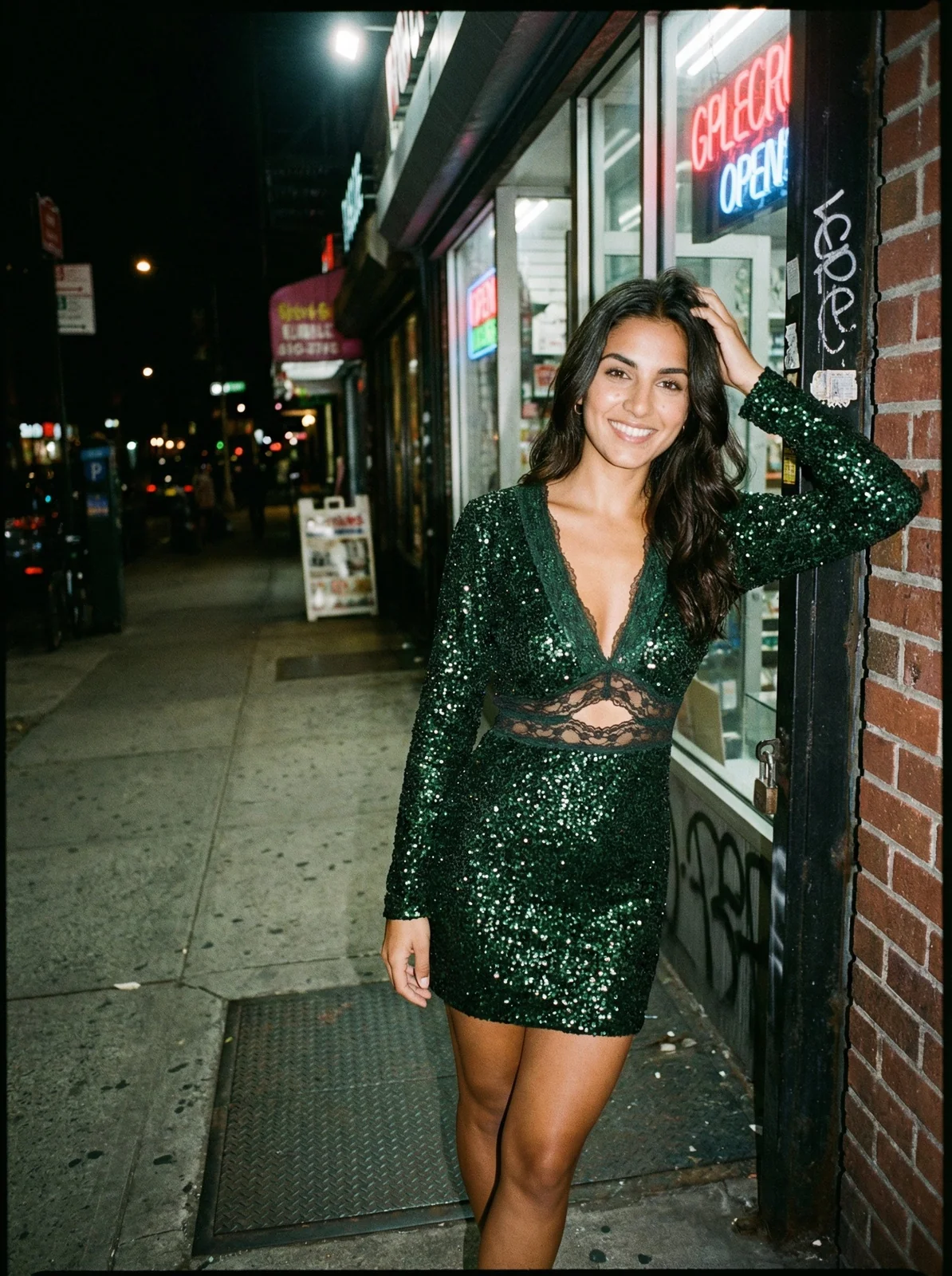
For fashion and apparel brands specifically, lifestyle imagery is exceptionally powerful. Customers can't try clothes on before buying online. The right lifestyle image — a jacket on a model walking through a city street, activewear in a gym setting, a linen shirt in a café — bridges that gap. It reduces purchase uncertainty and builds desire at the same time.
Think of it this way: standard product photography shows what you're selling. Lifestyle product photography shows why someone should want it. Both are necessary. Only one is the difference between a browsed page and a completed checkout.
Lifestyle vs. standard product photography: what's the difference?
Most fashion brands need both types of imagery. They serve different functions on different platforms. Here's how they compare:
| Standard (packshot) | Lifestyle | |
|---|---|---|
| Background | White or plain neutral | Real-world location or contextual scene |
| Subject | Product alone or on mannequin | Product on model, in environment |
| Purpose | Technical accuracy, product detail | Emotional connection, aspiration |
| Where used | Product detail pages, marketplaces (Amazon, Etsy) | Social ads, homepage hero, email, editorial |
| Cost (traditional) | $25–$75 per image | $100–$500 per image |
| Conversion impact | Table stakes — buyers need them | +15–30% conversion lift when added alongside packshots |
The most effective fashion brands don't choose between them. They use packshots for technical detail pages — especially on Amazon and Shopify product listings — and lifestyle imagery for everything that creates desire: Instagram ads, email headers, homepage banners, and editorial placements.
For a detailed breakdown of what different photography types cost in 2026, see Understanding Product Photography Cost in 2026.
Types of lifestyle photography for fashion brands
Not all lifestyle imagery serves the same purpose. Fashion brands use several distinct styles depending on where the content lands and what it needs to do.
1. On-model editorial
Models wearing your product in a real or studio-designed setting. This is the gold standard for fashion. It shows fit, drape, movement, and scale — the four things customers most want to know before buying clothing online. It's also the most expensive option. A full editorial lifestyle shoot with a professional model, photographer, stylist, and location runs $2,000–$8,000 per session in Australia as of 2026.
2. On-model in context (location shoots)
Similar to editorial but shot in actual environments — a café, a park, a city streetscape. These feel more authentic than studio-created sets. The trade-off: logistics are harder, weather is unpredictable, and post-production is heavier. Location shoots work well for seasonal campaign content where you want a real sense of place.
3. Flat-lay lifestyle
No model required. Products arranged on a surface alongside contextual props that suggest a lifestyle — sunglasses, coffee cups, plants, accessories. Lower cost and easier to produce in-house, but less effective for apparel than for accessories or homewares. Without a model, you lose the most important visual cue: how the garment fits on a body.
4. AI-generated on-model lifestyle
The newest category, and the one changing the economics of fashion content entirely. A brand uploads a flat lay, ghost mannequin, or hanger shot. AI generates a photorealistic on-model image — typically within 60 seconds — in a chosen setting, with a model that reflects the brand's customer profile. No studio booking, no model casting, no location permits. At Picjam, brands generate full-catalogue on-model lifestyle imagery at a monthly subscription cost.

How to plan and execute a lifestyle photoshoot
If you're running a traditional lifestyle shoot, here's what experienced fashion brand operators plan for — and what most first-timers get wrong.
Define your brand aesthetic before booking anything
Before hiring a photographer, nail your visual direction. What's the mood? What life does your customer aspire to? A Melbourne-based activewear brand shoots differently from a Sydney luxury womenswear label. Build a mood board with 20–30 reference images before your first call with a photographer. They cannot read your mind, and ambiguity on set costs money.
Brief your team on deliverables
Be specific: how many hero shots, how many secondary angles, which SKUs need coverage. Leaving the brief open-ended leads to sessions that run long on early SKUs and rush through the final 30% of the shot list. Experienced operators brief at minimum: total shot list, model requirements, location shortlist, and intended use (social vs. website vs. email — dimensions differ significantly).
Choose models who reflect your customer
This matters more than most brands realise. Your customer doesn't just buy the product — they buy a vision of themselves wearing it. If your customer is a 35-year-old woman running a small business, don't cast a 20-year-old editorial model. Relatability converts better than aspirational distance. For more on this decision: A Guide to Product Photography With Models in 2026.
Budget for post-production from the start
Raw lifestyle shots don't go live without editing. Standard retouching runs $15–$40 per image. Add colour grading, background cleanup, and resizing for different platforms, and the post-production bill often adds 30–50% to your initial shoot quote. Budget for this upfront — it's a surprise that hits at exactly the wrong moment if you don't.

The cost math: why lifestyle photography breaks at scale — and what fashion brands are doing about it
This is the section that nobody in the top search results covers. It's also the section that actually determines whether lifestyle photography is viable for your brand at your current stage.
The per-shoot number looks manageable
A lifestyle shoot with a professional photographer, model, and location in Sydney or Melbourne runs $2,000–$5,000 per half-day in 2026. If you have 20 hero SKUs, that's $100–$250 per SKU. Manageable for a quarterly campaign. Most brand operators look at this number and think: that's fine, we can do this a couple of times a year.
The full-catalogue math doesn't work
The average Shopify fashion brand we work with at Picjam carries 80–200 active SKUs. Not all of them need lifestyle shoots, but most need at least one on-model image to compete in social ads and on their own product pages. At $150–$200 per SKU for a lifestyle shoot, a 150-SKU catalogue costs $22,500–$30,000 just to photograph once. Before new colourways, seasonal updates, or collection launches.
Seasonal refreshes make the problem worse
Fashion moves fast. Brands typically refresh visual content every 3–6 months to stay current in ads and keep the feed from looking stale. Run a $25,000 lifestyle shoot twice a year and you're looking at $50,000+ in annual photography spend — before retouching, travel, or any campaign-specific content. For most DTC brands below a certain revenue threshold, that's not a content budget. That's a major portion of total marketing spend.
Where AI has changed this calculation
After working with 1,200+ clothing brands at Picjam, the pattern is clear. The brands competing most effectively on content volume are not the ones with the biggest photography budgets. They're the ones that figured out how to generate lifestyle-quality imagery from existing flat lays.
Here's what the comparison looks like:
| Traditional lifestyle shoot | Picjam AI | |
|---|---|---|
| Cost per image | $100–$500 | Covered by $99/mo Studio plan |
| Turnaround time | 2–6 weeks | 60 seconds |
| Minimum viable run | 20–50 shots per session | 1 image |
| Model diversity | 1–2 models per shoot | Unlimited AI model options |
| Seasonal refresh cost | Full shoot cost again | Same monthly plan — no extra cost |
| 100-SKU catalogue | $10,000–$50,000 | $99/month |
One of our Shopify customers — a Perth-based women's casualwear brand with 140 active SKUs — ran a split test over three months. Half their product listings used traditional lifestyle imagery from their annual studio shoot. The other half used AI-generated on-model images created in Picjam. The AI images converted within 9% of the traditional lifestyle shots on their product detail pages. In Instagram ad creative, the AI images actually outperformed — lower cost per click, higher click-through rate. The cost comparison: $21,000 for the traditional studio shoot versus $297 for three months of Picjam.
That's not an outlier. Across brands at different price points and category types, the conversion gap between high-quality AI lifestyle imagery and traditional lifestyle imagery continues to narrow. The production cost gap is already enormous — and will not close.
Where traditional lifestyle shoots still earn their cost
To be straight with you: there are still contexts where a traditional lifestyle shoot is the right call. Hero campaign imagery for major seasonal launches where you want cinematic quality. Content that requires a specific celebrity or brand ambassador. Highly aspirational editorial placements in print fashion media. Fine-detail beauty shots where fabric texture and drape at pixel level matter.
For those 10–15% of your content that anchors your brand identity, invest in a great shoot. For the remaining 85–90% of your catalogue and ongoing social content, AI imagery at scale is now the rational choice for most brands.
The flat lay → lifestyle pipeline
The workflow that most fashion brands haven't discovered yet: start every new product with a clean flat lay on a white surface. This is easy to do in-house — a phone camera and an A3 sheet of white cardboard work fine. Feed that flat lay into Picjam. Out comes an on-model lifestyle image in your chosen setting, with a model that reflects your customer demographic. No studio booking, no model casting, no weather delays, no re-shoots.
This pipeline lets brands generate lifestyle imagery the same week a product is added to their catalogue — not two months after the shoot date. For brands launching products regularly, that time advantage compounds significantly across a year. For more on how AI lifestyle photos work: How AI Lifestyle Photos Can Cut Your E-commerce Content Costs by 90%.

How Picjam generates lifestyle photos from your existing flat lays
When we built Picjam, we started from one observation: fashion brands were stuck between two bad options. Either spend too much on traditional shoots and ration lifestyle content to hero SKUs only. Or skip lifestyle photography entirely and accept lower conversion rates as a fixed cost of being lean.
The Picjam flat lay → model pipeline is built to eliminate that trade-off.
Step 1: Upload your flat lay
Any flat lay, ghost mannequin, or hanger shot works as your starting image. The garment just needs to be clearly visible. No special lighting rig or studio required — most brands already shoot flat lays for Amazon or their own product pages, and those images work directly. If you don't have flat lays yet, a phone camera against a white wall is a completely workable starting point.
Step 2: Select a model and setting
Choose from Picjam's AI model library — different skin tones, body types, and age ranges. You're not locked into one look. A brand selling to a 25-year-old athleisure customer chooses differently from a brand selling to a 45-year-old professional woman. Choose a background setting: studio clean, urban environment, outdoor, custom colour, or location scene.
Step 3: Generate, review, and download
In under 60 seconds, you get a photorealistic on-model lifestyle image. Review it, adjust the model or background if needed, generate alternatives, and download. The output is ready for Shopify, Instagram, TikTok, Amazon, or your ad set — no separate retouching required in most cases.
Picjam's Studio plan is $99/month. That covers your full catalogue with no per-image fees. Over 1,200 brands use it globally. Trustpilot rating: 4.3 stars from 114 reviews. Shopify App Store: 4.7 stars.
See our full pricing comparison.
Try Picjam free — generate your first lifestyle image in 60 seconds

Frequently asked questions
What is lifestyle product photography?
Lifestyle product photography is a commercial photography style that shows products in real-world settings rather than against a plain background. For fashion brands, this typically means on-model images in contextual environments — a café, a street, a gym — that help customers imagine wearing the product themselves.
What is the difference between lifestyle and product photography?
Standard product photography shows the item alone, usually on a white or neutral background. Lifestyle product photography places the product in context — with a model, in a setting, with props. Standard shots show what the product is. Lifestyle shots show why the customer should want it. Most fashion brands need both: standard for marketplaces and product pages, lifestyle for social media and advertising.
Do you need models for lifestyle product photography?
Not necessarily — some brands create effective lifestyle imagery using flat lays with contextual props. But for apparel and clothing specifically, on-model images significantly outperform prop-only lifestyle shots, because fit, drape, and scale are key purchase triggers for clothing buyers. With AI tools like Picjam, brands now generate on-model lifestyle images without booking or paying a model.
How much does lifestyle product photography cost?
In 2026, traditional lifestyle photography with a professional photographer and model costs $100–$500 per finished image in Australia. A half-day shoot covering 20 SKUs typically runs $2,000–$5,000 all-in before retouching. AI-generated lifestyle photography via Picjam's Studio plan costs $99/month for unlimited images across your full catalogue — no per-image fees.
Is lifestyle photography good for e-commerce?
Yes. Products with lifestyle imagery alongside standard packshots convert 15–30% better than packshots alone, based on 2026 ecommerce data across fashion brands. For social media advertising in particular, lifestyle imagery consistently outperforms white-background product shots — it creates an emotional response, stops the scroll, and helps potential buyers picture themselves in the product.
How can I do lifestyle product photography without a big budget?
Start with flat lay images shot on a plain white surface — a phone camera works fine for this first step. Then use an AI tool like Picjam to transform those flat lays into on-model lifestyle images, giving you the conversion impact of lifestyle photography without the cost of a traditional shoot. If you want to shoot traditionally but cost-effectively, see A Fashion Brand's Guide to Flat Lay Photography That Sells as a starting point.
Bottom line
Lifestyle product photography is the difference between showing what your clothes look like and making customers want to wear them. If you're running a fashion brand in 2026 and your content strategy is packshots-only, you're leaving measurable conversion improvement on the table.
The old constraint was cost. Traditional lifestyle shoots at $100–$500 per finished image made full-catalogue lifestyle coverage unaffordable for most brands below a certain revenue threshold. AI has removed that constraint. Over 1,200 fashion brands now generate on-model lifestyle imagery with Picjam for $99/month — rated 4.3 stars on Trustpilot (114 reviews) and 4.7 stars on the Shopify App Store. If you sell clothing online and you're still paying $3,000+ per shoot for 20 images, it's worth running one AI-generated lifestyle image alongside your traditional content and measuring the difference yourself.
The brands winning on content volume in 2026 are not the ones with the biggest budgets. They're the ones that found the most efficient path from product to on-model imagery.
Try Picjam free — generate your first on-model lifestyle image in 60 seconds
Michael Pirone
Co-Founder