A Guide to Product Photography With Models in 2026
Master product photography with models. Learn how top apparel brands plan, direct, and leverage AI to create stunning, cost-effective campaigns. Get your guide.
When a customer sees your apparel on a person, they aren't just looking at a piece of fabric — they're picturing a lifestyle. That's the real power of product photography with models: it turns a static garment into something relatable and aspirational that drives people to click "buy." It helps shoppers visualize fit, understand scale, and form an emotional connection with your brand.
Why Model Photography Is No Longer Optional for Brands
In fashion ecommerce, context is everything. Shoppers can't touch the fabric or try on the clothes, so they rely completely on your images to make a decision. A simple product shot on a plain background gives them facts, but it doesn't answer the questions that matter: How will this look on me? How does it move? How will it make me feel?
This is where on-model photography shines. Seeing clothing on a person gives an immediate sense of scale and fit that other methods just can't match. Market data from McKinsey shows product pages with models see a significant lift in conversion rates — they close the gap between scrolling on a screen and owning the item.
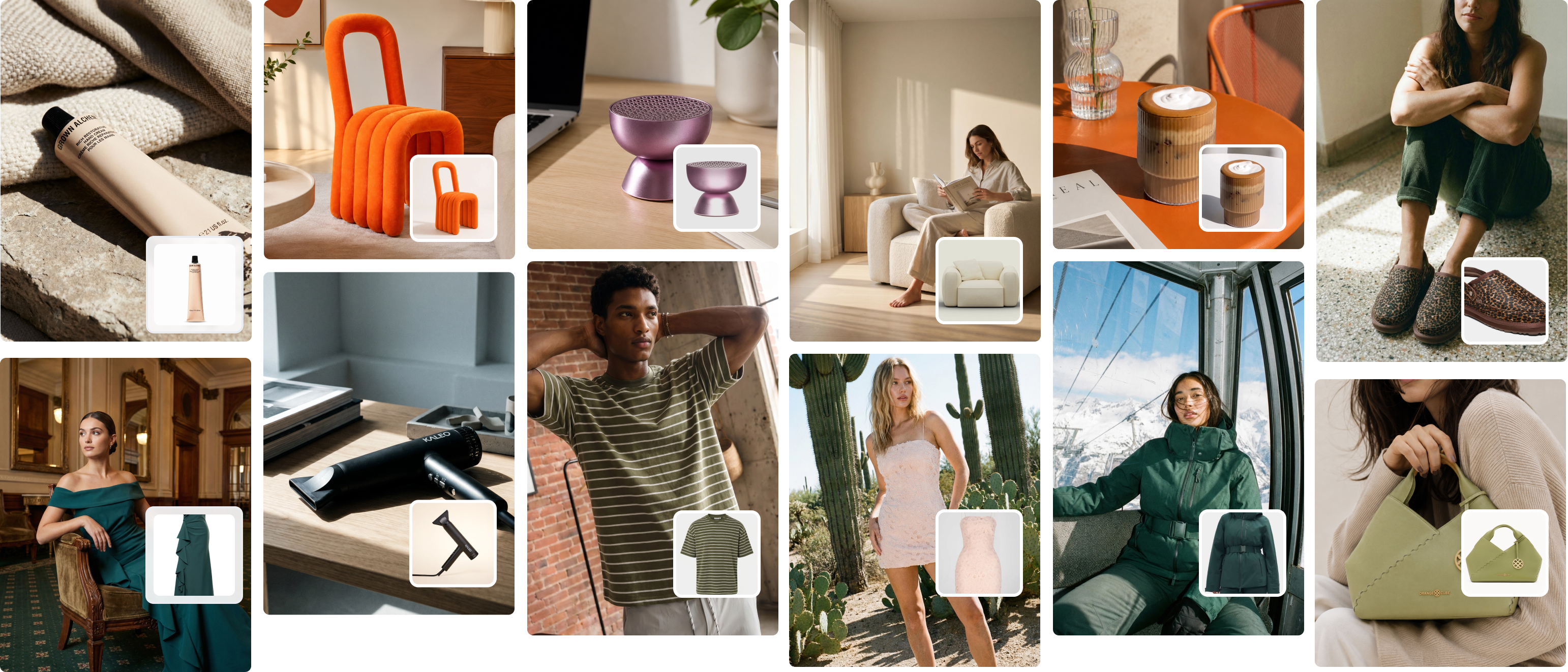
Picjam's AI virtual model tool lets brands generate stunning, on-model imagery without traditional overhead, delivering that same emotional connection and sales impact in a fraction of the time and cost. It's about creating essential lifestyle visuals with the speed modern ecommerce demands.
Building an Emotional Connection That Drives Sales
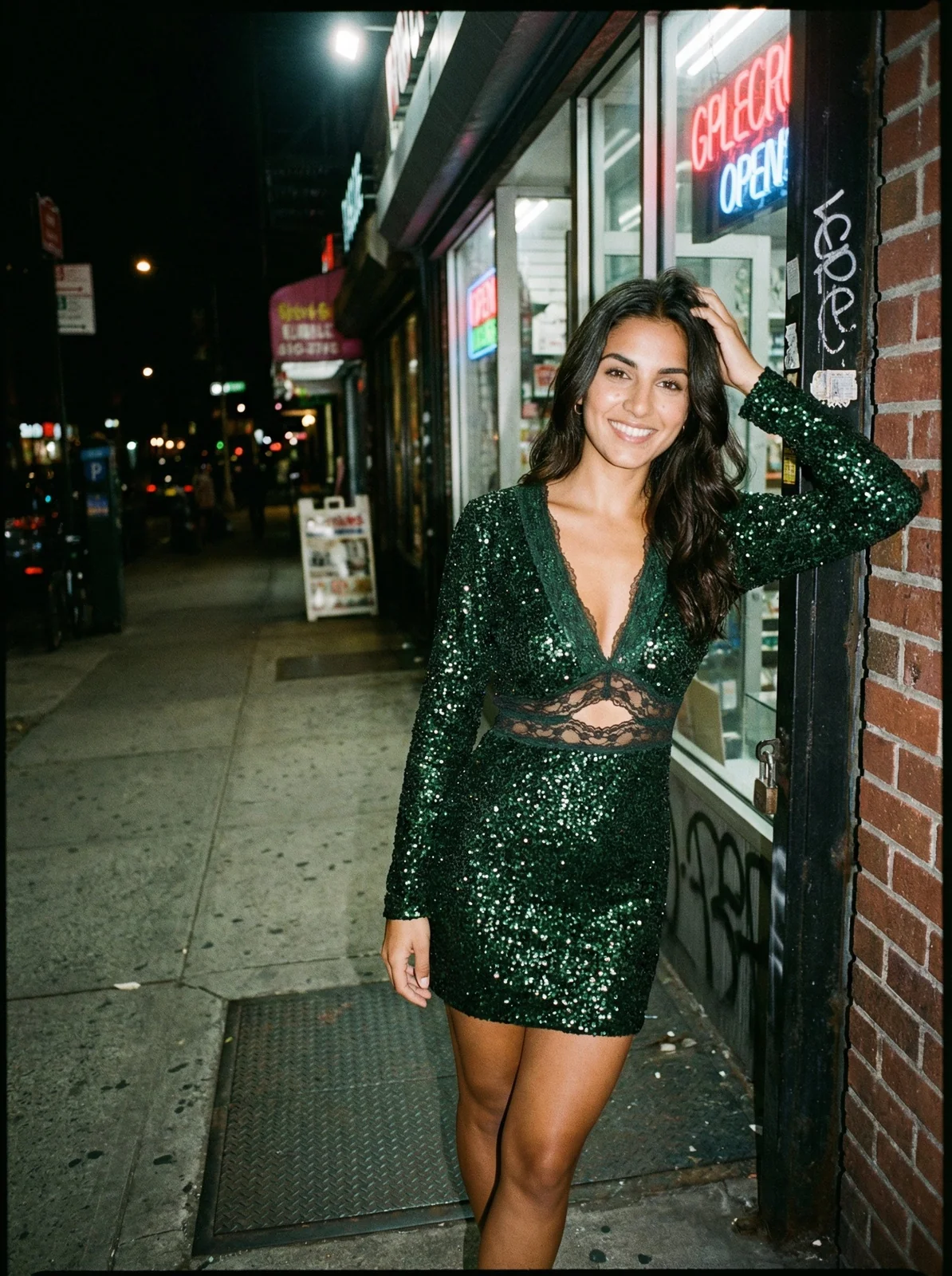
Brands like Reformation are masters at this. Their photos don't just sell a dress; they sell a sunny afternoon in Los Angeles or a confident stride through the city. The models they choose and the way they're styled reflect a specific persona their target audience aspires to. This creates an emotional bond that goes far beyond a single purchase.
A model's expression, pose, and energy communicate your brand's identity:
- Confident and Powerful: Perfect for formalwear or statement pieces.
- Playful and Carefree: Works great for casual wear or festival collections.
- Serene and Natural: Aligns beautifully with sustainable or minimalist brands.
This story-driven approach helps customers see themselves in your brand, making the purchase feel like a personal style choice.
How Traditional Photoshoots Create Bottlenecks
Of course, creating this connection has traditionally been a huge operational headache. The logistics of a conventional photoshoot are notoriously complex and expensive.
The process drains time and money on:
- Scouting and casting models
- Booking photographers, stylists, and makeup artists
- Renting a studio or securing a location
- Managing post-production and retouching
These hurdles have often put high-quality model photography out of reach for new and growing brands, forcing them to compete with visuals that don't convert. This is precisely the resource gap that modern solutions are built to fix.
Your Strategic Photoshoot Planning Blueprint
A successful photoshoot is won long before anyone steps on set. The quality of your product photography with models comes down to pre-production planning. This isn't about a basic checklist; it's about creating a strategic framework that informs every decision.
It all starts with a rock-solid creative brief. This document is the single source of truth for your campaign. It must clearly define your target audience, the specific feeling you want to capture, and the overall aesthetic. Ask the tough questions: Are we reaching Gen Z on TikTok with a high-energy vibe? Or a mature audience on Pinterest who responds to a sophisticated look? Brands like Ganni nail this, creating briefs that translate their bold identity into every photograph.
How to Define a Shot List That Delivers ROI
Once you've got your creative vision, build a detailed shot list. This is your battle plan for the day, ensuring every image serves a marketing purpose. A well-planned shot list guarantees you get all the assets you need and is your best insurance against expensive reshoots.
Break your shot list down by asset type:
- Primary PDP Images: Full-length, three-quarter, and detail shots on a clean background.
- Social Media Content: Dynamic and eye-catching formats for Reels, Stories, and carousels.
- Homepage Banners: Hero shots that tell a bigger brand story at a glance.
- Email Marketing Visuals: Images designed to grab attention and drive clicks.
For every shot, specify the model's pose, camera angle, and the exact product. This detail removes guesswork and keeps the team — photographer, model, stylist — working efficiently.
How to Assemble a Winning Creative Team
With your plan in place, bring in the talent. Casting the right model is arguably the most important decision. Your model is the living embodiment of your brand. A Vogue Business study found that 60% of consumers are more likely to buy from a brand featuring diverse and representative models. You're looking for someone who genuinely connects with your target customer's persona.
A model's job is to bring the garment to life. Your job is to find a model who represents the life your customer wants to live. Casting is about brand alignment, not just aesthetics.
Next, scout locations. The right environment transforms a product's story. An outdoor brand needs a rugged setting; a luxury silk brand might use a clean, architectural interior. The location provides context and makes the product more desirable.
Finally, brief your stylist and hair and makeup artist with absolute clarity. A casual beachwear shoot for a brand like Outerknown demands a "no-makeup" look and natural hair to feel authentic. Getting this level of planning right prevents chaos on set and ensures every shot is on-brand.
How to Direct a Shoot That Sells Your Apparel
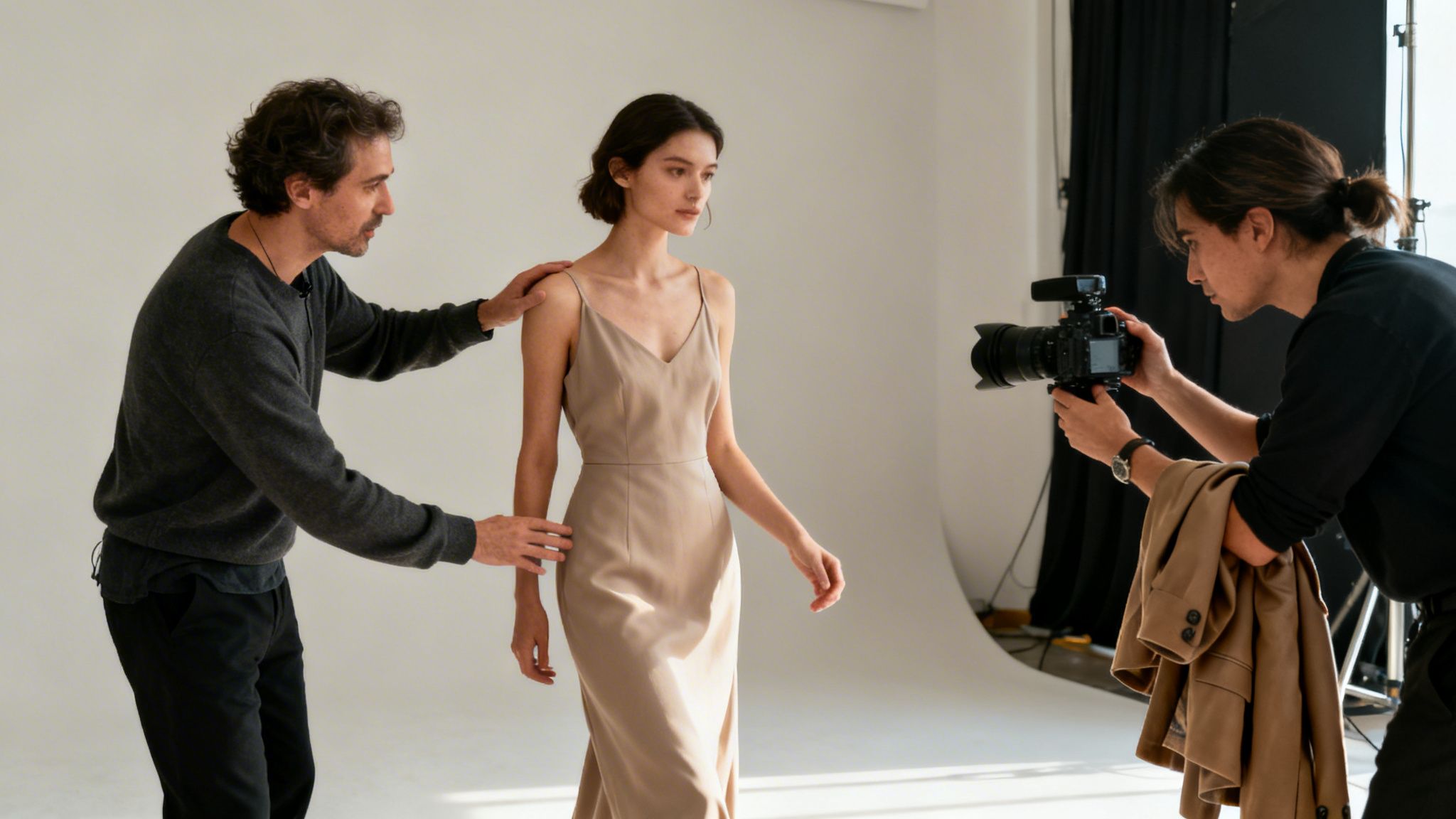
The brief is locked, the team is on set, and the first outfit is styled. This is when your vision for product photography with models comes to life. Directing a shoot isn't about barking orders; it's about creating an environment where your model feels comfortable, confident, and ready to make your apparel look incredible.
Great direction boils down to great communication. Forget vague commands like "look natural." Give specific, actionable feedback. Instead of "look happy," try, "Imagine you just ran into an old friend on a perfect, sunny day." This gives the model an emotional anchor, leading to genuine expressions.
Think of your model as your most important collaborator. A positive, high-energy vibe is your greatest asset. Keep the mood upbeat, offer encouragement, and show them shots from the camera's display. This feedback loop builds trust and helps them fine-tune their performance.
Guiding Poses That Convert Browsers Into Buyers
The poses you direct must actively sell the garment. Your shot list should include a mix of static poses that clearly show the product and dynamic shots that create emotion.
A few go-to poses that always work for apparel include:
- The Adjust: Having the model fix a cuff or smooth a lapel feels candid while drawing the eye to product details.
- The Stride: Catching the model mid-walk is perfect for demonstrating how a garment moves — crucial for dresses and outerwear.
- Interactive Poses: Ask the model to interact with a prop or their environment, like leaning against a wall or holding a coffee cup. This adds lifestyle context.
The best poses feel like a moment captured in time, not a stiff, awkward position. Focus on creating scenarios that lead to natural movement, all while keeping the apparel the hero of the image.
Mastering Angles and Expressions for Maximum Impact
To build a useful asset library, you need variety. Work with your photographer to capture a range of compositions.
- Full-Length Shots: Non-negotiable for showing the complete outfit and its fit.
- Three-Quarter Shots: Perfect for showing how a top and bottom pair together.
- Close-Ups: Essential for highlighting fabric texture or unique hardware.
- Over-the-Shoulder: A classic shot that adds intrigue and an engaging feel.
This principle applies to expressions. Your job is to guide the model to deliver a spectrum of moods that align with your brand. A brand like AllSaints might lean into moody, confident expressions, while a brand like Farm Rio will want joyful, carefree smiles.
Navigating Post-Production and Critical Image Licensing
When the shoot is done, a new phase of work begins. The success of your product photography with models depends just as much on what happens after the shoot. This is where you turn raw images into polished, market-ready assets and ensure you have the legal right to use them.
First, cull through the photos to find the gems. From there, your top selections head into retouching. The key here is authenticity. While you want to correct lighting and fix minor imperfections, heavy-handed editing can erode customer trust. Your goal is to make the product look its best, not artificially perfect.
The Essentials of Brand-Aligned Image Retouching
Great post-production balances polish and realism. Focus on edits that bring clarity and fit your brand's vibe.
Key areas to dial in include:
- Color Correction: The product color in your photo must perfectly match the real item. Color discrepancies are a huge and preventable reason for returns.
- Blemish Removal: Get rid of distractions like stray hairs, dust on the garment, or minor skin blemishes that pull focus from the product.
- Consistency Across Images: Apply the same editing style to all photos from a single shoot. This creates a cohesive, professional look for your campaign.
Securing Your Legal Foundations to Avoid Costly Fines
This is where so many brands get it wrong, often with expensive consequences. Every image featuring a model requires a solid legal framework. Without it, you're exposed to major financial and legal risks.
You don't just own a photo; you own the rights to use it in specific ways. A model release is not a suggestion — it's a non-negotiable contract that protects your brand from future claims.
At a minimum, you need two crucial documents for every shoot:
- Model Release: A signed contract from the model giving you permission to use their likeness for commercial purposes.
- Photographer Agreement: This contract must clearly state who owns the final images and define the usage rights.
Usage rights specify where, for how long, and in what context you can use the photos. Can they go on your website? In paid ads? On a billboard? Each use carries a different value and must be negotiated. Using an image beyond what you've agreed to can lead to legal action.
Failing to secure clear usage rights is a common mistake. Picjam's AI fashion photography tool creates huge value here — all generated imagery is completely royalty-free and cleared for worldwide commercial use, eliminating licensing headaches entirely.
The AI Alternative: How to Get Model Photos in Minutes

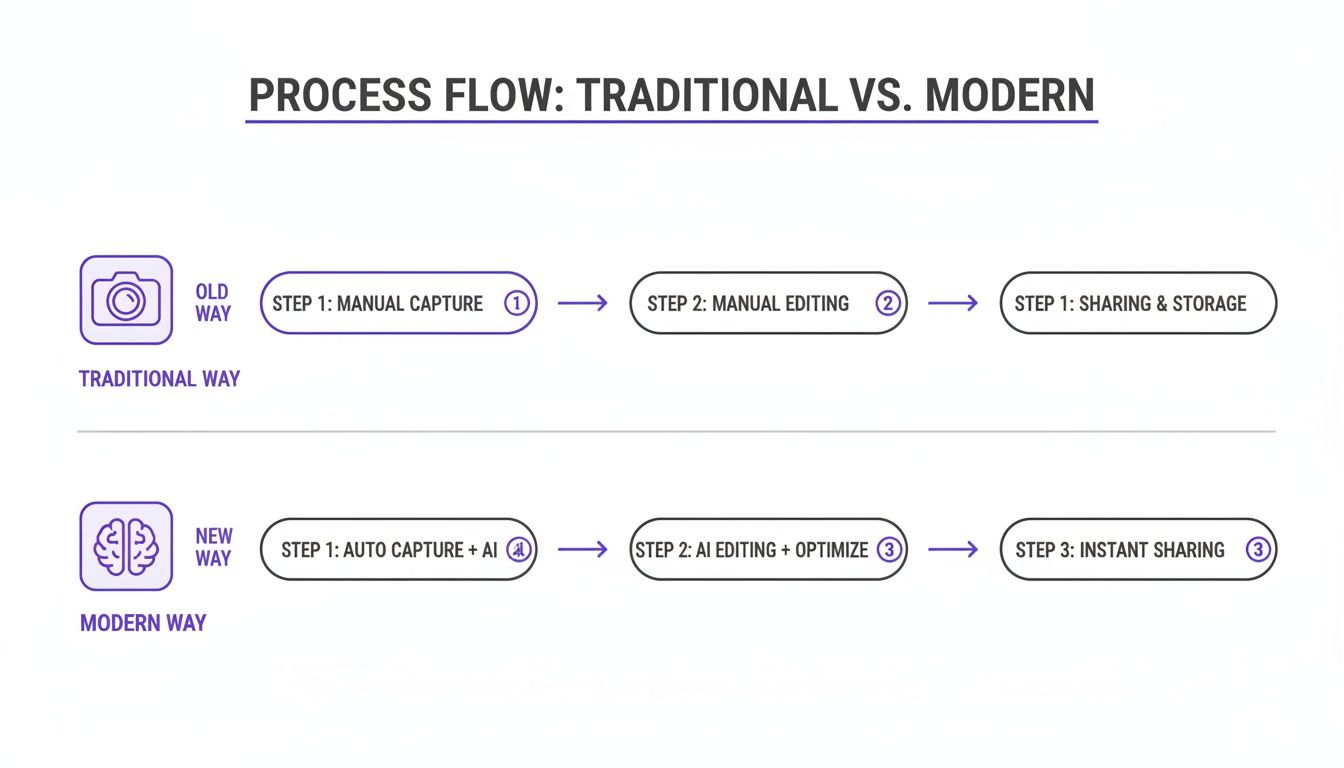
What if you could produce an entire on-model campaign in an afternoon, without booking a studio or casting a person? While a great traditional photoshoot has impact, it comes with a heavy price in time, money, and logistics. For agile brands, that slow process is a serious bottleneck.
This is where AI-powered workflows come in. Picjam's Fashion AI Generator helps brands create stunning, on-model imagery in minutes, not weeks.
This isn't about replacing creativity. It's about building a better engine for it.
How AI Workflows Transform Content Production
Imagine taking a single, basic photo of your apparel — say, on a hanger — and instantly placing it on a diverse cast of AI-generated models. That's the core of this new workflow. You can select models who perfectly match your audience, use advanced tools to guarantee a flawless fit, and generate on-brand lifestyle backgrounds without leaving your desk.
This fundamentally changes the economics of content creation. The thousands of dollars for a typical shoot are compressed into a few clicks and a predictable, low subscription cost. It's a shift from a project-based mindset to a continuous flow of fresh content.
Achieving Speed and Scale Traditional Shoots Can't Match
The real game-changer with an AI approach is strategic agility. Instead of one massive photoshoot per season, you can generate new assets whenever you need them.
- React to Trends Instantly: Did a style go viral on TikTok? Generate new model shots in minutes and have a targeted ad campaign live the same day.
- A/B Test Creatives Endlessly: Test dozens of model, background, and style combinations. Data from Meta shows that brands testing 4 or 5 creatives see significant performance lifts — a volume impossible with physical shoots.
- Localize for Global Markets: Instantly create campaigns with models and settings that feel local to different regions, making your brand relevant everywhere.
The real power of AI in fashion photography isn't just cost reduction. It's the freedom to test, learn, and scale your visual marketing at a pace that was previously unimaginable, giving you a serious competitive edge.
Traditional Photoshoot vs. AI-Powered Workflow
| Metric | Traditional Photoshoot | AI-Powered Workflow (Picjam) |
|---|---|---|
| Time to Final Assets | 3–6 weeks | Under 5 minutes |
| Average Cost | $5,000–$20,000+ per shoot | Low, fixed monthly subscription |
| Creative Variations | Limited by on-set time | Virtually unlimited |
| Model & Usage Fees | High and complex | None; all assets are royalty-free |
| Logistical Overhead | Extremely high | Almost zero |
Takeaway
Great model photography comes down to a few key ideas. It starts with strategic planning. Whether running a traditional shoot or using AI, your creative brief and shot list are your best defense against expensive mistakes. Don't overlook the legal side — proper model releases and usage rights are non-negotiable and protect your brand from serious financial headaches.
Finally, embrace AI tools as a strategic advantage. Picjam's AI virtual model tool gives brands the agility to test creative ideas and scale content production for a fraction of the usual cost. This is the playbook for building a modern, future-forward fashion brand.
Curious to see what that looks like for your business? Use the Picjam savings calculator and compare the numbers against what you're spending on photography right now.
By Michael Pirone, Founder of Picjam & Vidico
Your Top Model Photography Questions, Answered
What Are the Biggest Mistakes to Avoid?
I've seen three major pitfalls: sloppy planning, casting the wrong models, and legal oversights. Not having a solid plan turns shoot day into a frantic, expensive mess. Casting models who don't connect with your target audience makes your brand message fall flat.
But the single costliest mistake? Failing to lock down your contracts. If you don't get signed model releases and clearly defined usage rights, you're exposing your brand to massive legal and financial risks. It's the one corner you absolutely cannot cut.
How Much Should I Budget for a Model Photoshoot?
This can vary wildly. A small-to-mid-sized shoot can run anywhere from a few thousand dollars to well over $20,000.
The final number depends on:
- Model Fees: Agency models cost significantly more than independent talent.
- Photographer & Crew: Rates for your photographer, stylist, and makeup artist are major expenses.
- Location & Studio Rental: A professional studio or permitted outdoor location adds to the budget.
- Post-Production: Retouching and editing costs can add up fast, especially with a high volume of images.
Can I Use Model Photos on All My Channels?
No, not automatically. This is a huge misconception. The right to use a photo on your website versus in a social media ad must be negotiated and spelled out in your contracts with the model and photographer. These are called usage rights.
Using an image beyond that agreed-upon scope — like taking a photo cleared only for web use and putting it on a billboard — can lead to demands for hefty fees or legal action. Always clarify and secure rights for all intended channels upfront.

Picjam team
The Picjam team blends AI, product, and creative expertise to eliminate the cost and delay of traditional photography for modern eCommerce brands.