
A Modern Guide to Models for Photo Shoots
Discover the pros and cons of traditional, influencer, and AI models for photo shoots. Learn how to choose the right option for your brand's visual content.
How to start saving money
Lorem ipsum dolor sit amet, consectetur adipiscing elit lobortis arcu enim urna adipiscing praesent velit viverra sit semper lorem eu cursus vel hendrerit elementum morbi curabitur etiam nibh justo, lorem aliquet donec sed sit mi dignissim at ante massa mattis.
- Neque sodales ut etiam sit amet nisl purus non tellus orci ac auctor
- Adipiscing elit ut aliquam purus sit amet viverra suspendisse potent i
- Mauris commodo quis imperdiet massa tincidunt nunc pulvinar
- Adipiscing elit ut aliquam purus sit amet viverra suspendisse potenti
Why it is important to start saving
Vitae congue eu consequat ac felis placerat vestibulum lectus mauris ultrices cursus sit amet dictum sit amet justo donec enim diam porttitor lacus luctus accumsan tortor posuere praesent tristique magna sit amet purus gravida quis blandit turpis.

How much money should I save?
At risus viverra adipiscing at in tellus integer feugiat nisl pretium fusce id velit ut tortor sagittis orci a scelerisque purus semper eget at lectus urna duis convallis. porta nibh venenatis cras sed felis eget neque laoreet suspendisse interdum consectetur libero id faucibus nisl donec pretium vulputate sapien nec sagittis aliquam nunc lobortis mattis aliquam faucibus purus in.
- Neque sodales ut etiam sit amet nisl purus non tellus orci ac auctor dolor sit amet
- Adipiscing elit ut aliquam purus sit amet viverra suspendisse potenti
- Mauris commodo quis imperdiet massa tincidunt nunc pulvinar
- Adipiscing elit ut aliquam purus sit amet viverra suspendisse potenti
What percentage of my income should go to savings?
Nisi quis eleifend quam adipiscing vitae aliquet bibendum enim facilisis gravida neque. Velit euismod in pellentesque massa placerat volutpat lacus laoreet non curabitur gravida odio aenean sed adipiscing diam donec adipiscing tristique risus. amet est placerat imperdiet sed euismod nisi.
“Nisi quis eleifend quam adipiscing vitae aliquet bibendum enim facilisis gravida neque velit euismod in pellentesque massa placerat”
Do you have any comments? Share them with us on social media
Urna ut fermentum imperdiet lacus, elementum etiam maecenas libero nunc, suspendisse massa, nisl, elit curabitur feugiat in quis ut nibh enim in tristique aliquam sed vitae dui, dis adipiscing pharetra aliquam turpis turpis nibh rhoncus enim, pellentesque leo laoreet neque in sed bibendum fermentum suspendisse tempus non purus adipiscing suscipit fringilla adipiscing convallis dolor nulla fermentum facilisis ullamcorper ut vehicula tortor libero metus donec velit, tristique fermentum, dictum euismod diam scelerisque enim non pharetra tristique lectus habitant pharetra est id
When luxury brand Gobi Cashmere needed to photograph its new collection, it sidestepped the traditional multi-day, multi-thousand-dollar photoshoot. Instead, it used AI to generate on-brand models for photo shoots, cutting production time from weeks to minutes and saving an estimated 80% on content costs.
This isn't just a niche trend; it's a strategic shift. Brands are weighing cost against speed and both against identity, now choosing from three talent pools: traditional agencies for high-gloss control, influencers for authenticity, or AI-generated models for efficiency and scale.
How AI Cuts Content Costs for Modern Brands
The relentless demand for fresh visuals is forcing e-commerce brands to rethink how they find and shoot models. The single, seasonal photoshoot is gone. Modern brands like Zara and H&M need a constant flow of images for product pages, social media, and digital ads, creating immense pressure on budgets.
This pressure is building inside a market that's booming. The global photographic services industry is on track to hit USD 64.68 billion by 2034, fueled by this insatiable hunger for commercial content. A quick look at the data on photography market growth{target="_blank"} shows just how much visual commerce is exploding.
3 Core Model Sourcing Options
To keep up, brands are exploring a wider range of talent than ever before. Each choice comes with a unique set of trade-offs.
Traditional Agency Models: The classic route for a reason. You get the highest level of professionalism and quality control. Brands like Chanel and Dior rely on agencies to maintain a polished, aspirational feel.
Influencer & UGC Talent: This approach offers a powerful combination of authenticity and a built-in audience. Fast-fashion giants often team up with influencers whose real-world style connects directly with their target demographic.
AI-Generated Models: A game-changer for brands that need speed and want to slash costs. Platforms like Picjam let you generate studio-quality, on-brand model imagery without the logistics of a physical shoot. Dive into how a virtual model works{target="_blank"} in our detailed guide.
This guide breaks down each option, giving you a clear framework to choose the best models for your brand's unique needs — from costs and casting to legal rights and production workflows.
Comparing Your Model Sourcing Options
Picking the right model is more than a creative choice; it’s a strategic one that directly impacts your budget, timeline, and brand perception. For most brands, it boils down to three paths: traditional agencies for control, influencers for authenticity, and AI models for speed and cost savings.
Each one serves a different business goal. This framework cuts through the noise and shows which path to take based on what matters most — speed, creative control, or cost.
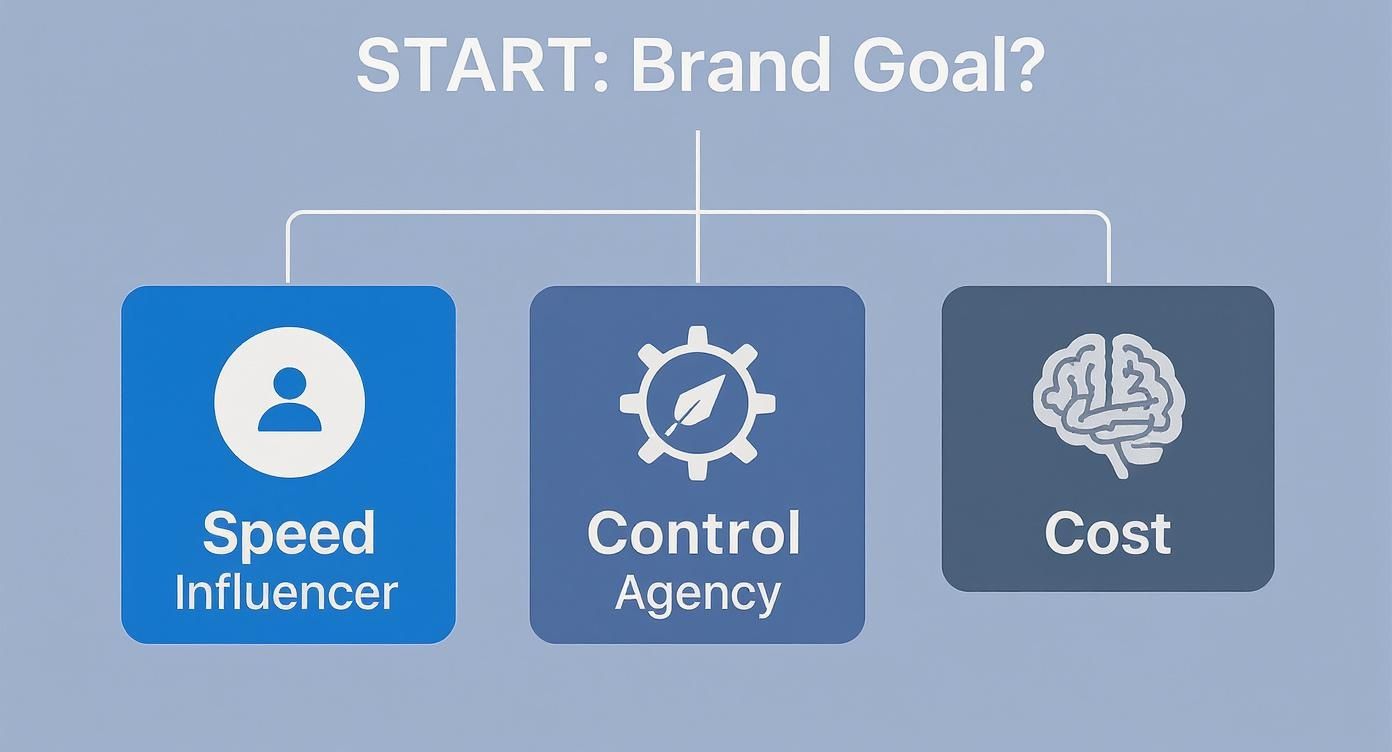
If you need pixel-perfect control, an agency is your go-to. If you need content to market yesterday, influencers turn things around fast. But when saving money and scaling content are your main drivers, AI models make the strongest business case.
How Model Costs and Timelines Stack Up
The traditional agency route means juggling multiple line items. You have model day rates ($500 to $2,500+), agency fees (20%), photographer costs, studio rentals, and post-production. The process stretches from weeks to months. A brand like G-Star RAW invests heavily in this high-touch process for its campaigns.
Working with influencers changes the cost structure. You're paying for a package that includes content creation and distribution. It can be quicker, but costs are variable, and you often give up creative control in exchange for their audience.
AI platforms like Picjam{target="_blank"} flip the script with a subscription model, eliminating most variable costs. No agency fees, no studio rentals, no day rates. The production timeline collapses from weeks into minutes. A brand can generate hundreds of unique models for photo shoots for less than the cost of a single traditional model for one day. It’s an approach catching on fast — a recent Vogue Business report{target="_blank"} found that 73% of fashion executives plan to increase their AI spend.
How to Balance Brand Control and Scalability
Agencies give you the most hands-on control, but that control comes at a steep price: scalability. Repeating that intense process for every product is not financially or logistically realistic for most brands.
Influencer content gives you the least control. The final image is a collaboration, reflecting the creator’s style as much as your brand’s, which can lead to off-brand visuals.
AI-generated models offer a unique sweet spot — total control combined with infinite scalability. Brands can specify the exact demographics, poses, and settings needed, ensuring every image is perfectly on-brand. Create a thousand images as easily as one, letting you test creative ideas without extra production cost.
Model Sourcing Comparison: Traditional vs. Influencer vs. AI
Each path has its place, but AI models provide a powerful new option that excels in areas where traditional methods fall short — namely, cost, speed, and the ability to scale.
How AI Models Slashed Gobi Cashmere’s Shoot Budget
Let's walk through a real-world scenario for a brand like Gobi Cashmere, known for its high-quality knitwear. Imagine launching a new 20-piece collection. A traditional photoshoot would mean a serious investment and a logistical headache, as the brand requires high-end models for photo shoots that match its premium feel.

The $30,000+ Traditional Photoshoot Breakdown
A standard 2-day studio shoot in New York or Los Angeles piles up costs fast.
- Models: 2 professional agency models at $2,500/day each for 2 days totals $10,000.
- Agency Fees: A standard 20% commission adds another $2,000.
- Photographer & Crew: A skilled fashion photographer and a small crew run $8,000.
- Studio & Equipment: Renting a professional studio with lighting comes to about $3,000.
- Stylist & MUA: A stylist, hair stylist, and makeup artist add at least $4,000.
- Post-Production: Retouching and color grading can easily hit $3,000.
Just like that, the baseline cost for this shoot blows past $30,000, not including travel or catering. The whole process would take weeks of planning and coordination.
The AI-Driven Alternative: Savings and Speed
Now, let's see how this plays out with an AI-powered workflow using Picjam. Gobi would start by uploading their flat-lay product shots of the new knitwear.
Instead of a drawn-out casting process, they select virtual models that match their customer demographics. Using simple text prompts, they can generate hundreds of unique, on-brand images. For example: "A model wearing our cream cashmere sweater in a minimalist Scandinavian-style living room with soft morning light."
The financial difference is staggering. Instead of a $30,000+ production, Gobi could generate a massive library of campaign-quality assets for the cost of a subscription. This approach wipes out nearly every single line item from the traditional budget.
The savings from AI aren't just a small trim; it's a complete overhaul. For a fraction of the cost, Gobi can create more content, A/B test different creative concepts, and localize campaigns for global markets without ever booking a flight. To see this in action, explore technologies like the Google Veo3.1 AI model{target="_blank"} and dive deeper into our guide to AI product photography{target="_blank"}.
Mastering the Digital-First Photoshoot Workflow
Stepping into an AI-powered workflow removes the logistical headaches of traditional shoots — coordinating schedules, booking locations, shipping samples. The focus shifts from managing people to pure creative execution, letting you build stunning visuals with unprecedented speed and control.
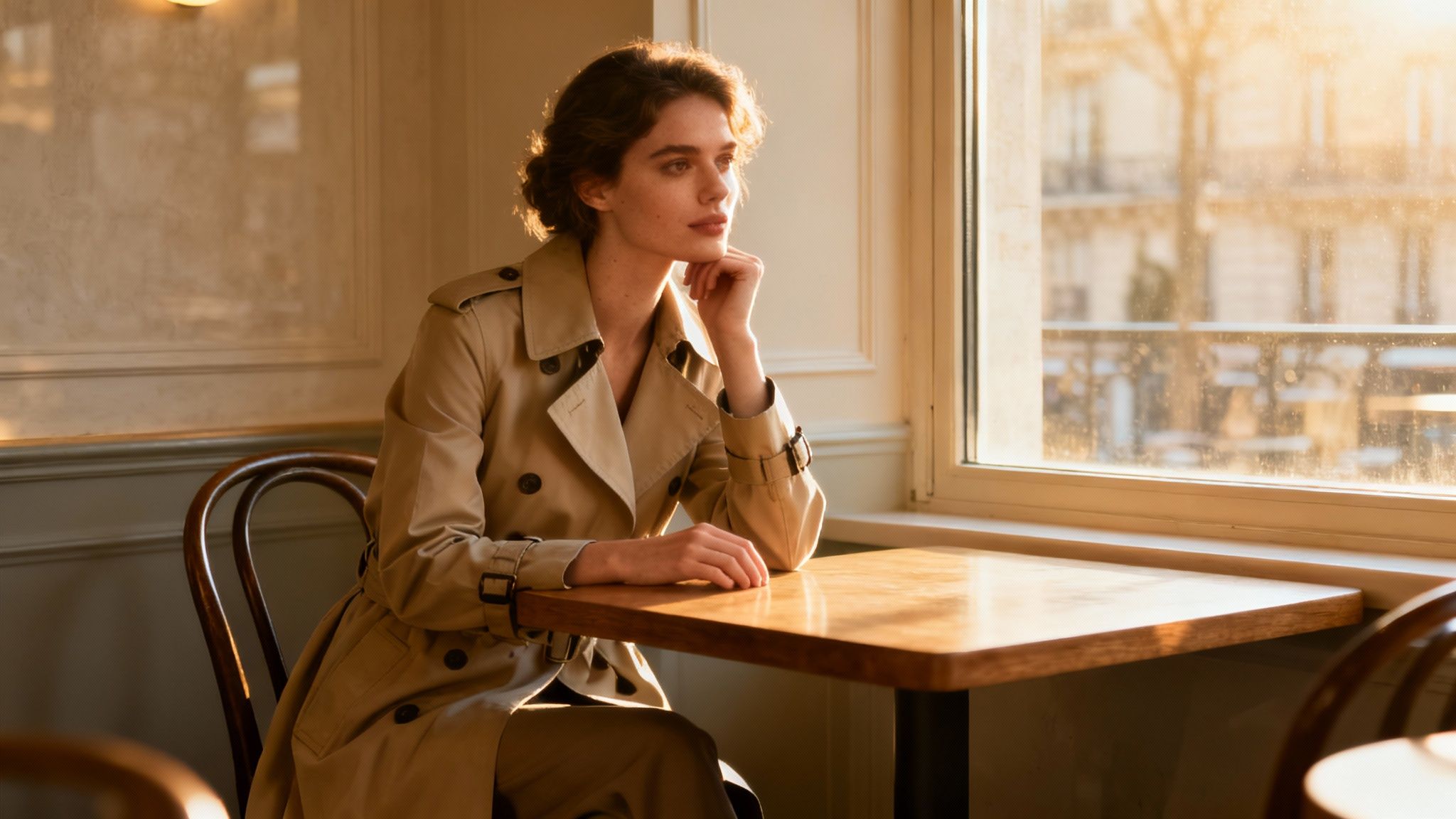
It all starts with clean, flat-lay images of your products. You upload the same high-resolution shots you use for your product pages. This simple step replaces the entire circus of physical samples and complex studio setups.
This shift couldn't be more timely. Consider this: in 2025, an estimated 2.1 trillion photos will be taken, with a staggering 94% from smartphones. This explosion has rewired customer expectations for brands and the models for photo shoots they feature. Speed and adaptability are no longer optional.
From Creative Brief to Text Prompt
With product images uploaded, the fun begins. Forget writing a detailed creative brief. Now, you translate your vision directly into simple text prompts, directing the entire shoot from your keyboard.
- Select Your Model: Pick virtual models who reflect your ideal customer, from age and ethnicity to personal style.
- Set the Scene: Instantly define the environment. A sun-drenched beach in Tulum or a moody loft in Brooklyn? Just type it out.
- Craft the Aesthetic: Get specific about lighting, pose, and vibe. Your prompt could be, “A model wearing our trench coat in a minimalist Parisian café at golden hour.”
This process is built for experimentation. If an idea doesn't work, you're not out thousands of dollars. Tweak the prompt and generate a new concept in minutes.
From Concept to Campaign in Minutes
The final step is generation. With a single click, a platform like Picjam can produce a suite of on-brand, campaign-ready images. What used to take weeks of planning, casting, shooting, and editing is now compressed into minutes.
This isn’t just about doing the same thing faster. It’s a different way of thinking that unlocks new strategies. Brands can now A/B test different models, backgrounds, and styles for performance marketing, creating visuals that are beautiful and proven to convert.
Why AI Solves the Model Usage Rights Headache
For most fashion brands, model usage rights are a notorious legal and financial minefield. When you hire traditional models for photo shoots, you sign complex licensing agreements that dictate how, where, and for how long you can use the images.
It’s common for these agreements to limit usage to specific channels (website but not paid ads), territories (North America only), and durations (usually 1–2 years). Once the clock runs out, you either pull the content or pay expensive buyout fees to renew the license.
The Problem with Content Ownership
Working with influencers brings its own complexity. You get access to their audience, but the lines around content ownership get blurry. Can your brand repurpose a creator’s post for a Facebook ad without a new negotiation? Without a rock-solid contract, you’re inviting future disputes.
The AI Advantage: Unlimited Licensing
AI-generated models completely change the game. Platforms like Picjam{target="_blank"} offer one clear advantage: a perpetual, worldwide commercial license for every image you generate.
It’s simple — once you create an image, it’s yours. You can use it forever, on any channel, in any country. No expiration dates, no renewal fees, no strings attached. This flips content from a recurring expense into a permanent asset.
For brands like Gobi Cashmere{target="_blank"}, this completely reshapes their long-term content strategy, turning photoshoots into an investment rather than just a cost.
Time to Put This Into Practice
Understanding these new approaches is one thing, but weaving them into your workflow is where real change happens. With the global photography market valued at USD 105.2 billion in 2023, brands must get smarter and more nimble with content creation. You can get a deeper dive into the photography industry’s growth on behindmud.com{target="_blank"}.
First, get an honest look at what you’re spending. I’m not just talking about day rates for models for photo shoots. Dig into all the hidden costs — logistics, travel, insurance, and licensing fees. This gives you the baseline needed to compare against new solutions.
Start Small, Get Proof
Once you know your numbers, it's time to experiment. Don't try to overhaul your entire creative department overnight.
Instead, pick a small, measurable project, like an email marketing or a paid social media campaign. Create a batch of AI-generated images for that one channel. This sets up a low-stakes A/B test where you can directly compare AI visuals against your usual shots. Track metrics like click-through and conversion rates to get hard data on what’s working.
Your Quick-Start Guide
- Do a Full Cost Audit: Uncover every line item tied to your photoshoots to find your true cost of production.
- Run a Controlled Test: Pick one low-risk channel and use AI-generated models to benchmark performance against your current content.
- Measure the Savings: Use data from your audit and test to see exactly how an AI workflow could free up your budget.
A Few Lingering Questions
Dipping your toes into the world of models for photo shoots can be overwhelming, especially with new tech shaking things up. Let's clear the air on some common questions.
What are my main options for models?
You're pulling from three pools. Agency models bring top-tier professionalism for major campaigns. Influencer or UGC models are fantastic for social media, offering real-world authenticity. And AI-generated models from platforms like Picjam{target="_blank"} are your weapon for speed, cost savings, and high-volume e-commerce content.
What's the real cost to hire a model?
A traditional agency model costs $500 to over $2,500 a day, plus a 20% agency fee and other production costs. Influencers work on package deals, from a few hundred dollars to tens of thousands. AI model platforms typically run on a subscription, letting you create unlimited images for one flat fee.
Where is AI actually headed in fashion shoots?
AI is becoming an essential tool in your creative kit. It’s not about replacing every human model, but rather taking over the heavy lifting for high-volume content — product page images, social posts, and performance marketing ads. Brands like Zara are already using AI to get visuals out faster and for a fraction of the cost.
If I use an AI model, do I own the photos?
Yes — and this is a huge deal. With a platform like Picjam, you get a perpetual, worldwide commercial license for every image you generate. The image is yours to use on any channel, in any country, forever, sidestepping the tangled expense of traditional usage rights.
Takeaway
Audit Your True Content Costs: Don’t just look at model day rates. Calculate the total cost of production — including agency fees, studio time, and post-production — to establish a clear financial benchmark for your current photoshoots.
Match the Model to the Marketing Goal: Use high-cost agency models for hero campaigns, tap influencers for social proof, and lean on AI for high-volume needs like e-commerce product shots and performance marketing creative where speed and scalability are critical.
Test an AI Workflow on a Small Scale: Pick a single product line or marketing channel to run a low-risk test. This allows you to directly compare the cost, speed, and creative results of AI-generated content against your established process before committing to a larger strategic shift.
Ready to run the numbers for your own brand? Use our calculator to compare your current photography expenses with Picjam’s AI solution.

Picjam team
The Picjam team blends AI, product, and creative expertise to eliminate the cost and delay of traditional photography for modern eCommerce brands.

