Tutorial
Jan 3, 2026

How an AI Fashion Photoshoot Slashes Content Costs

Discover how to run an AI fashion photoshoot to cut costs, accelerate content creation, and generate high-conversion visuals without a physical studio.

How to start saving money

Lorem ipsum dolor sit amet, consectetur adipiscing elit lobortis arcu enim urna adipiscing praesent velit viverra sit semper lorem eu cursus vel hendrerit elementum morbi curabitur etiam nibh justo, lorem aliquet donec sed sit mi dignissim at ante massa mattis.

  1. Neque sodales ut etiam sit amet nisl purus non tellus orci ac auctor
  2. Adipiscing elit ut aliquam purus sit amet viverra suspendisse potent i
  3. Mauris commodo quis imperdiet massa tincidunt nunc pulvinar
  4. Adipiscing elit ut aliquam purus sit amet viverra suspendisse potenti

Why it is important to start saving

Vitae congue eu consequat ac felis placerat vestibulum lectus mauris ultrices cursus sit amet dictum sit amet justo donec enim diam porttitor lacus luctus accumsan tortor posuere praesent tristique magna sit amet purus gravida quis blandit turpis.

Mauris commodo quis imperdiet massa tincidunt nunc pulvinar

How much money should I save?

At risus viverra adipiscing at in tellus integer feugiat nisl pretium fusce id velit ut tortor sagittis orci a scelerisque purus semper eget at lectus urna duis convallis. porta nibh venenatis cras sed felis eget neque laoreet suspendisse interdum consectetur libero id faucibus nisl donec pretium vulputate sapien nec sagittis aliquam nunc lobortis mattis aliquam faucibus purus in.

  • Neque sodales ut etiam sit amet nisl purus non tellus orci ac auctor dolor sit amet
  • Adipiscing elit ut aliquam purus sit amet viverra suspendisse potenti
  • Mauris commodo quis imperdiet massa tincidunt nunc pulvinar
  • Adipiscing elit ut aliquam purus sit amet viverra suspendisse potenti
What percentage of my income should go to savings?

Nisi quis eleifend quam adipiscing vitae aliquet bibendum enim facilisis gravida neque. Velit euismod in pellentesque massa placerat volutpat lacus laoreet non curabitur gravida odio aenean sed adipiscing diam donec adipiscing tristique risus. amet est placerat imperdiet sed euismod nisi.

“Nisi quis eleifend quam adipiscing vitae aliquet bibendum enim facilisis gravida neque velit euismod in pellentesque massa placerat”
Do you have any comments? Share them with us on social media

Urna ut fermentum imperdiet lacus, elementum etiam maecenas libero nunc, suspendisse massa, nisl, elit curabitur feugiat in quis ut nibh enim in tristique aliquam sed vitae dui, dis adipiscing pharetra aliquam turpis turpis nibh rhoncus enim, pellentesque leo laoreet neque in sed bibendum fermentum suspendisse tempus non purus adipiscing suscipit fringilla adipiscing convallis dolor nulla fermentum facilisis ullamcorper ut vehicula tortor libero metus donec velit, tristique fermentum, dictum euismod diam scelerisque enim non pharetra tristique lectus habitant pharetra est id

When DTC knitwear label Everlane needs clean, simple product shots, they don’t waste budget on elaborate studios. They master the basics — neutral backgrounds and good lighting — creating the perfect foundation for an AI fashion photoshoot. This approach allows brands to use artificial intelligence to generate realistic, on-model images from basic product photos, transforming content workflows.

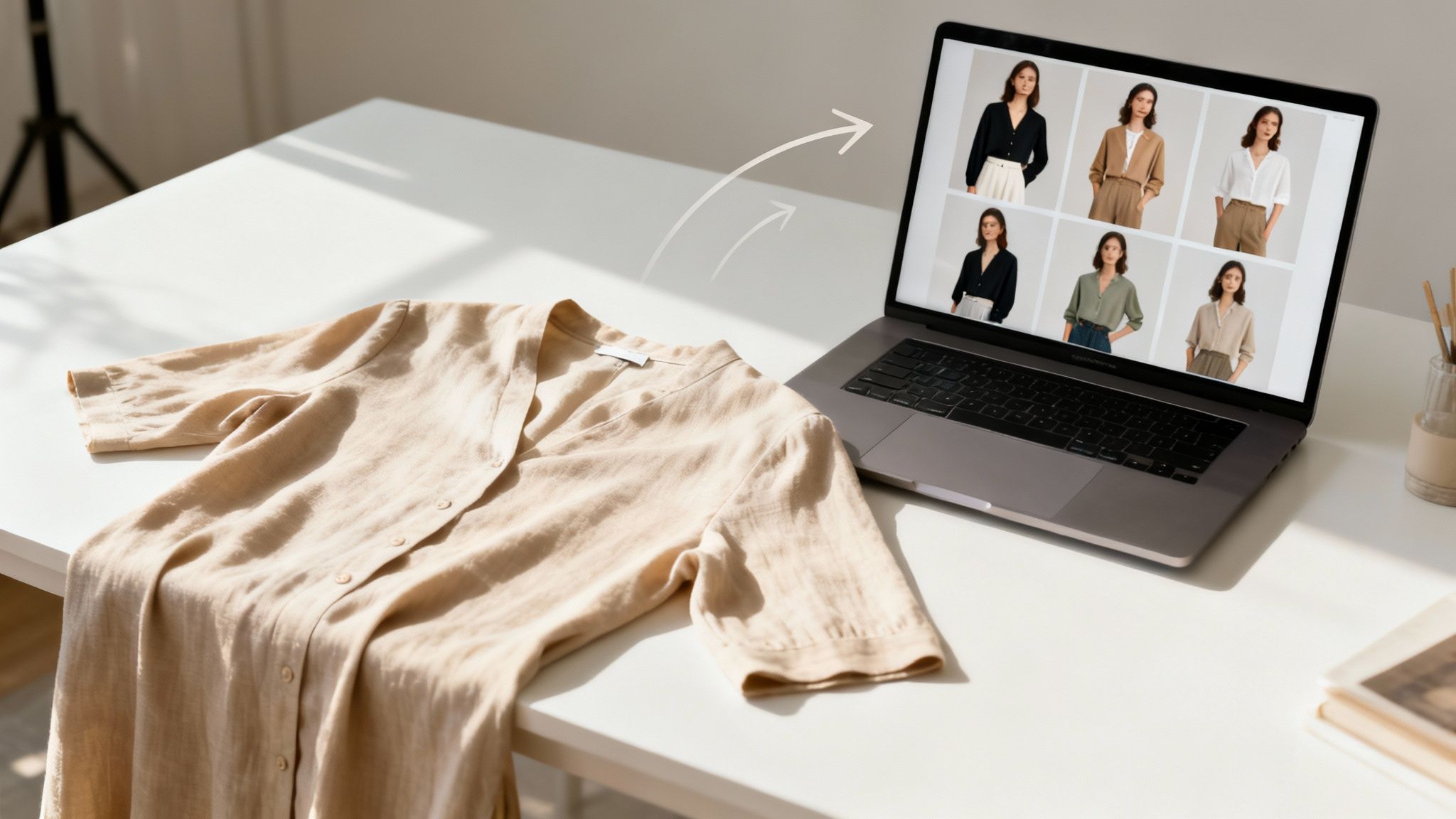
Forget the logistical nightmare of hiring models, photographers, and studios. You upload pictures of your clothes, and AI places them onto virtual models in any setting you can imagine. According to a McKinsey report, fashion brands are already experimenting with AI for content, cutting production costs by as much as 60% and speeding up campaign launches.

Using a platform like Picjam gives brands a clear path to achieve these savings. It’s a strategic shift that streamlines content creation and elevates visual storytelling.

How to Prepare Garments for a Flawless AI Shoot

The quality of your final AI-generated images depends entirely on your initial product photography. Think of these first photos as the foundation of a house. If the foundation is weak, the entire structure will be shaky. This first step is the single most important part of the process for getting incredible results.

Professional studio product photography of a flowing white women's blouse from three perspectives.

You don't need a fancy studio to nail this. All you really need is a neutral background, decent lighting, and a clear, unobstructed view of the garment. This gives an AI engine the perfect canvas to work with.

Ghost Mannequin vs. Flat Lay: Which is Better for AI?

When shooting your products, you have two main routes: ghost mannequin or flat lay. Each gives the AI different, valuable information about your garment’s shape, texture, and fit.

  • Ghost Mannequin: This is where you photograph the item on a mannequin and then edit the mannequin out later. The final image shows the product's natural shape and drape. It’s perfect for structured items like blazers, dresses, and fitted tops where showing form is everything.

  • Flat Lay: For this, you lay the garment flat on a surface and shoot it from above. Flat lay shots are fantastic for showing off details, textures, and prints. It’s the go-to choice for casual pieces like t-shirts, sweaters, and accessories.

For the best AI results, a mix of both is the sweet spot. Ghost mannequin shots tell the AI how the garment fits a human body, while flat lays provide crisp details for texture and pattern mapping.

Why Multiple Angles Are Your Biggest Time-Saver

One of the biggest mistakes brands make is not getting enough angles during the initial product shoot. Capturing front, back, and side views of every garment is essential for creating realistic AI images.

If you only provide a front view, you're asking the AI to guess what the back and sides look like. It can make a decent guess, but the results won't be accurate. Multiple angles give the AI all the data it needs to render the garment perfectly from any perspective.

"Capturing multiple angles upfront eliminates the need for expensive and time-consuming reshoots," notes a stylist for a major eCommerce brand. "This simple step saves us days in post-production."

Brands like Zara built their fast-fashion empire on efficiency. They systemized product photography to include multiple angles from day one, creating a massive library of assets for endless campaigns. For a deeper look, see our guide on AI clothing product photos.

Essential Product Photography Checklist for AI

Getting your source images right is the key to unlocking stunning AI-generated visuals. This table breaks down exactly what you need to focus on.

ElementBest PracticeWhy It Matters for AI
LightingSoft, even, and diffused lighting. Avoid hard shadows.Harsh shadows can be misinterpreted as part of the garment's pattern or texture, leading to inaccurate results.
BackgroundUse a clean, neutral background (white or light gray is best).A simple background makes it easy for the AI to isolate the garment and place it cleanly onto a virtual model.
ResolutionHigh-resolution images (2048x2048 pixels or higher).The AI needs as much detail as possible to accurately capture fabric texture, stitching, and drape.
AnglesCapture front, back, and at least one side view.Multiple angles provide a complete 3D understanding of the garment, ensuring it fits realistically in any pose.
Garment PrepSteam or iron the garment to remove all wrinkles and creases.The AI will render exactly what it sees. Wrinkles in the source photo will appear in the final on-model image.

The takeaway is simple: invest a little extra effort in your initial photography. It pays off by making the AI generation process smoother and the results more realistic, giving you freedom to build campaigns without a physical studio.

How to Style an AI Campaign That Reflects Your Brand

The creative work in an AI fashion photoshoot isn't about scouting locations or booking studio time. It’s about choosing the right virtual models and defining an aesthetic that clicks with your audience. This is where you bring your brand's personality to life in pixels.

The process is a night-and-day difference from traditional casting. Industry data shows brands can burn through up to 25% of their content budget on casting alone. With AI, that entire cost disappears.

Instead of putting out casting calls, you get instant access to a library of diverse virtual talent. On platforms like Picjam, you can filter for models by ethnicity, age, and body type with a single click, ensuring your campaign visuals reflect your customers. This isn’t just about saving money; it’s a smart way to build a more inclusive brand image.

Define Your Ideal Customer Before Choosing a Model

Before picking a model, you need a razor-sharp picture of your ideal customer. Are you selling high-tech activewear to Gen Z gym-goers or timeless basics to style-conscious millennials? Each group responds to different visual cues.

  • A brand like Revolve, which thrives on trends, needs an aspirational, influencer-driven vibe. Their AI campaigns would feature models in dynamic poses against vibrant, travel-inspired backdrops.

  • A data-driven service like Stitch Fix is all about personalization. Their AI imagery should showcase a broader range of body types in everyday situations, helping customers see how the clothes fit into their actual lives.

Once you’ve nailed down this persona, you can pick AI models that embody that look and feel. The principles from our guide on how to choose a model for a photoshoot still apply.

Articulate a Cohesive Styling Vision in Your Prompts

Styling in an AI world isn't about physically dressing a model. It’s about giving the AI crystal-clear, detailed instructions. Your styling prompts become the creative brief.

"AI gives us the ability to act on creative impulse almost instantly," noted a digital fashion strategist in Vogue Business. "If we want to see how a collection looks with a Parisian street-style aesthetic versus a minimalist Scandinavian vibe, we can generate both in minutes, not weeks."

This means you need to go beyond just the clothes. A solid styling vision includes:

  • Hair and Makeup: Be specific. Don't just say "updo" — say "messy top knot." Don't just say "makeup" — say "a bold red lip" or "a natural, dewy glow."
  • Accessories: Do you want "delicate gold hoop earrings," "a chunky statement necklace," or "a classic leather belt"? The more detail, the better.
  • Mood and Pose: Describe the feeling. "Confident and powerful, walking towards the camera" will give you a different result than "relaxed and casual, leaning against a wall."

The brands that nail AI-generated content master this art of descriptive direction. This meticulous approach is what elevates a generic AI image into a compelling AI fashion photoshoot.

How to Generate and Refine On-Model Images in Minutes

You've got clean product shots and a solid styling plan. Now it's time to bring your collection to life on a model. This is where careful prep pays off, letting you create a campaign’s worth of visuals in a fraction of the time of a traditional shoot.

The process kicks off when you upload your ghost mannequin or flat lay photos to a platform like Picjam. The AI maps every detail — the texture, the drape, the fit — onto the virtual model you’ve selected. The first result is often stunning, but the real magic is in the refinement tools.

Instantly Adjust Fit and Form with a Click

One of the biggest headaches in fashion photography is getting the garment to sit just right. On a physical set, that means endless pinning, clamping, and hours of post-production editing. With AI, those tweaks take seconds.

You get core features that let you dial in the final look with simple commands:

  • Swap Model: If the first model doesn't nail the vibe, you can instantly switch to another one without re-uploading the product. This is huge for testing the same piece on different body types and ethnicities.
  • Fit to Model: This smart tool analyzes the garment's shape and the model's pose, then makes tiny adjustments to create a realistic fit. It fixes common problems like unnatural pulling or awkward draping.

This gives a creative director a level of control that used to require a whole team on set. For a deeper dive, check out our guide on how to generate AI models for clothing.

Craft the Perfect Scene Without Leaving Your Desk

Once you’ve nailed the model and fit, it's time to place them in a scene that tells your brand’s story. You can instantly generate studio and lifestyle backgrounds that turn a basic product shot into something compelling.

Want a minimalist studio with soft, morning light? Done. How about a bustling Parisian street? Just type it in. This capability allows brands like the contemporary label Ganni to maintain a consistent, high-fashion look across all visuals without the massive costs of a global photoshoot.

This streamlined process — from picking a model to styling the scene — creates an incredibly efficient workflow.

Diagram illustrating an AI campaign flow from model selection to AI-powered fashion styling.

This simple flow shows how quickly you can get from a concept to final creative assets. When you compare the time and money saved, the argument for AI becomes clear.

How AI Stacks Up: Traditional vs. AI Photoshoot

FactorTraditional PhotoshootAI Fashion Photoshoot
Time4–8 weeks (planning, shooting, post-production)Hours to days (upload, generate, refine)
Cost$10,000–$50,000+ per campaign$100–$1,000+ per campaign (subscription-based)
LocationLimited by budget; requires travel and permitsUnlimited virtual locations generated instantly
ModelsFixed cast; limited diversity per shoot budgetHundreds of diverse models available instantly
StylingPhysical samples, on-set stylist requiredVirtual styling and fit adjustments with a few clicks
RevisionsRequires expensive reshoots or heavy retouchingInstant revisions and variations at no extra cost
OutputA few dozen final, approved imagesHundreds or thousands of creative variations

As the table makes clear, this is a complete shift in how brands produce fashion imagery. The savings in both time and money are massive.

"We used to spend weeks planning a single lifestyle shoot. Now, we generate dozens of on-brand scenes for our entire collection in an afternoon. This lets us test what resonates on social media in real-time, without sinking our budget into one concept."

This iterative process replaces the high-stakes, one-shot deal of traditional photography. Brands can experiment freely, creating a wider array of content to find the exact visuals that convert best.

How to Optimize AI Visuals for E-commerce and Ads

Getting a stunning set of on-model images is just the starting line. To move the needle on your bottom line, those visuals must be fine-tuned for everywhere your customers see them — from product pages to paid social campaigns.

A woman wearing a white cropped tweed jacket and wide-leg blue jeans in a modern fashion photoshoot.

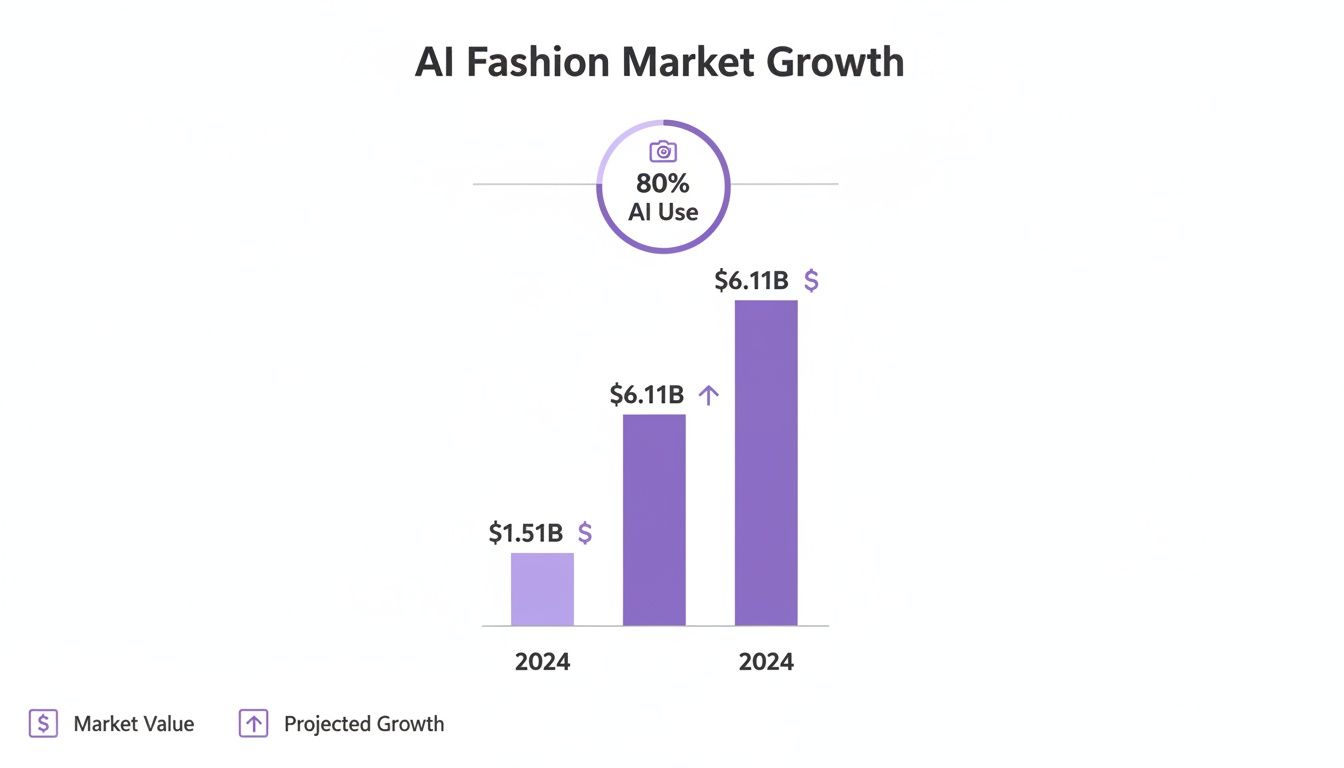
There's a reason for the explosive growth in this space. Projections show the AI-generated fashion photography market is set to rocket to $6.11 billion by 2029. That growth is about brands using AI as a data-driven marketing engine. You can dig into these numbers in PixelDojo.ai's full projections.

Upscale Images for Crystal-Clear Product Pages

Your product page is where customers get up close. Blurry or low-res images are a conversion killer. Shoppers expect to zoom in and see every stitch with perfect clarity. If they can’t, they’ll assume the product quality is just as poor.

AI upscaling tools, often built into platforms like Picjam, are non-negotiable. With a click, you can boost the resolution of your generated images, ensuring they stay crisp and professional. It’s a small step that builds trust and conveys quality.

And for consistency, a solid understanding of color management in printing is a must if you're creating physical lookbooks.

Supercharge Ad Performance with Rapid A/B Testing

One of the most powerful uses of AI in fashion marketing is generating ad variations at scale. It used to be slow and expensive to create multiple ad versions for A/B testing. Now, you can spin up dozens of variations in minutes.

Let's say you're an activewear brand like Gymshark, launching new leggings. Instead of betting your ad budget on a single creative, you can instantly test visuals for:

  • Different Models: Does your audience respond better to a pro athlete or an everyday fitness enthusiast?
  • Varied Backgrounds: Does a clean studio shot outperform a gritty, outdoor gym environment?
  • Multiple Poses: Is it the dynamic action shot or the static pose that gets more clicks?

By running these variations on Instagram or TikTok, you get real-world performance data in hours, not weeks. This lets you pinpoint the winning creative and boost your return on ad spend (ROAS).

According to recent marketing analytics, fashion brands using AI to generate ad creative can reduce customer acquisition costs (CAC) by up to 50% by rapidly identifying the most effective visuals.

How to Navigate the Ethical and Legal Landscape

Jumping into AI for creative work brings new ethical and legal questions. For any serious brand, building your strategy on a solid ethical foundation is crucial for earning customer trust. Every AI fashion photoshoot must be managed with this in mind.

Traditional photoshoots mean wading through model release forms and complex usage agreements. AI platforms with commercially licensed, royalty-free virtual models offer a massive shortcut, wiping those legal hurdles off your plate.

Ensure Model Consent with Commercial Licensing

Platforms like Picjam were built to simplify this. The virtual models they offer are ethically sourced and come fully licensed for commercial use. This means you can use the generated images across your website, social media, and ad campaigns without worrying about surprise fees or legal issues. It's a huge reduction in cost and risk.

This approach sidesteps the debate around AI models trained on unauthorized images. You can operate with confidence, knowing your visuals are built on a compliant and ethical framework.

Build Customer Trust with Transparency

Beyond legal issues, there's the conversation about transparency. Should you tell customers you're using AI-generated images? The smartest brands are treating this as an innovation to be shared, not a secret to be kept.

Levi’s, for instance, publicly announced their partnership with Lalaland.ai to supplement human models with AI-generated ones, framing it as a way to boost diversity. While it sparked debate, their upfront approach was a big deal.

A simple line in your website footer, like "Images generated with AI to showcase our collection on a diverse range of models," can make a world of difference. It’s honest and reframes AI as a tool for inclusivity.

A solid understanding of intellectual property protection is non-negotiable. Your best first step is always to use a platform that offers crystal-clear commercial licensing. This lets you use AI to spark creativity and efficiency without compromising your brand's values.

Takeaway

Getting your first AI fashion photoshoot off the ground boils down to 3 core ideas that will set you up for visuals that move the needle for your business.

  1. Prioritize High-Quality Inputs. The quality of your source images — clean, well-lit flat lay or ghost mannequin photos — is the single most important factor. Spend the extra time prepping your garments and capturing clear, high-res shots from every key angle. This initial effort pays off tenfold in the final result.

  2. Use AI to Enhance Diversity. Showcase your collection on a genuinely diverse range of virtual models without the cost of traditional casting. Use AI to generate images featuring models of different ethnicities, ages, and body types to connect with a broader audience and build a more authentic brand.

  3. Test Creative to Lower Ad Costs. Don't just create beautiful images; put them to work. Generate dozens of creative variations for your ad campaigns to test different models, backgrounds, and concepts. This data-driven approach is the fastest way to lower your customer acquisition costs (CAC) and improve your return on ad spend (ROAS).

Ready to see what this workflow could mean for your budget? Compare your current photography costs with the Picjam approach.

Calculate Your Savings Now

About

Picjam team

The Picjam team blends AI, product, and creative expertise to eliminate the cost and delay of traditional photography for modern eCommerce brands.