A Modern Guide to the Perfect Clothing Photoshoot
Master your next clothing photoshoot with our guide. Learn how to plan, shoot, and scale stunning on-model images that drive sales for your fashion brand.
By Michael Pirone, Founder of Picjam & Vidico
When leading brands like Crocs test AI-generated photos for a new collection, they can discover a 60% faster campaign rollout. That speed doesn't come from a better camera — it comes from a smarter process that translates a brand's vibe into images that sell.
A successful clothing photoshoot begins long before the camera comes out. It starts with a solid game plan, moving from a big-picture creative vision to a detailed shot list that nails every angle and fabric detail.
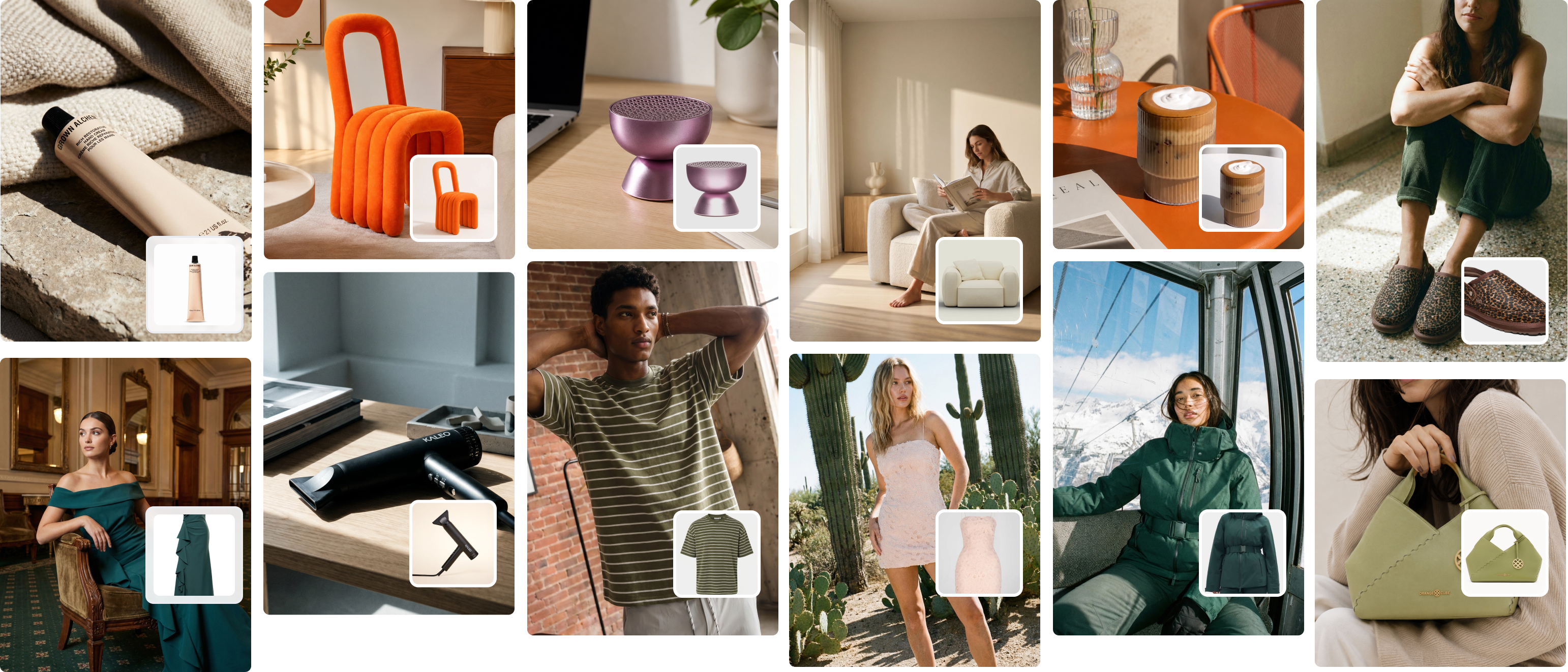
This shift is where tools like Picjam come in, allowing brands to generate entire on-model photoshoots from a single product image, saving immense time and budget.
Nailing Your Creative Vision and Shot List
Long before anyone steps in front of the camera, you need to lock down your creative vision. This is the foundation for the entire shoot and separates a random collection of photos from a cohesive campaign. Get this right, and your team — photographer, stylist, models — will be perfectly aligned.
First, think about where your brand sits in the market. Are you a luxury brand telling a story of heritage like Gucci? Or are you a fast-fashion brand like Zara, where visuals need to feel energetic and of-the-moment? Defining this will guide every decision.
Build Your Mood Board
A mood board is your photoshoot's North Star. It’s a collection of images, colors, and textures that visually define the look and feel you're aiming for. It's a critical communication tool that gets everyone on the same page.
When you're putting your mood board together, zero in on these elements:
- Color Palette: What are the main and accent colors for your backgrounds, props, and styling? This is key for brand consistency.
- Lighting Style: Are you going for bright, clean commercial lighting? Or something more dramatic with high-contrast shadows for a high-fashion edge?
- Model Poses and Expressions: Collect examples of poses that match your brand’s personality. Are they confident and sophisticated, or more candid and playful?
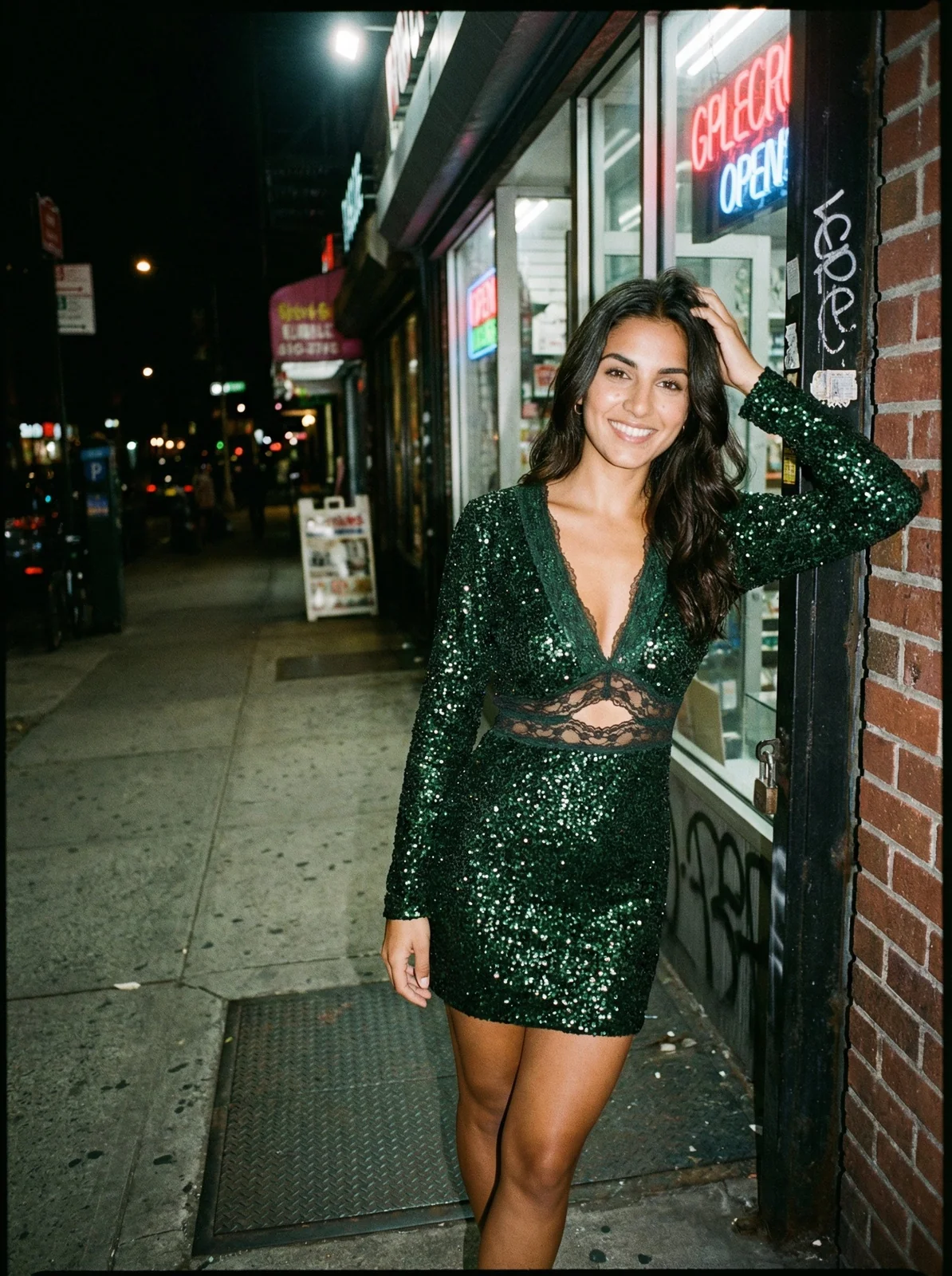
- Location and Environment: Gather images of settings that fit your brand’s story — a minimal studio, a gritty urban street, or a calm, natural landscape.
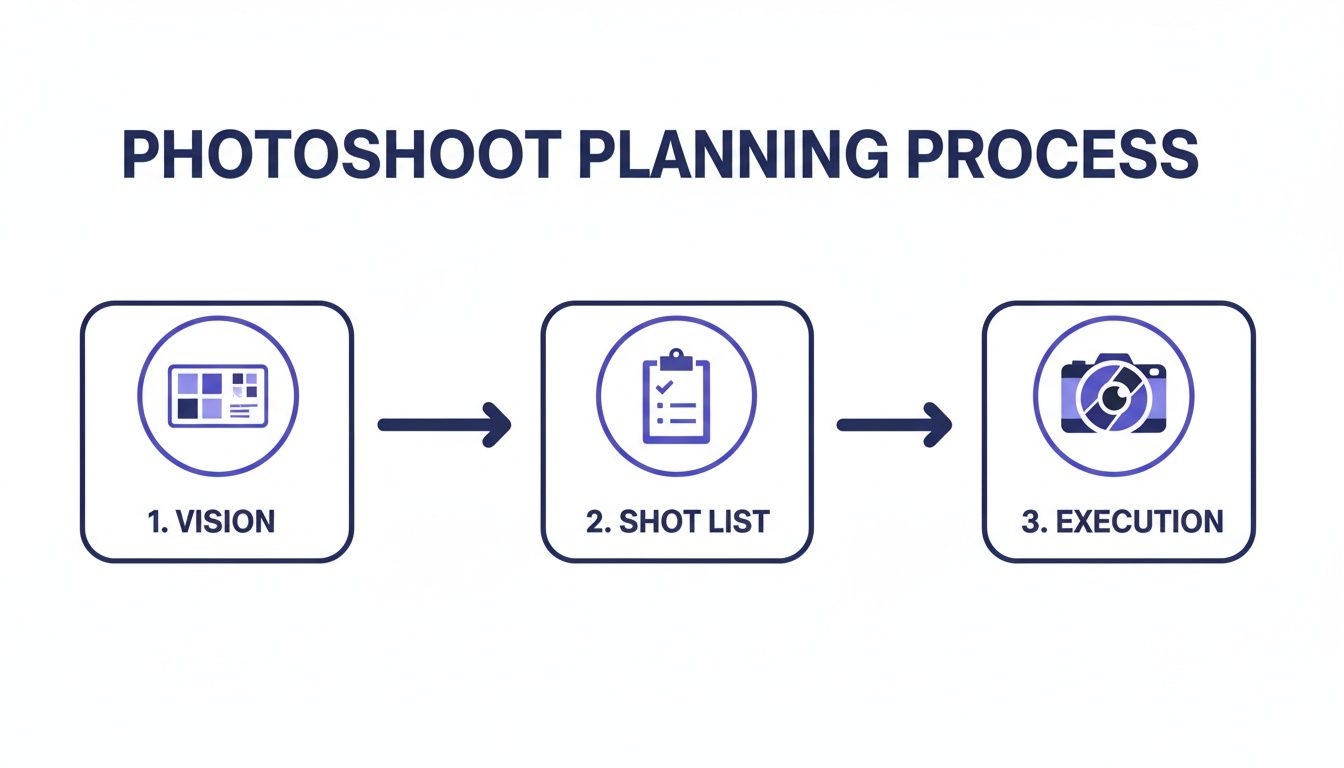
Once your mood board has brought the vision to life, it's time to turn those creative ideas into an actionable plan.
Create a Strategic Shot List
With your creative direction set, the next step is a detailed shot list. This is your production blueprint, ensuring you capture every image needed for product pages, marketing, and social media. A good shot list saves you from expensive reshoots. For more creative fuel, check out our guide on clothing brand photoshoot ideas.
A common mistake is planning for just one or two "hero" shots. To build real customer confidence, you need to show your products from multiple angles.
A solid shot list for a single garment should include:
- Full-Body Shots: Get the front, back, and side. These show the complete silhouette and how the item fits.
- Three-Quarter Shots: These are typically cropped from the mid-thigh up and focus on how the garment looks on the model's upper body.
- Detail Close-Ups: This is your chance to highlight what makes your product special — unique buttons, intricate embroidery, fabric texture, or a specific seam.
- Movement Shots: Capture the garment in action. Seeing a model walk, jump, or twirl shows off the fabric's drape and flow in a way static shots can't.
- Styled Shots: Pair the product with other items from your collection. This not only provides styling inspiration but also helps encourage bigger cart sizes.
How On-Model Photography Boosts Conversion by 30%
Seeing clothing on a real person isn’t just a nice-to-have for an online store — it's one of the most powerful levers you can pull to drive sales. On-model imagery is the standard in fashion ecommerce for a simple reason: it answers the two most critical questions every shopper has: "How will this look on me?" and "How does it actually fit?"

When customers can see how a garment drapes and moves, they can instantly visualize themselves wearing it. This creates a powerful connection that a static flat lay shot just can't match.
Think about how performance brands like Nike or Lululemon sell their gear. They don't just put a pair of leggings on a white background. They show them on athletes in motion, demonstrating flexibility and fit in a real-world context. That’s what builds customer confidence.
Building Connection and Trust
On-model photography closes the gap between scrolling online and shopping in a physical store. Shoppers connect more deeply with brands that show apparel on people they can relate to. This is why inclusive representation is a smart business strategy that broadens your audience.
The numbers don't lie. A staggering 95.6% of top fashion brands rely on model photography. Seeing a garment on a person reveals its fit and style in a way that can boost conversion rates by up to 30%, according to industry benchmarks. If you want to dive deeper, this fashion photography research lays out the full picture.
Getting your product presentation right is a huge part of any successful effort to increase Shopify sales and grow your brand's revenue.
How AI Is Lowering the Barriers to Entry
For years, the biggest challenge for growing brands has been the enormous logistical headache of a professional clothing photoshoot. The old model of booking models, studios, and photographers is both slow and expensive.
This is where things are finally starting to change. The high barrier to entry that once protected the industry giants is being taken apart by new technology.
Tools like Picjam are creating a whole new playbook. Using AI, brands can now generate entire on-model photoshoots from a single product shot. This allows you to place your apparel on a diverse range of virtual models in any setting you can dream up, all within minutes.
This approach gives every brand access to high-quality campaign imagery. It empowers emerging companies to produce visuals that look like they came from a six-figure budget, but at a tiny fraction of the time and cost. You can get a closer look at this modern approach in our guide to product photography with models.
Mastering Your Photoshoot's Technical Details
A great moodboard is one thing, but translating that vibe into actual photos is where the technical stuff comes in. This is the part of your clothing photoshoot where art meets science, and getting it right is the difference between images that sell and images that lead to returns.
When the lighting, camera settings, and angles all work together, your apparel looks just as good on screen as it does in real life. That builds trust and gives customers the confidence to click "buy."
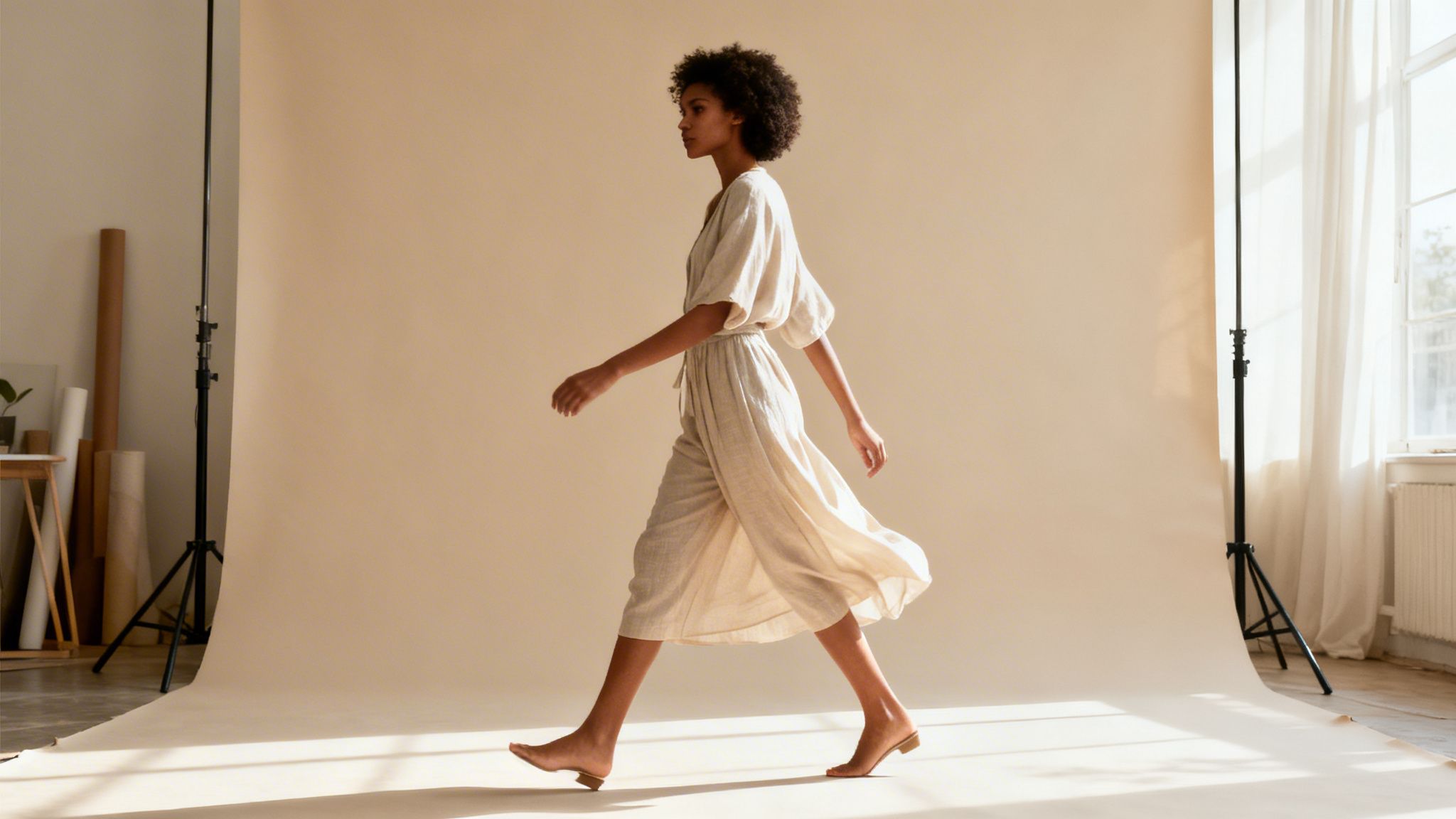
Even if you’ve hired a pro photographer, knowing the fundamentals means you can direct the shoot with confidence. You’ll be able to ask for exactly what you want, whether it's a crisp shot of fabric texture or a dreamy, soft-focus background.
Dialing In Your Camera Settings
It all comes down to the "exposure triangle" — the interplay between aperture, ISO, and shutter speed. These 3 settings control how bright and clear your photos are. Mastering their balance is what gives your shots that professional polish.
Aperture (f-stop): This setting controls what's in focus. For clothing, a wide aperture (like f/1.8 to f/4) is your best friend. It creates that beautiful blurred background (bokeh) that makes the model and clothing really stand out.
ISO: This is your camera's sensitivity to light. Your goal here is to keep this number as low as possible, ideally between ISO 100-400. This gives you clean, crisp images that show off every detail of the fabric.
Shutter Speed: This is how fast your camera takes the picture. For static product shots, a shutter speed of 1/125s or faster is a solid starting point. To capture the flowy movement of a dress, you'll need to go much faster — think 1/500s or more — to freeze that motion perfectly.
Remember, these 3 work as a team. Change one, and you'll probably need to adjust another to get the exposure right.
Shaping the Mood with Lighting
Lighting isn't just about making things visible; it's about telling a story. Your lighting can make a garment feel dramatic and high-end or clean and approachable. It's also absolutely critical for color accuracy. Bad lighting can make a navy dress look black, which is a recipe for customer disappointment.
Let's look at 2 common ways to light a shoot.
Three-Point Lighting: This is the industry standard for a reason. It uses a key light (your main light), a fill light (to soften shadows), and a backlight (to separate the model from the background). It’s the go-to for clean, commercial shots.
Single-Source Lighting: If you want more mood and drama, using one large light source (like an octabox) can be incredible. By placing it to the side of your model, you create soft shadows that define the shape of the clothing and highlight fabric texture.
No matter which setup you choose, start your shoot by taking a picture of a color checker card. This simple tool is a lifesaver in post-production, letting you dial in perfect color accuracy so what you see is what your customer gets.
Want to dive deeper into controlling light? Check out our complete guide to the basics of photography lighting.
Styling and Directing for Maximum Impact
You can nail the creative brief and get the lighting perfect, but a clothing photoshoot truly comes alive with the human touch. The styling and the way you direct your model are what turn a simple garment into something your customer absolutely has to own. It's the secret sauce that creates a dynamic, story-driven image.
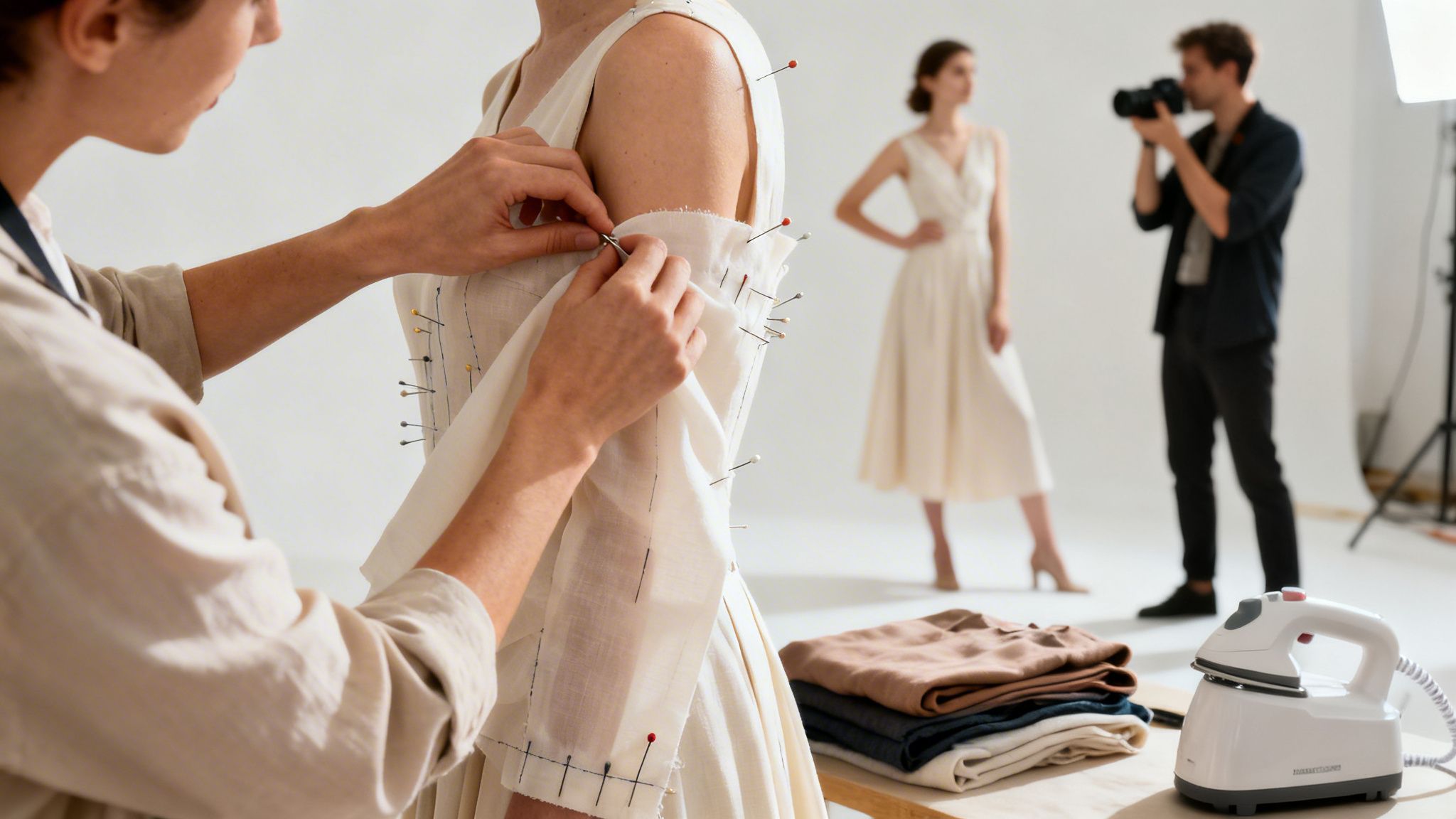
Great styling is more than just throwing on accessories. The real work starts with meticulous prep. Every single piece of clothing needs to look pristine on camera, which means steaming out every wrinkle, using pins to create the perfect fit, and hunting down any distracting tags or loose threads.
The Art of Flawless Garment Styling
Long before a model steps onto the set, the stylist is already working. The whole point is to show the clothing in its absolute best light, making sure the fit, fabric, and design look both accurate and aspirational.
Here are the on-set styling tasks that are completely non-negotiable:
- Steaming and Ironing: No excuses here. Every item must be perfectly steamed or ironed. Wrinkles look unprofessional and make your product feel cheap.
- Strategic Pinning and Clipping: Use clips and pins to tailor the garment to your model, especially if you’re shooting with sample sizes that aren't a perfect match. The goal is to add shape without making the clothing look unnaturally tight.
- Lint Rolling: This is a simple but critical step. Fabrics, especially dark ones, are magnets for dust and lint that become glaringly obvious under studio lights.
- Static Guard: Static cling can ruin the shot, particularly with flowy dresses or synthetic fabrics. A quick spritz ensures the material moves naturally.
This level of prep makes the clothes look intentional and polished, which directly translates to a higher perceived value in your customer's mind.
Directing Poses That Sell
Once the clothes look perfect, it’s all about the direction. Your model isn’t just a living mannequin; they’re a storyteller. Your job is to guide them to bring out the right feeling and show off the clothing’s best features.
Take a brand like Free People, for example. They nail this. Their models are rarely standing still; they’re often captured mid-motion, with windswept hair and a natural expression. This dynamic direction sells a feeling of freedom and adventure, not just another boho dress.
To get these kinds of shots, you need to communicate a story or a feeling, not just a pose. Instead of saying "stand like this," give prompts that inspire action.
- For Activewear: Try something like, “Imagine you’re stretching after a long run.” This encourages natural movements that show off the fabric's flexibility.
- For a Formal Dress: A prompt like, “Walk toward me like you’re entering a grand ballroom,” creates an elegant posture and a sense of occasion.
- For Denim: Go for something relaxed, like, “Lean against the wall like you’re waiting for a friend.” This gives off a casual, relatable vibe.
This approach doesn't just produce more compelling images — it also helps the model relax and deliver more genuine expressions.
From a Good Shot to a Great Asset: Post-Production and Scaling
The shoot isn’t over when you put the camera down. The edits you make in post-production are what turn a solid photo into a high-performing asset that actually drives sales. This is where you perfect your images, ensure they’re brand-consistent, and find ways to get more mileage out of every single shot.
The first step is always culling — sifting through hundreds of photos to find the best ones. Once you have your selects, it’s time to polish them into a set of flawless "hero" images that will anchor your product pages.
Nailing the Foundational Edits
Before you can even think about creating variations for ads or social media, your master images need to be perfect. This isn't about dramatically changing the photo; it's about making it the truest, most compelling version of itself.
Your editing checklist should always include these non-negotiables:
- Color Correction: This is your top priority. The color of the garment on screen must match the color in real life. Get this wrong, and you’re practically begging for returns.
- Exposure and Contrast: A quick tune-up of the brightness and contrast can make an image feel alive. The goal is to make the product pop without losing important details.
- Basic Retouching: Look for small distractions and clean them up. A stray thread, a piece of dust, or a scuff mark on the floor can pull a customer's eye away from the product.
Once these hero images are dialed in, you have a strong foundation. For brands looking to grow, this is just the starting point.
The New Frontier: Scaling Your Creatives with AI
What if you could test a new dress against 10 different backgrounds in your social ads? Or instantly place your winter coat on a dozen different AI models for different regional markets?
Traditionally, creating this much variety was a logistical and financial nightmare. This is exactly the problem an AI studio like Picjam was built to solve. Instead of seeing a photoshoot as a single event, you can now use your hero images as a launchpad for virtually unlimited creative assets.
With a platform like Picjam, you can take one of your polished product shots and instantly:
- Swap out the background for dozens of on-brand options.
- Place the same garment on a diverse range of AI-generated models.
- Generate new model poses and looks tailored for international markets.
This approach completely redefines post-production. It’s no longer just a cleanup phase; it’s a strategic engine for creating marketing assets. By handing off the repetitive work of creating variations to AI, you free up your team to focus on what really matters: analyzing performance data and building a more agile content strategy.
Optimizing and Scaling Your Visual Content Strategy
You’ve got your edited images. Now you have to actually put them to work. This is where we move from production to strategy — making sure the right images hit the right channels and figuring out how to feed the endless content beast of modern marketing. A folder of photos must become an engine for growth.
Any brand succeeding today knows that a one-size-fits-all approach to images is a dead end. The crisp shots on your product pages are the same ones that will get scrolled past on TikTok. Every channel has its own language.
Tailoring Your Assets for Every Channel
Just look at a major player like ASOS. They don’t just slap one on-model photo everywhere. Their website is a masterclass in detail, with product shots from every angle. Their Instagram is a mix of polished campaign images and more candid, user-generated-style content. Their TikTok ads are all fast cuts and trend-driven video.
That constant flow of different visuals is what keeps their audience locked in. To pull that off, you have to think about your assets as a toolbox, not a finished product.
- Product Detail Pages (PDPs): This is where you need your sharpest, highest-resolution images. Shoppers want to see it all — front, back, side, and close-ups. This is about building trust.
- Social Media Feeds (Meta, Pinterest): Here, you need to tell a story. Lifestyle and campaign shots are king. This is your chance to show styled looks and establish a real brand mood.
- Video-First Platforms (TikTok, Reels): Static images are a non-starter. You need movement. Think short clips of the model walking or animations stitched together from your stills.
- Email Marketing: A good email uses a mix of clean product shots and aspirational lifestyle photos. The goal is to get the click, so the visuals have to be both clear and compelling.
How to Meet Constant Content Demand
For any brand trying to grow, keeping up with this demand for fresh, channel-specific content is a massive headache. The old-school model — plan a shoot, book a crew, execute, repeat — is slow, expensive, and inflexible.
This is where you need a real shift in thinking. Instead of being limited by a single photoshoot, you need a way to generate endless variations from your core images. After you've invested in that first batch of high-quality content, building a strong clothing affiliate program is a smart way to multiply the reach of those visuals.
A tool like Picjam becomes a game-changer. It lets you break free from the rinse-and-repeat cycle of traditional photoshoots. By starting with one high-quality product photo, you can generate a virtually endless supply of on-brand, on-model images and campaign assets. It’s a strategic pivot to a more agile, cost-effective content model that lets you test, learn, and optimize at a speed that was impossible before.
Takeaway
Plan Meticulously: A clear mood board and a detailed shot list are your most important tools. They align your team and ensure you capture every shot needed for every channel, saving you from expensive reshoots.
Master the Technicals: Understanding the basics of aperture, ISO, and shutter speed gives you creative control. More importantly, shaping your light tells a story and ensures color accuracy, which is critical for reducing returns.
Scale with AI: Don't let your photoshoot be a one-time event. Use a platform like Picjam to transform your hero images into hundreds of variations for A/B testing, social media, and international campaigns, dramatically increasing your content ROI.
Curious how this approach could change your budget? Punch your numbers into the Picjam savings calculator to see a side-by-side comparison of your current costs and find a much more flexible path forward.

Picjam team
The Picjam team blends AI, product, and creative expertise to eliminate the cost and delay of traditional photography for modern eCommerce brands.