Perfume Photography: How to Photograph Fragrance Bottles
How to photograph perfume for ecommerce: shot list, lighting clear, coloured and frosted glass, taming cap reflections, scent-story props and 10 ideas.
Short answer: To photograph perfume for ecommerce, shoot the bottle front-on against white or a soft gradient for the main image, lit by large diffused lights from the side or behind. Use black and white cards to shape the glass edges, clean every fingerprint, and add the box, cap detail, scale and a scent-story scene.
Perfume and fragrance bottles are some of the hardest products to photograph: clear glass, coloured liquid, chrome caps and printed labels all behave differently under light. This guide covers the shot list, lighting for each bottle type, how to control reflections, styling the scent story, common mistakes and ten perfume photography ideas.
- The perfume shot list
- Lighting by bottle type
- Controlling reflections
- Styling the scent story
- Common mistakes
- 10 perfume photography ideas
- Skip the shoot
- FAQs
The Perfume Product Photography Shot List
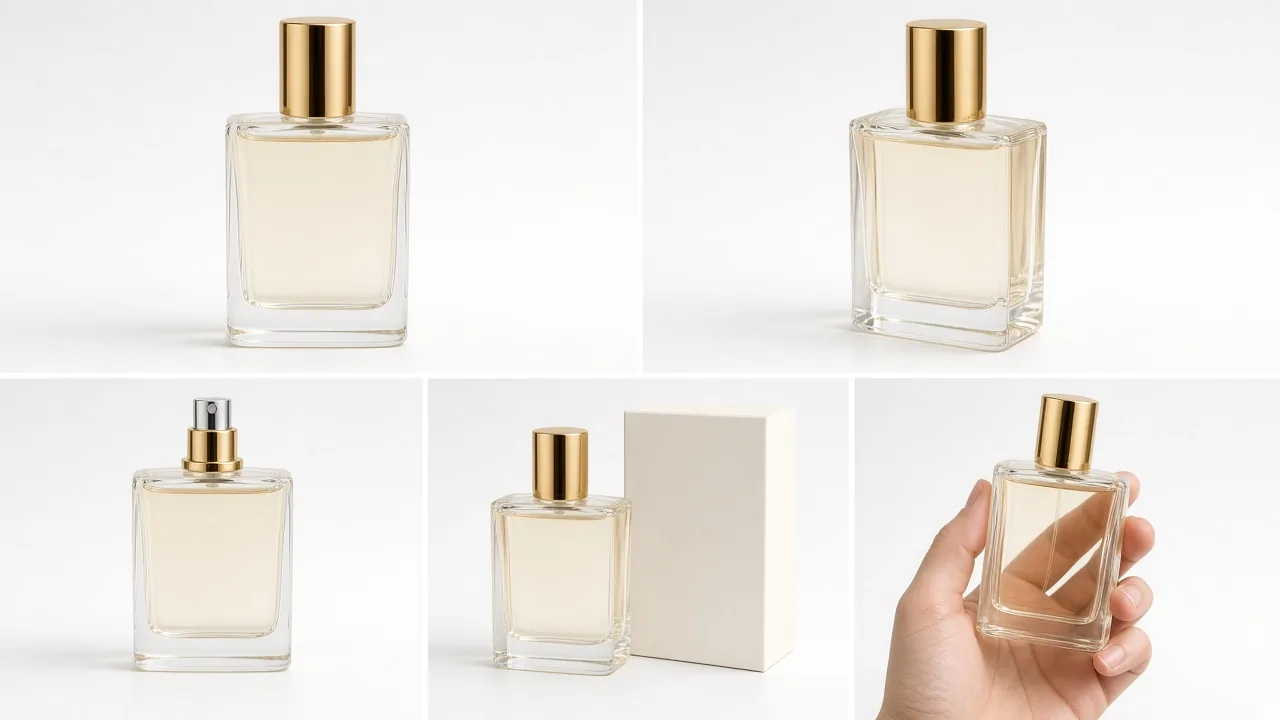
- Front hero. The bottle straight on, cap on, label level, on white or a soft gradient. This is your main image.
- Three-quarter angle. Turned slightly to show depth, the shape of the glass and the thickness of the base.
- Cap and atomiser detail. The cap off or beside the bottle, with the sprayer and collar sharp.
- Bottle with box. The bottle in front of or beside its carton, so buyers know what arrives.
- Label and size close-up. Name, concentration (such as eau de parfum) and volume, sharp enough to read.
- Scale. In a hand or beside a familiar object, so a 30 ml and a 100 ml bottle are easy to tell apart.
- Scent-story scene. The bottle with props that suggest its notes: citrus, florals, woods, spice.
Lighting by Bottle Type
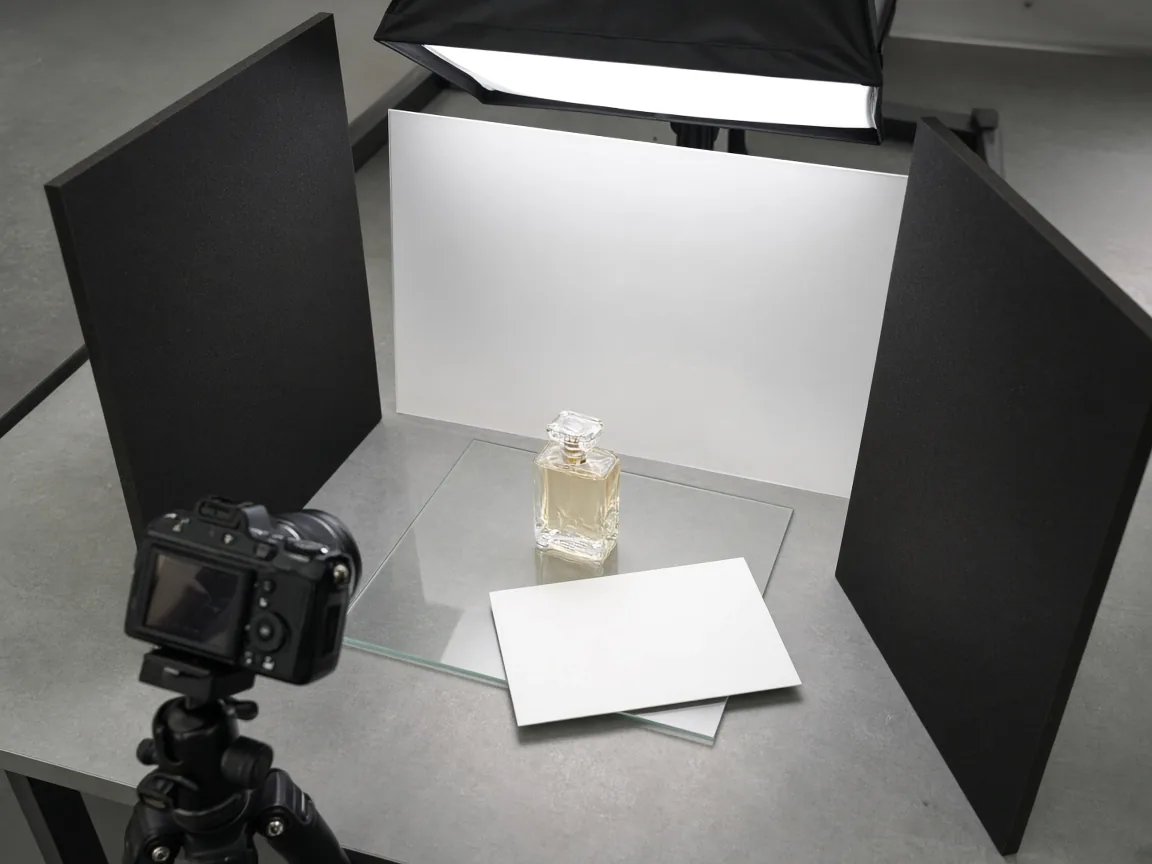
Glass does not show light; it shows reflections of light. So the size and position of your light sources matter more than their power. Start with one large diffused light (a softbox or a sheet of diffusion fabric) and add cards to shape the edges.
| Bottle or finish | How to light it | Watch out for |
|---|---|---|
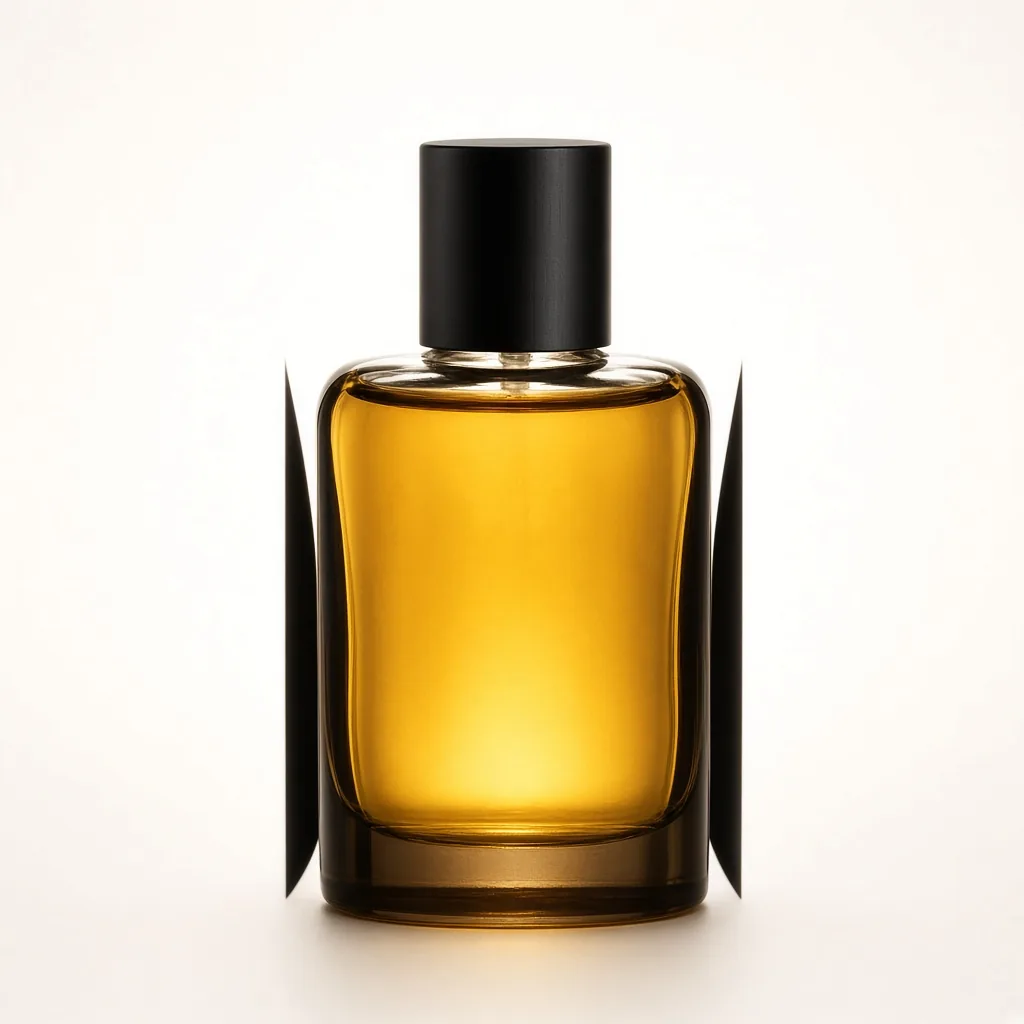
| Clear glass, clear liquid | Backlight through diffusion, with black cards just out of frame on each side to draw dark edges | A bottle that disappears into a white background |
| Coloured liquid or tinted glass | Light from behind so the colour glows; a small white card under the bottle lifts the base | Liquid that looks dark and muddy when lit from the front |
| Frosted or opaque glass | Large soft light from the side for an even tone, plus a reflector on the other side | Grey, patchy frosting and lost shape |
| Chrome, gold or metal caps | Surround with white and black cards so the cap reflects clean bands, not the room | Your camera, tripod and ceiling showing in the cap |
| Faceted or cut glass | A hard, small light for sparkle plus a soft fill so the facets stay readable | Too many hot spots that hide the label |
| Black or dark glass | Long strip lights at the sides to trace the outline; a gradient background behind | A bottle that merges into a dark backdrop |
Controlling Reflections
- Turn off room lights and block windows, so the glass only reflects what you choose.
- Use black cards to add definition and white cards to add highlights. Move them a few centimetres at a time and watch the edges change.
- Shoot through a hole. If your camera shows up in a metal cap, hang black fabric or card in front of the camera and shoot through a small gap.
- Use a longer lens from further back. It keeps the bottle's lines straight and reflects less of the room.
- Try a polarising filter to calm glare on glass. It helps less with reflections on metal.
- Use a tripod and fix the set, so you can shoot separate frames for the cap, label and liquid and blend them if needed.
Prep and Styling the Scent Story
- Clean like it is jewellery. Wear cotton gloves, wipe with a microfibre cloth, and blow off dust right before each frame. Peel off protective film and price stickers.
- Check the liquid. Fill line level, no bubbles, and the dip tube straight and centred.
- Straighten the label and line up the cap so any logo faces the camera.
- Match props to the notes. Citrus slices for fresh scents, petals for florals, cedar or vetiver for woody ones, vanilla pods and tonka for gourmands, spices for warm amber scents. Keep props smaller and softer than the bottle.
- Pick surfaces that match the price point. Marble, stone, silk, water and mirrored acrylic suit luxury; linen, wood and paper suit natural or indie brands. See our guide to backgrounds for products for more.
Common Perfume Photography Mistakes
- Fingerprints and dust that only show at full zoom.
- A clear bottle with no edges, lost against white because there are no dark cards.
- The studio reflected in the cap, including the photographer.
- Wrong liquid colour from mixed light or heavy editing. Buyers expect the juice to match.
- A crooked bottle or label, which reads as cheap on a premium product.
- Props that compete with the bottle for attention in the main image.
10 Perfume Photography Ideas
- Floating on water with soft ripples and petals.
- Ingredient still life with the bottle surrounded by its key notes.
- Mirror reflection on black acrylic for a premium look.
- Splash shot with water or liquid frozen mid-air behind the bottle.
- Silk and shadow, with draped fabric and a hard window-light shadow.
- Stone plinth with a single sculptural block and a coloured backdrop.
- Vanity table scene with a tray, jewellery and a mirror.
- Coloured gel backlight that matches the liquid or the brand colour.
- Seasonal scene, such as citrus and sun for summer or pine and velvet for winter.
- Collection line-up of every size or scent in the same light.
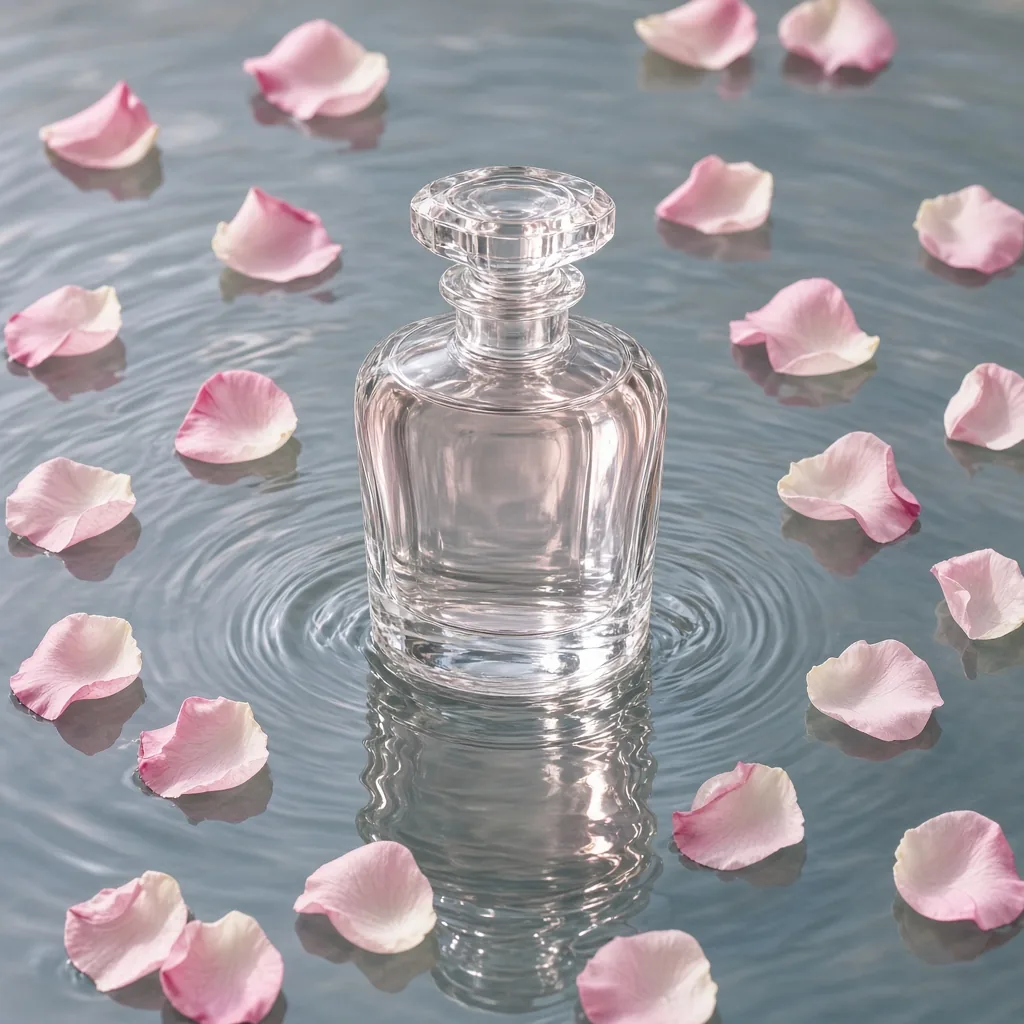
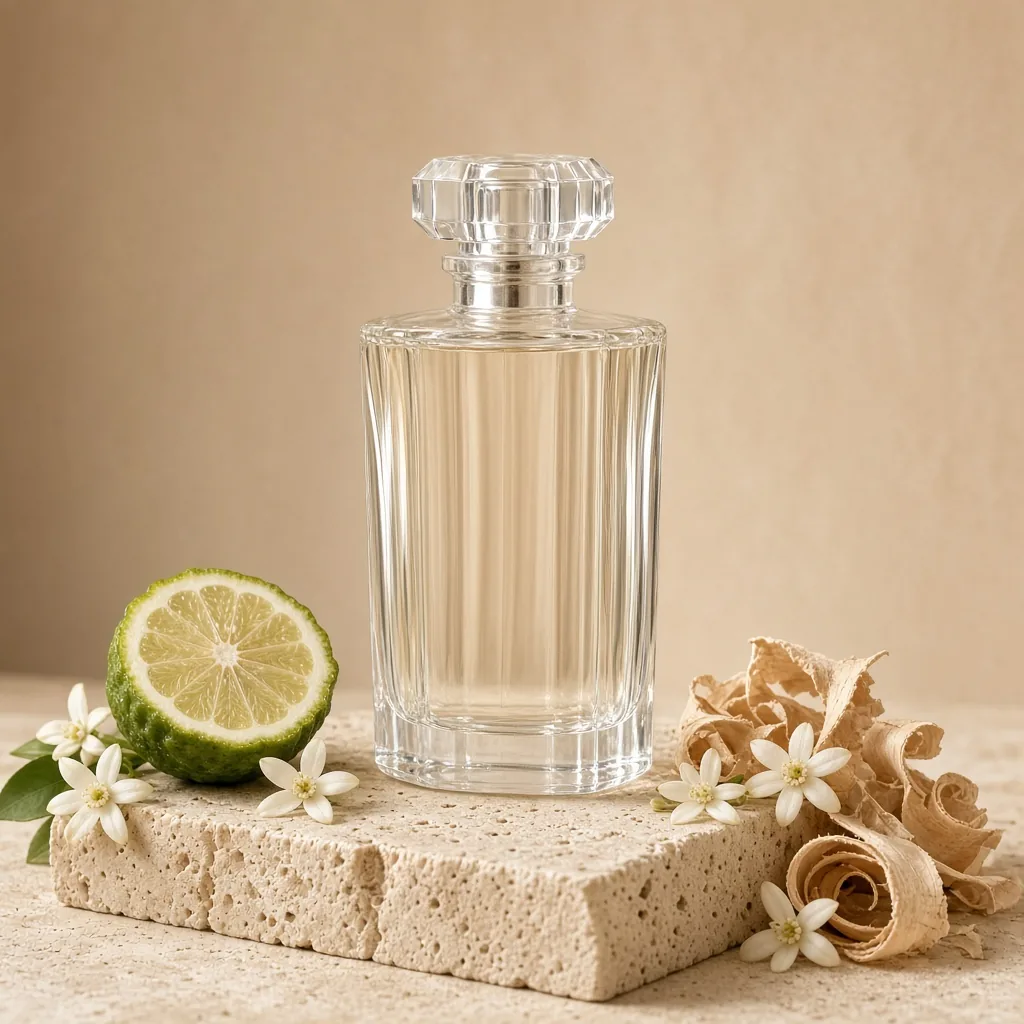
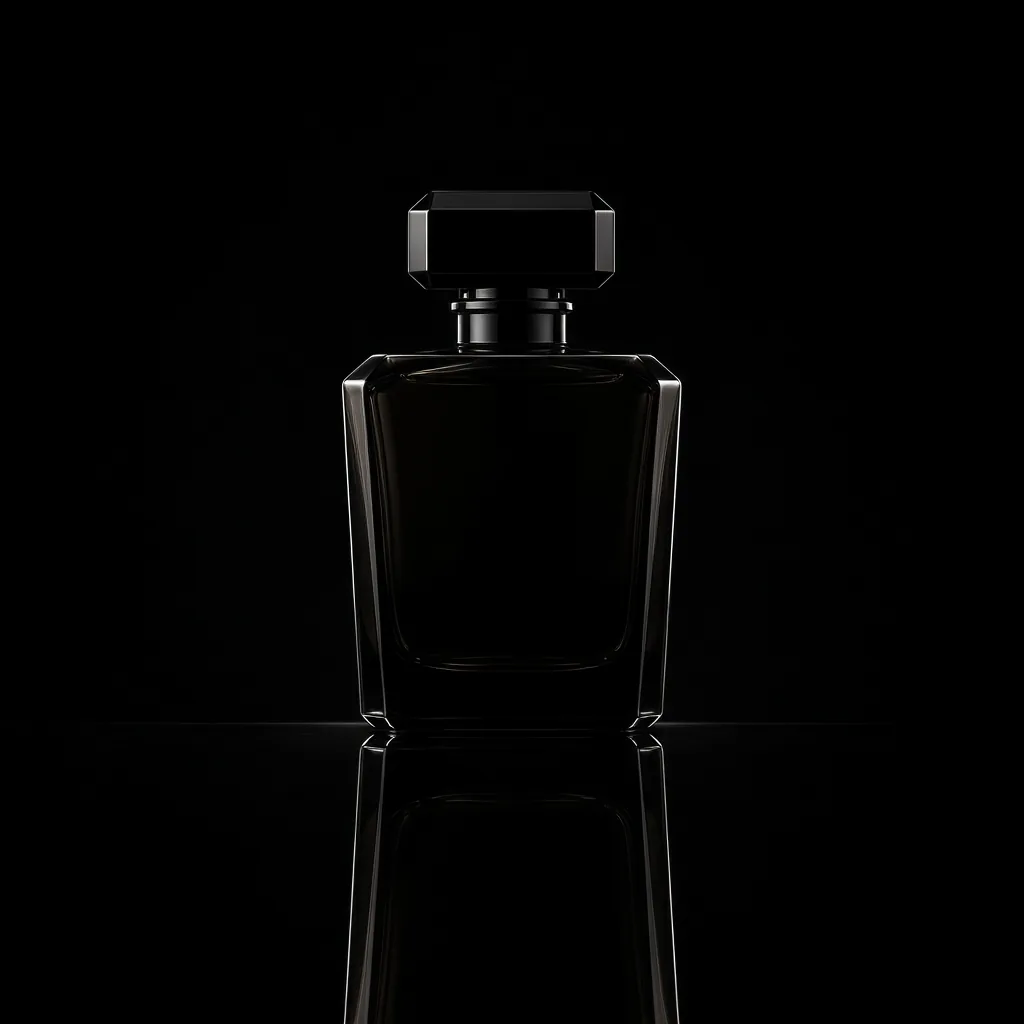
Skip the Shoot: Generate Perfume Images From One Product Photo
A single styled fragrance scene can take a day of set building, props and retouching, and every new scent needs another. If you have one clean product photo of the bottle, Picjam can generate the rest: packshots on white or a brand colour, lifestyle scenes like the ideas above, and short product video. There are no prompts to learn. Picjam suggests the shots each product needs, based on large volumes of product images and sales data.
Start with the AI product photography and lifestyle scene generator. For a slow reveal or spritz clip from the same stills, use the AI product video generator. Check that the bottle shape, cap, label and liquid colour match the real product before you publish.
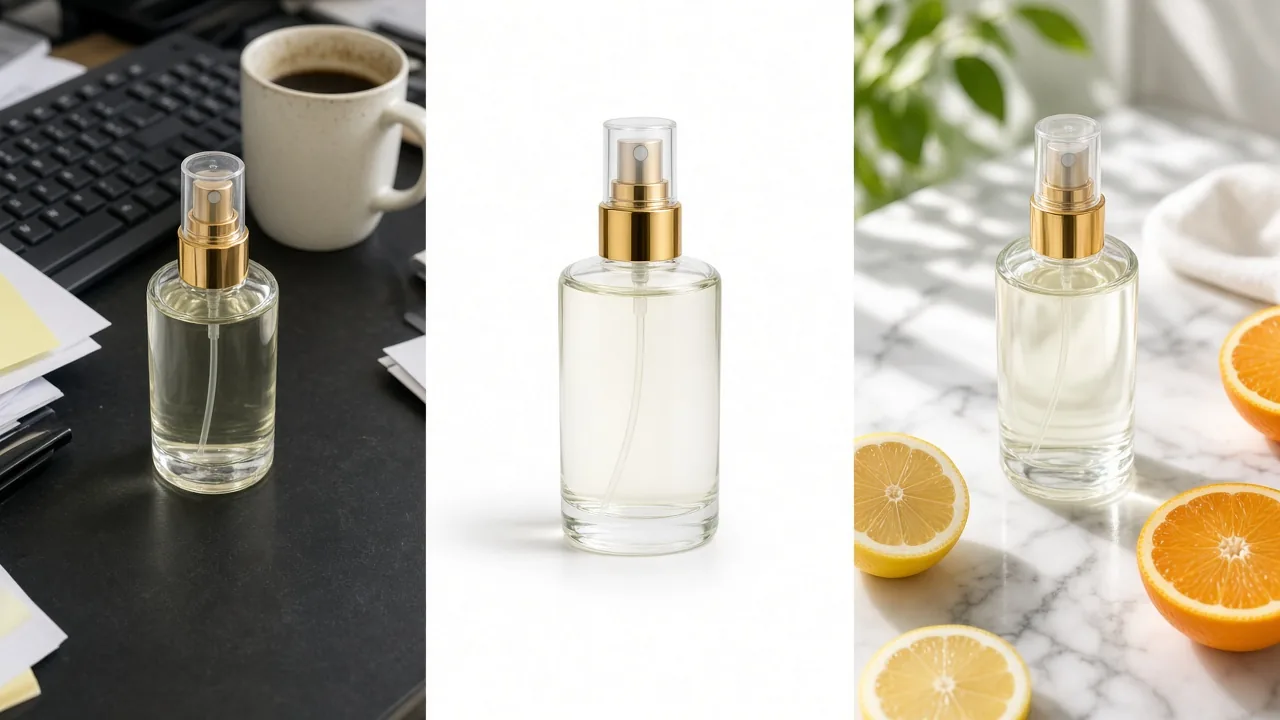
Selling fragrance alongside skincare or makeup? Our cosmetic product photography guide covers droppers, tubes and shade accuracy.
Frequently Asked Questions
How do you photograph perfume bottles without reflections?
Turn off room lights, use one large diffused light, and place black and white cards around the bottle so the glass reflects only what you choose. Shoot from further back with a longer lens and hide the camera behind black card.
What is the best background for perfume photography?
White or a soft gradient works best for the main image, because the bottle shape and label stay clear. For lifestyle images, use marble, stone, silk, water or mirrored acrylic that matches the scent and the price point.
How do you make clear glass bottles stand out on white?
Light the bottle from behind through diffusion and place black cards just out of frame on each side. The cards reflect as dark lines along the edges of the glass, which separates the bottle from the white background.
What props work well for fragrance photography?
Props that suggest the scent notes work best: citrus for fresh scents, petals for florals, cedar or vetiver for woody scents, and vanilla pods for gourmands. Keep them smaller and softer than the bottle so it stays the hero.
Can I make perfume product photos without a studio?
Yes. A window, a sheet of diffusion fabric, black and white card and a tripod are enough for clean shots. You can also generate packshots and lifestyle scenes from one product photo with an AI tool such as Picjam.

Picjam team
The Picjam team blends AI, product, and creative expertise to eliminate the cost and delay of traditional photography for modern eCommerce brands.