Watch Photography: How to Photograph Watches That Sell
How to photograph watches for ecommerce: an 8-shot list, lighting steel, gold and crystal, macro setup, 10:10 prep, pre-owned condition shots, 10 ideas.
Short answer: To photograph watches for ecommerce, set the hands to about 10:10, clean the case and crystal, and shoot on a tripod with a macro lens inside a diffusion tent. Use large soft light and black and white cards to control reflections. Show the dial, case side, crown, caseback, clasp, wrist shot and box.
Watches are small, polished, curved and covered in glass, so every surface acts like a mirror. This guide is for brands and sellers listing watches online, not hobby shots for a collection. It covers the shot list, lighting by material, a simple macro setup, prep, extra shots for pre-owned watches, common mistakes and ten styled ideas.
- The watch shot list
- Lighting by material
- Setup and camera settings
- Prep before you shoot
- Pre-owned watches
- Common mistakes
- 10 watch photography ideas
- Skip the shoot
- FAQs
The Watch Product Photography Shot List
- Dial hero. Face-on or slightly angled, hands at about 10:10, strap closed in a natural curve. This is your main image.
- Three-quarter view. Shows the bezel, case shape and lugs in one frame.
- Case side and crown. Profile view for thickness, crown guards and pushers.
- Caseback. Engravings, an exhibition window or the movement.
- Clasp or buckle. Open and closed, with any brand mark sharp.
- Dial macro. Indices, texture, lume and the date window, in crisp detail.
- On the wrist. For scale and how it sits; buyers want to judge size.
- Box and papers. Everything included, laid out neatly.

Lighting by Material
Like jewellery, a watch shows reflections of your lights, not the lights themselves. Use one or two large soft sources, then shape the metal with cards: white cards add bright bands, black cards add depth and contrast.
| Material | How to light it | Watch out for |
|---|---|---|
| Polished steel | Large soft light plus black cards to give clean dark bands on the case | The room, camera and you reflected in the case |
| Brushed steel and titanium | Soft side light at a low angle to show the brushing direction | Flat grey metal with no texture |
| Gold and rose gold | Warm-balanced soft light and white cards; set white balance on a grey card | Gold turning yellow-green or copper |
| Sapphire or mineral crystal | Angle the light so its reflection falls off the dial; a polariser can help | A white glare patch hiding the dial |
| Black or dark dials | A gradient reflection from a softbox to show depth; lift the indices with a small card | A dial that reads as a black hole |
| Leather, rubber and fabric straps | Softer side light to show grain, stitching and weave | Dust, lint and creases at full zoom |
Setup and Camera Settings
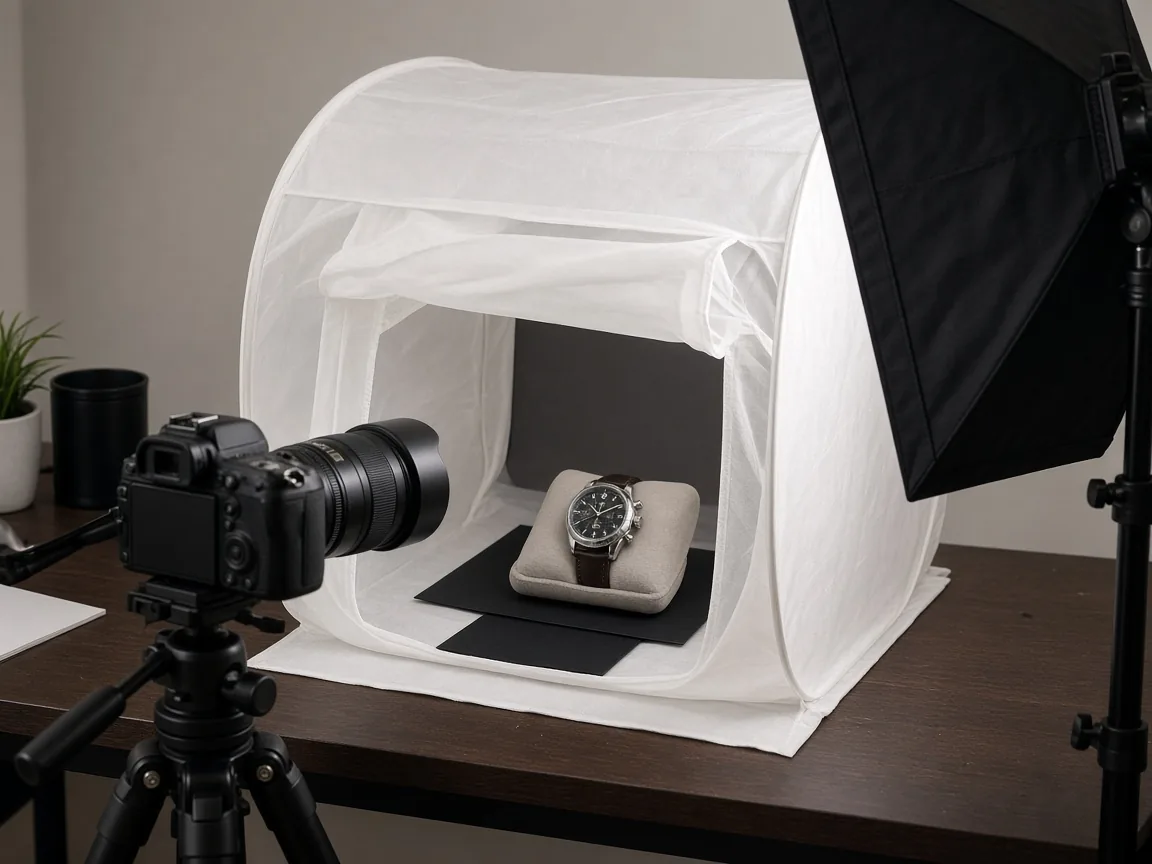
- Lens: a macro lens (around 90-105 mm on full frame) lets you fill the frame from far enough back to keep reflections under control. A phone's macro mode or telephoto lens works for simpler listings.
- Tripod and remote release: you will be shooting at slow shutter speeds and close distances, so any movement shows.
- Aperture: start around f/8 to f/11. Watches are deep, so close up you may need focus stacking: several frames focused from the crystal to the lugs, blended in editing.
- Light tent or diffusion: a white tent gives even light around the case; cut a slot for the lens so the camera does not reflect.
- Support: a watch pillow, a clear acrylic stand or a little museum putty under the case keeps it level and hidden.
- White balance: set it on a grey card so steel stays neutral and gold stays true.
Prep Before You Shoot
- Clean it twice. Wipe with a microfibre cloth, use a soft brush between the bracelet links, and blow off dust right before shooting. Wear cotton gloves.
- Remove protective stickers from the crystal and caseback unless you are showing a new watch as delivered.
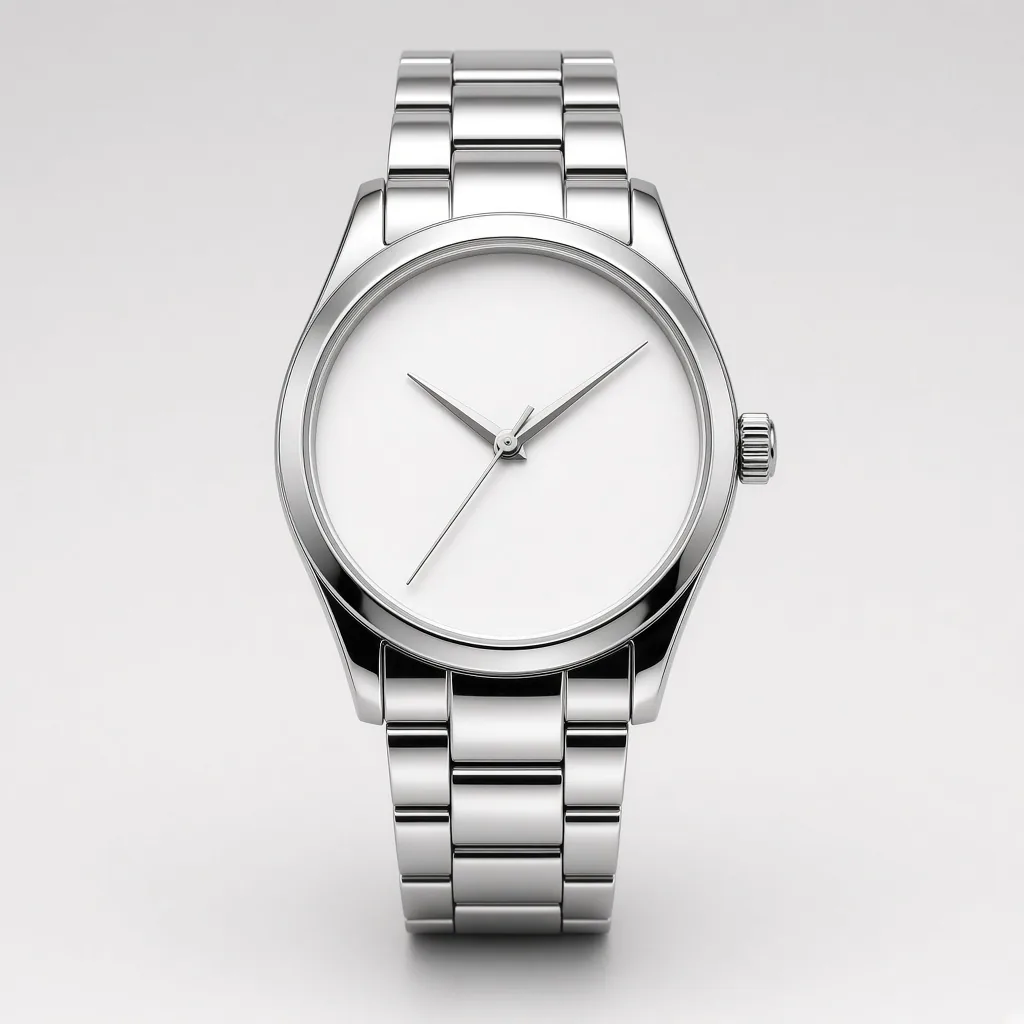
- Set the time to about 10:10. The hands frame the logo and the dial looks balanced. Set the date or day to a neutral value.
- Wind or start it if you want the seconds hand in a set position, then shoot quickly.
- Close the strap in a natural round shape, or use a stand so the bracelet does not collapse flat.
Extra Shots for Pre-Owned Watches
For a used watch, the photos are the condition report. Add sharp close-ups of any scratches, dents, bezel wear or crystal marks, the clasp wear, and the strap holes. Show the movement if it has an exhibition back, plus the box, papers, spare links and receipts that come with it. Keep edits to cropping, exposure and colour; do not retouch away wear that the buyer will receive.
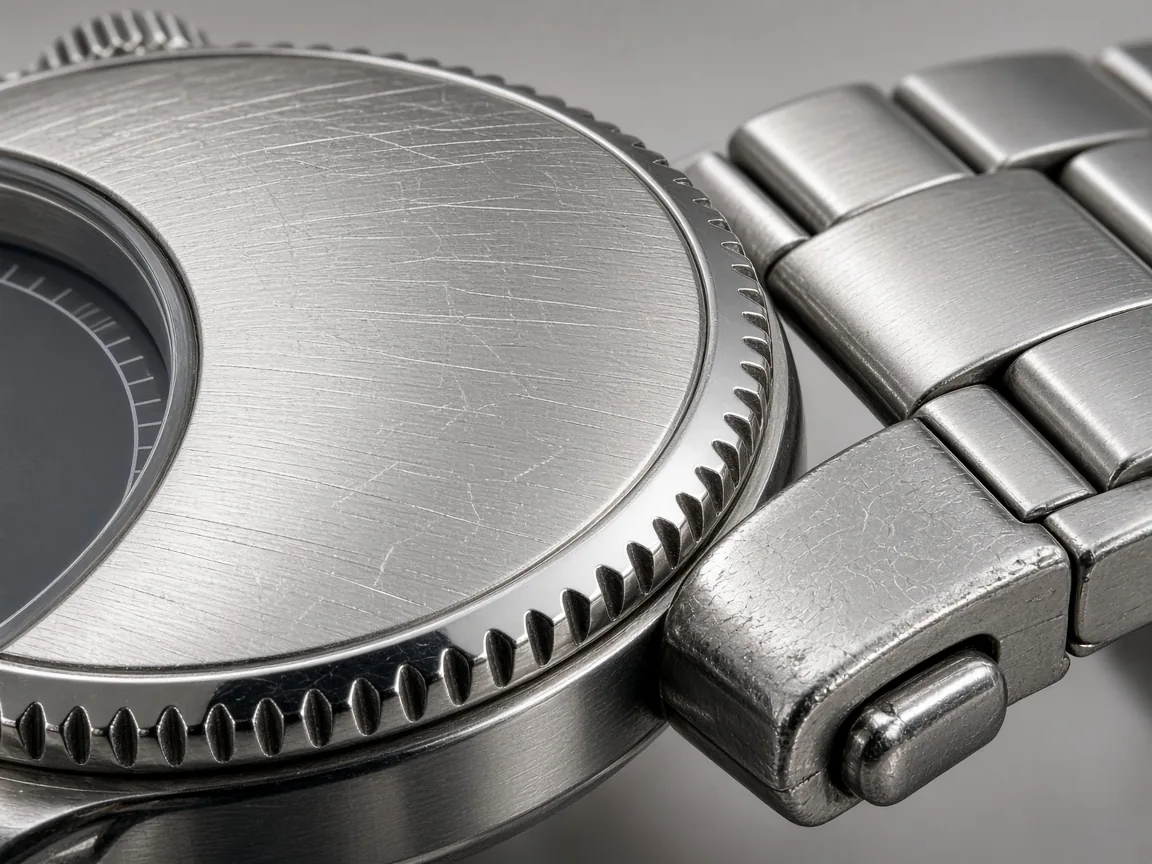
The same angle rules apply to every product; our product photography angles guide covers the full set.
Common Watch Photography Mistakes
- Glare on the crystal that hides the dial.
- The photographer reflected in a polished case or bezel.
- Dust and fingerprints that only show at full zoom.
- Hands at random times that cover the logo or look untidy.
- Soft focus at the lugs because the depth of field was too shallow.
- No wrist shot, so buyers cannot judge the size.
10 Watch Photography Ideas
- Stone and slate flat surface with a single hard shadow.
- Wrist lifestyle with a cuff, a steering wheel or a coffee cup.
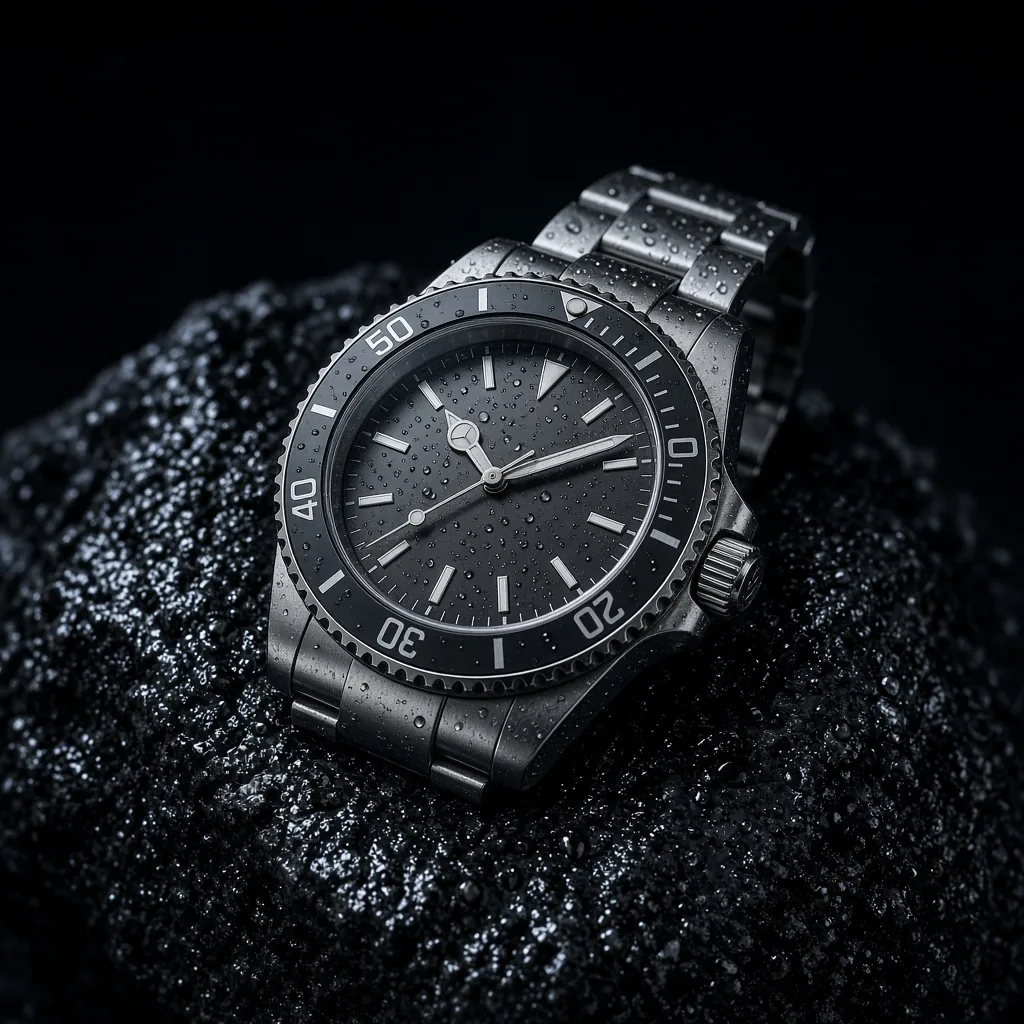
- Dive watch on wet rock with water droplets on the crystal.
- Black acrylic reflection for a premium, glossy look.
- Floating watch on an invisible stand against a gradient.
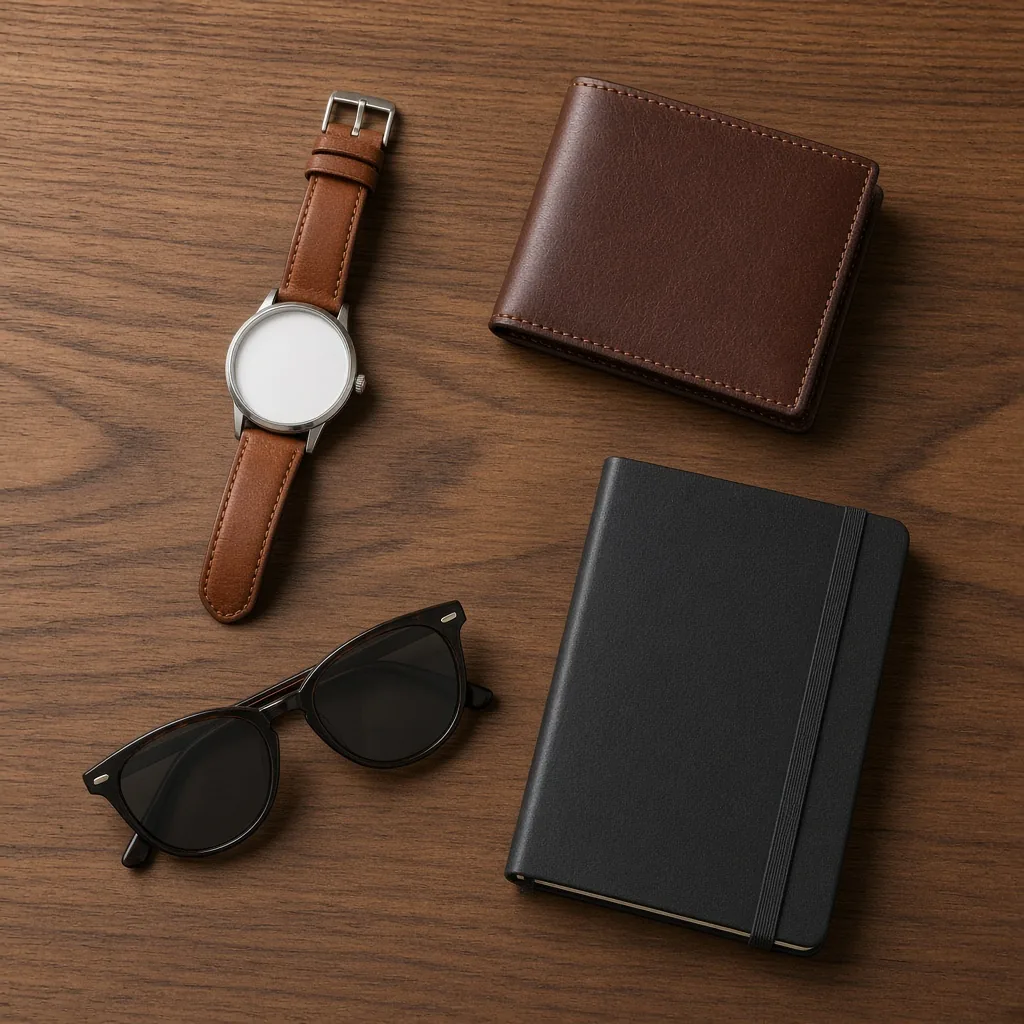
- Flat lay with a wallet, sunglasses and a notebook.
- Macro dial texture filling the frame.
- Strap options laid out in a row with the watch head.
- Box opening moment with the watch on its pillow.
- Collection line-up of every dial colour in the same light.
Skip the Shoot: Generate Watch Images From One Product Photo
A full watch gallery can take hours of cleaning, flagging and focus stacking, and every new dial colour needs another round. If you have one clean product photo, Picjam can generate the rest: packshots on white or a brand colour, lifestyle scenes like the ideas above, and short product video. There are no prompts to learn. Picjam suggests the shots each product needs, based on large volumes of product images and sales data.
Start with the AI product photography and packshot generator. For a slow turn or light sweep across the dial, use the AI product video generator. Check that the dial, hands, logo and case match the real watch before you publish.

Selling rings and necklaces too? Many of the same reflection tricks appear in our guide on how to photograph jewellery.
Frequently Asked Questions
Why are watches photographed at 10:10?
Setting the hands to about 10:10 frames the brand logo below the 12, keeps the hands off the date window and subdials on most watches, and makes the dial look balanced. It is a long-standing convention in watch advertising.
How do you photograph a watch without reflections?
Use a light tent or one large diffused light, place black and white cards around the watch to control what the metal reflects, angle the light so its reflection falls off the crystal, and shoot through a slot in black card or the tent.
What lens is best for watch photography?
A macro lens around 90 to 105 mm on full frame is the usual choice, because it focuses close while keeping the camera far enough back to limit reflections. A phone macro mode works for simpler listing photos.
How many photos should a watch listing have?
Aim for at least six: the dial, a three-quarter view, the case side with the crown, the caseback, the clasp and a wrist shot. Add box and papers, and close-ups of any wear for pre-owned watches.
Can I photograph watches with a phone?
Yes, for clean listing photos. Use a tripod, a light tent or window light through diffusion, the phone's macro mode or telephoto lens, and tap to focus on the dial. Larger, sharper images still need a macro lens and focus stacking.

Picjam team
The Picjam team blends AI, product, and creative expertise to eliminate the cost and delay of traditional photography for modern eCommerce brands.