Photography Backdrop Material: A Guide for E-commerce
Learn how to choose the right photography backdrop material for apparel and product e-commerce. Compare paper, vinyl, muslin, canvas, and workflow tradeoffs.
By Michael Pirone, Founder of Picjam & Vidico
Backdrop choice is not a small studio detail. For apparel and product teams, it directly affects how clearly the item reads online.
When a product image feels flat or slightly off, the issue is often not lighting or retouching. It is the surface behind the product. A backdrop can either help the customer focus on fabric, shape, and finish, or compete with all three.
For e-commerce, the goal is simple. Choose a backdrop material that supports the product, fits the workflow, and stays consistent across repeated shoots. That matters whether you are producing clean PDPs, mannequin photography, flat lays, or lightweight campaign assets.
Matching Your Backdrop to the Product
Most weak product photos are not dramatic failures. They are just visually crowded.
A heavily textured knit on a rough backdrop can lose separation. A delicate lace top on wrinkled muslin can look messy before the shopper even zooms in. A reflective leather jacket on the wrong surface can create distracting highlights that slow down editing.
That is why backdrop selection belongs closer to styling and production standards than to studio logistics alone. The backdrop changes how shoppers read texture, quality, drape, and price point.
If you shoot apparel regularly, a practical rule works well:
The more texture your garment has, the less texture your backdrop should add.
It is not absolute, but it solves many common e-commerce image problems.
The backdrop materials most teams actually use
For most in-house apparel and product teams, the shortlist is straightforward:
- Seamless paper for clean catalog images and quick color changes
- Muslin for a softer fabric background that travels easily
- Canvas for a more textured, painterly look
- Matte vinyl for durable, wipeable, low-maintenance studio use
- Polyester or microfiber for wrinkle resistance and faster handling
The real choice is not paper versus vinyl. It is surface behavior, maintenance, consistency, and whether the backdrop helps the product read clearly at scale.
Common Photography Backdrop Materials, Pros and Tradeoffs
Choosing a photography backdrop material gets easier when you separate the visual effect from the production reality. Some materials look good but slow the team down. Others are easy to manage but less flexible creatively.
Backdrop Material Comparison for Apparel Photography
| Material | Best For | Wrinkle Factor | Durability | Avg. Cost |
|---|---|---|---|---|
| Seamless paper | Clean catalog images, quick color swaps | Low while fresh, poor once damaged | Low to moderate | Budget-friendly |
| Muslin | Portable shoots, softer editorial feel | High unless steamed or tensioned | Moderate | Moderate |
| Canvas | Painterly campaigns, textured mood | Moderate | High | Higher |
| Matte vinyl | Repeatable studio production, easy cleanup | Very low | High | Moderate to higher |
| Polyester or microfiber | Fast-moving teams, travel, repeat setups | Low | Moderate to high | Moderate |
Seamless paper
Paper is popular because it is simple and clean. It gives you a smooth field of color, reads predictably on camera, and works well for straightforward apparel and product listings.
Its downside is wear. Shoes mark it, stands dent it, and once the sweep gets dirty, you are cutting forward or replacing the roll. Paper makes sense when speed matters and the team accepts that it is partly disposable.
Muslin
Muslin is useful when you want a softer, less clinical look. It folds down easily, travels well, and can suit lifestyle or editorial apparel content.
The tradeoff is maintenance. Muslin wrinkles, and wrinkles either become part of the look or part of the retouching queue. For detailed garments, that can create unnecessary visual noise.
Canvas
Canvas brings depth and character. It can work well for campaign imagery, especially when the product itself is visually simple and you want more atmosphere.
Operationally, it is heavier and slower to move. It also needs restraint. If both the garment and the background are doing too much, the image loses focus.
Matte vinyl
Matte vinyl is often the most practical studio option for repeatable e-commerce production. It hangs flat, wipes clean, and creates fewer surprises from one shoot day to the next.
That reliability matters when you are shooting frequent drops or trying to keep post-production predictable. The look can feel firmer than paper or cloth, but the tradeoff is control.
Polyester and microfiber
Modern polyester and microfiber backdrops are built for convenience. They resist creasing better than traditional cloth options, pack down easily, and help teams move faster across temporary setups or shared spaces.
They are especially useful when setup time is the real bottleneck.
How to Pair Backdrop Texture With Garment Fabric
The smartest backdrop decisions start with one question:
Is the product carrying the texture story, or does the background need to help build it?
If the garment already has strong tactile detail, the backdrop should usually stay quiet. If the garment is minimal, the backdrop can add some depth.
Use smooth surfaces for textured garments
Cable knits, lace, bouclé, crochet, washed denim, and tweed already contain a lot of visual information. Add visible backdrop texture behind them and the eye starts splitting attention between product and set.
For apparel, these pairings usually work well:
- Lace and crochet: use a smooth matte surface so edges stay readable
- Chunky knits: avoid backdrop grain that creates competing micro-shadows
- Distressed denim: keep the background restrained so wash detail stays clear
- Tweed and bouclé: use cleaner surfaces to preserve shape and weave definition
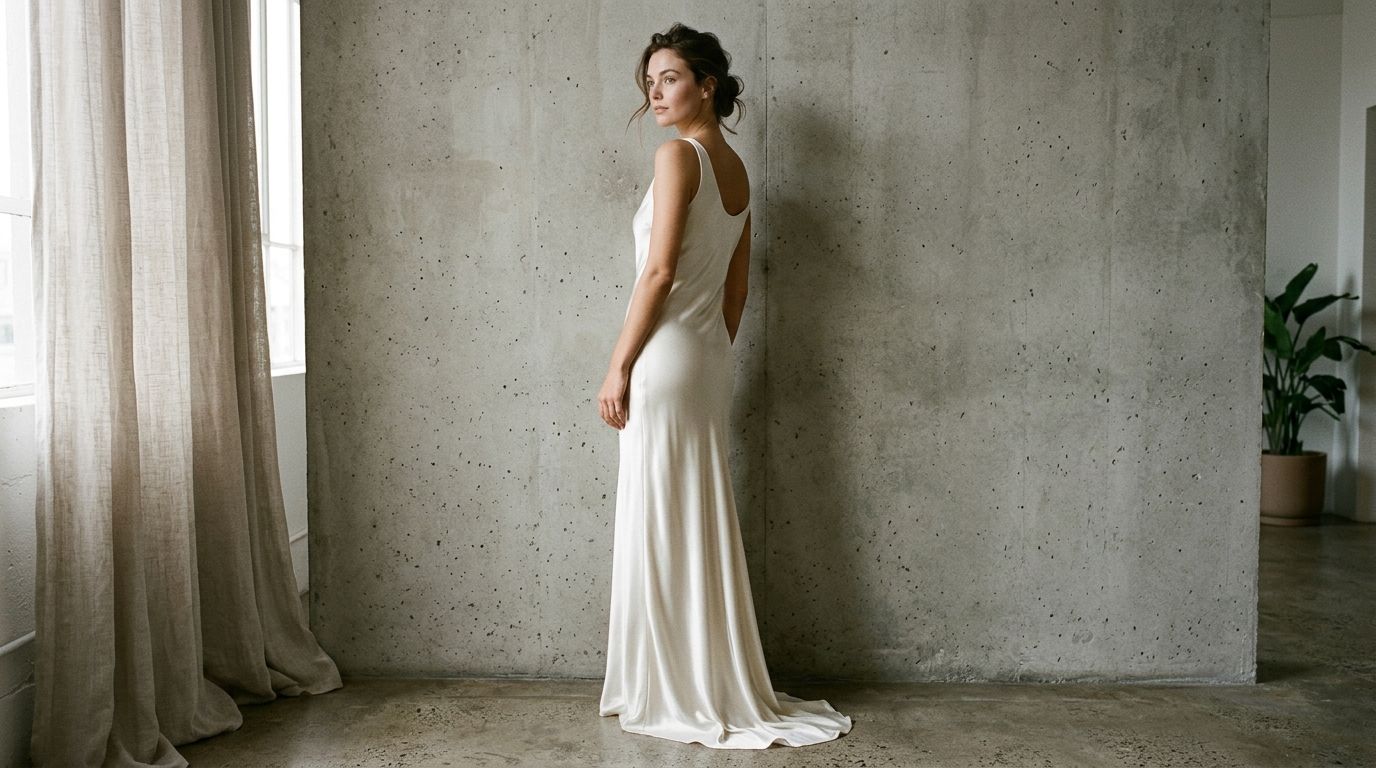
Let minimal products borrow some energy from the background
A plain white tee, silk slip, clean black blazer, or simple leather accessory can disappear against an overly flat setup. In those cases, a subtle concrete finish, tonal canvas, or soft texture can add dimension without overpowering the product.
The key is proportion. Background texture should frame the item, not compete with it.
Pair by fabric behavior, not just category
Treating all dresses the same or all tops the same is where many teams go wrong. Fabric behavior matters more than the product label.
Consider these combinations:
Silk and satin
Smooth, matte backdrops usually work best. Let the garment carry the sheen.Structured cotton and poplin
These can tolerate a little more environment. A subtle surface can help them feel less flat.Leather and coated fabrics
Keep the background matte. Reflective products already create enough highlight behavior.Soft jersey basics
These often benefit from a touch of backdrop character, especially when the silhouette is simple.
If your team wants one rule to remember, use this one: the more tactile the garment, the more visually restrained the backdrop should be.
Choose a Backdrop That Fits the Workflow
Creative preference matters, but workflow usually makes the final decision. The best photography backdrop material is the one your team can use repeatedly without slowing down setup, approvals, sample handling, or post.

Start with the real production bottleneck
Most e-commerce teams hit one of these issues first:
- Storage pressure: small studios and shared offices do not handle bulky materials well
- Setup drag: if the team is constantly steaming, clamping, or resetting, the surface is costing time
- Surface damage: if every shoot leaves visible wear, replacement costs rise quickly
- Lighting inconsistency: if glare or spill changes from frame to frame, review cycles slow down
A practical framework helps:
- If you need a repeatable in-house studio surface, matte vinyl is often the safest choice.
- If portability matters most, lighter cloth options are easier to move.
- If the output is mostly crisp PDP imagery, paper still does the job well if you can manage the waste.
- If the content is more editorial, canvas or controlled muslin may be worth the extra labor.
Match the material to the shooting pace
backdrop choices for product imagery
A team producing occasional launches can tolerate more manual prep. A team publishing new PDPs, campaign cuts, social assets, and wholesale updates every week usually cannot.
Use this simple lens:
- Low-volume brand: paper or muslin can work if visual flexibility matters more than efficiency
- Mid-volume in-house team: matte vinyl or microfiber often gives the best balance
- Mobile or showroom workflow: foldable, lighter fabric options are easier to transport and reset
If you are comparing physical setup options against faster production models, Picjam also has practical guides and tools for teams working across AI fashion photography workflows and ghost mannequin image cleanup.
Care and Lighting Tips That Actually Save Time
Most backdrop problems do not start with the material itself. They come from storage, handling, and lighting choices that expose every flaw.
Handle each material properly
Paper should stay rolled when not in use. Once the front edge gets bent, dirty, or soft, move forward and reset the sweep.
Muslin needs steaming or tension if you want a clean result. If folds are part of the concept, keep them controlled rather than random.
Vinyl is simple to maintain if the team is disciplined. Wipe it after contact with shoes, dust, or lint, then roll it evenly so the edges keep their shape.
Photo Stack Exchange discussion of cloth backdrop behavior
A few habits reduce cleanup work fast:
- Store upright when possible: it helps rolls keep their form
- Clean before residue sets: vinyl is easiest to maintain early
- Separate dark and light fabrics: lint transfer becomes a post issue quickly
- Test the floor sweep first: the horizontal section usually fails before the vertical one
Light for the backdrop, not just the product
Backdrop lighting should be deliberate. White, gray, and black backgrounds all behave differently depending on the material and light placement.
In practice:
- For black backgrounds: use light control to avoid spill and keep the surface from lifting in tone
- For white backgrounds: make sure the background is evenly lit if you want a clean high-key result
- For vinyl: watch reflection angles and feather lights to avoid hotspots
- For muslin and canvas: side light can exaggerate wrinkles and texture very quickly
The main point is simple. Do not light the backdrop by accident. Decide whether it should disappear, hold tone, or add depth, then light it that way.
Reduce retouching before it starts
A lot of editing time comes from preventable backdrop problems. Uneven spill, dirty sweep marks, wrinkles, and inconsistent tone are production issues first and post issues second.
If your current process still depends on manual rebuilds and repetitive editing, it may be worth comparing that workflow against a more flexible setup through Picjam or booking a closer look with the team at Picjam.
When Physical Backdrops Stop Being Efficient
Physical backdrops still make sense for many hero images, mannequin shoots, and tactile campaign visuals. But there is a point where changing surfaces manually stops being creative and starts becoming a bottleneck.
That usually happens when a team needs multiple background directions from the same source imagery, or when asset production expands across PDPs, paid social, email, marketplaces, and localization.

A practical approach is to capture the product once on a clean, controllable base, then extend that asset into different outputs without rebuilding every scene physically. For fast-moving e-commerce teams, that can reduce production drag and make testing easier.
For social-first teams exploring faster creative variation, resources on creative AI backgrounds for Shorts are useful because they show how quickly background changes now feed into short-form testing and campaign adaptation. If your team still relies on manual compositing, a guide on how to add a background in Photoshop is a helpful benchmark for understanding how much labor newer workflows can remove.
Here is a look at how that kind of modern workflow can play out in motion:
Takeaway
Choose your photography backdrop material the same way you choose styling, casting, or retouching standards. It changes how the product is perceived.
The clearest rule is also the most useful: textured garments usually need smoother backdrops. Minimal garments can carry more environmental texture.
Then test the creative choice against the workflow. If the team is constantly steaming cloth, replacing damaged paper, or fighting reflections, the backdrop is not just a visual choice. It is an operations choice.
For most apparel and product e-commerce teams, the best setup is the one that keeps product images clean, repeatable, and easy to scale.

Picjam team
The Picjam team blends AI, product, and creative expertise to eliminate the cost and delay of traditional photography for modern eCommerce brands.