10 Best AI Tools for Ecommerce That Actually Save You Money in 2024
Explore the best ai tools for ecommerce to boost visuals, personalization, and sales for your store in 2026.
When Crocs tested AI-generated photos for their spring collection, they discovered a 60% faster campaign rollout. For most eCommerce brands, the question isn't if AI can help, but where to start for the biggest, fastest ROI. The answer lies in your three biggest cost centers: visual content, customer personalization, and operational efficiency.
For fashion brands, this is even more critical. You need a constant stream of high-quality product images, a way to show the right styles to the right shoppers, and a system to manage inventory without endless guesswork. This is no longer about hype; it's about practical tools that directly impact your bottom line.
A new breed of AI tools, like Picjam, are built to tackle these challenges. They streamline creative workflows and give brands the power to generate studio-quality visuals almost instantly. We'll explore the best AI tools for ecommerce that are shaping the fashion brands of the future.
And if you want to get a head start on how virtual models are changing the game, check out our guide on AI models for e-commerce.
How AI Slashed Zara's Content Costs by 40%
A single traditional campaign shoot can easily run a brand $5,000, and for an emerging label, that cost is prohibitive. This is exactly why brands are turning to AI photography. Imagine taking a simple smartphone photo of your new hoodie and, minutes later, having a full set of studio shots with diverse AI models and styled lifestyle backgrounds.
This isn't a far-off concept. It's how smart fashion brands are bypassing one of their biggest operational bottlenecks: slow, expensive content creation. According to Vogue Business, fast-fashion giant Zara is already leveraging AI to create on-model imagery, leading to a reported 40% reduction in content production costs.
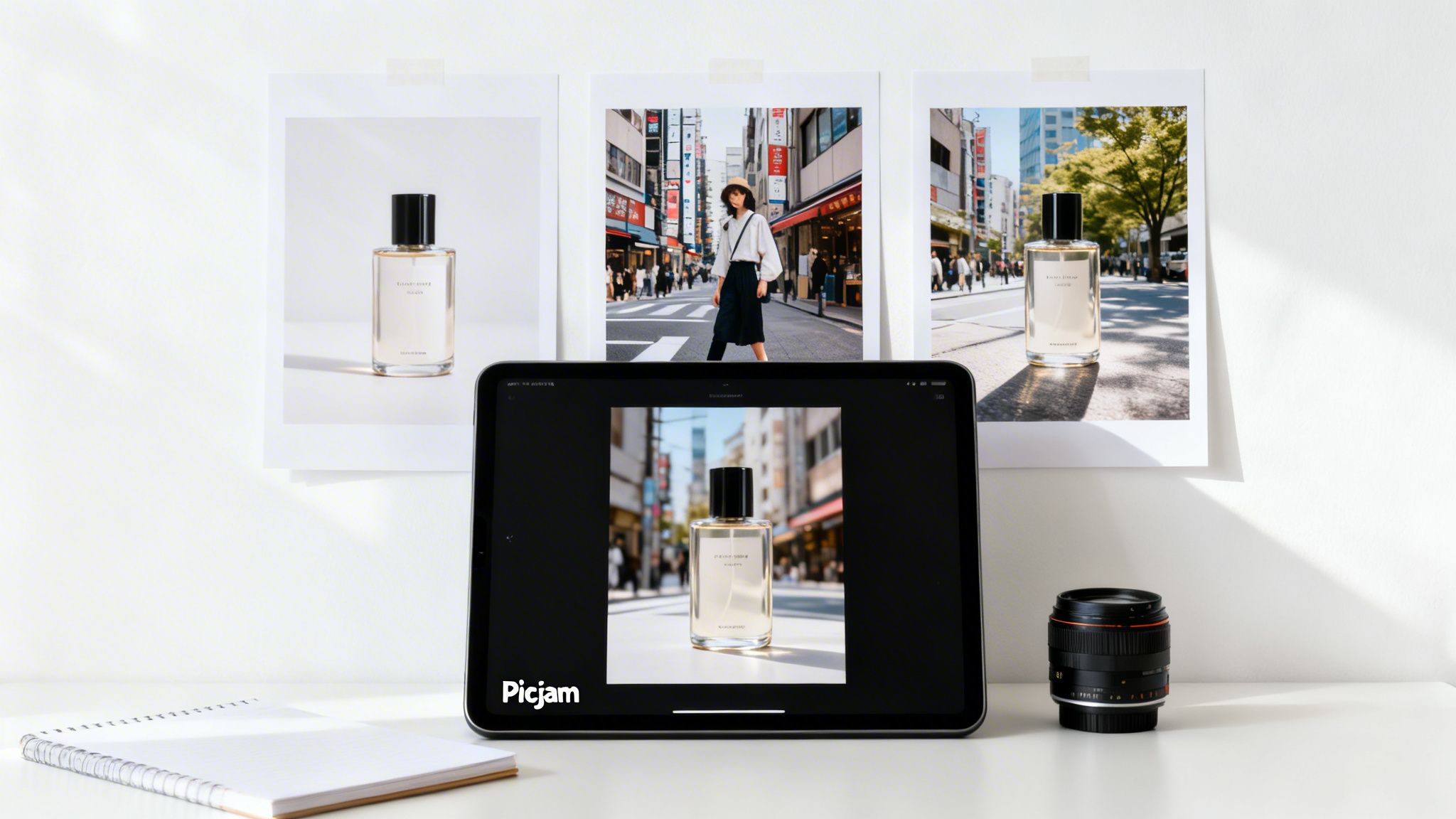
AI platforms like Picjam are rewriting the playbook, turning a major capital expense into a small, predictable operational cost. The game is no longer about coordinating photographers, models, and studios; it's about creating the exact visual assets you need, right when you need them.
This shift is accelerating. A McKinsey report highlights that generative AI could add up to $275 billion to the apparel, fashion, and luxury sectors' operating profits. Much of that value comes from streamlining marketing and content creation.
The Shift from Manual Production to Creative Automation
For a brand like Allbirds, known for its minimalist aesthetic, this means generating clean studio shots for its entire catalog without booking a single day in a studio. The savings are immediate and massive.
For a fast-fashion brand, it means creating hundreds of on-model images for a new drop in a single afternoon. This dramatically speeds up their time-to-market and lets them A/B test different visuals on product pages to see which images actually drive sales.
"AI doesn't just reduce the cost of a single photoshoot; it changes the entire economic model of content creation," notes a fashion-tech analyst. "Brands can now afford to test, learn, and refresh their visuals at a pace that was previously unimaginable."
This guide will walk you through finding and using the right AI solutions to save money and get ahead.
AI Tools That Redefine Fashion Photography
Visuals are the lifeblood of fashion. Before a customer can feel the fabric or check the fit, they see a picture. This is where some of the best AI tools for ecommerce are making their most striking impact, turning the high-stakes game of photography into a fluid, creative, and shockingly affordable process.
AI image generation and virtual model studios are creating entirely new ways to build product pages and marketing campaigns, directly tackling fashion's endless hunger for fresh, engaging, and diverse visual content.
From a Single Photo to a Global Campaign
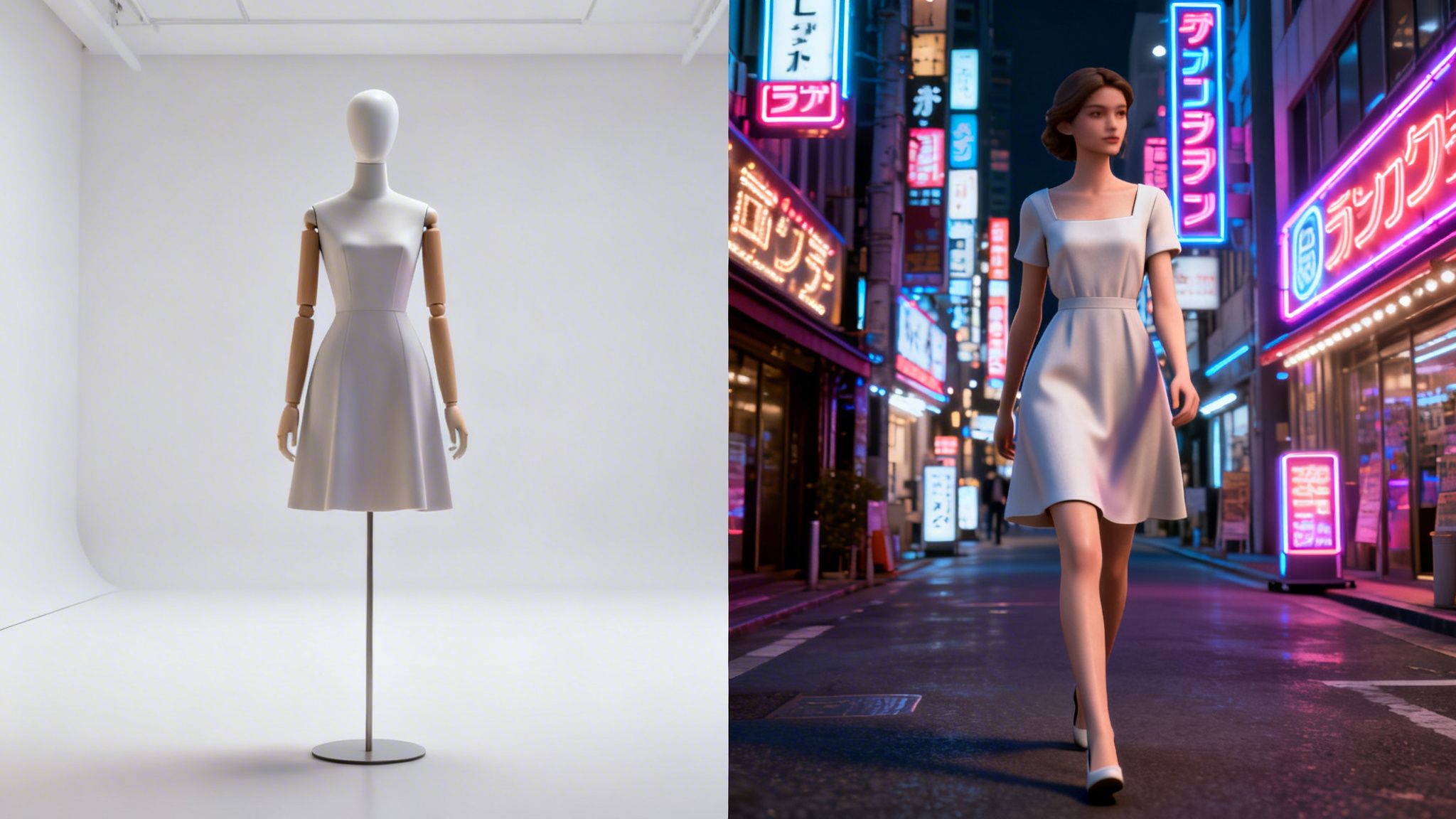
Imagine your brand gets a new sample — a simple white dress. The old way meant booking a studio, a model, and a photographer, then waiting weeks for edited shots. It's a huge bottleneck.
With an AI photography platform like Picjam, that entire process changes. You upload one basic photo of the dress — even a flat-lay shot. Within minutes, the AI spins up a complete campaign:
- Virtual Models: The dress is realistically placed onto a diverse range of AI-generated models, showing how it looks on different body types and skin tones.
- Creative Backgrounds: One click gives you a model wearing the dress in a neon-lit Tokyo street scene. Another places it on a sun-drenched beach in Santorini for a summer travel story.
- Limitless Variations: You can generate hundreds of other options, testing different lighting, angles, and poses to find out what actually makes people click.
This is where the game truly changes. Brands report savings of up to 90% on content production, turning a major budget line into a minor operational cost.
According to McKinsey, businesses that effectively use AI can increase profitability by up to 25%. In fashion, a huge chunk of that comes from slashing the cost and time tied to creating visual content.
Accelerate Speed-to-Market and Optimize Conversions
The payoff goes beyond the budget. For a brand like Zara, where speed is the business model, this technology is a perfect match. They get new arrivals online almost as fast as designs are finalized, staying on the pulse of fast-moving trends.
Then there's the data. AI-generated visuals make powerful A/B testing simple. A brand can run ads showing the same dress on different models or in different settings to see what connects. Is the "Tokyo street-style" shot converting better than the "minimalist studio" look? Now your creative decisions are driven by data, not just gut feelings. We dig into this more in our post on AI fashion photography.
Takeaway
- Test Visual AI First: For an immediate ROI, start with an AI photography tool. The cost savings are direct and easy to measure. Compare the monthly fee to your last photoshoot invoice.
- A/B Test Everything: Use the limitless creative variations to test different models and settings on your product pages and in ads. Let real data guide your creative choices.
- Accelerate Your Calendar: Use AI-generated content to cut your speed-to-market from weeks to days. Get new products in front of customers before competitors even book a shoot.
AI Tools That Elevate the Customer Journey
Stunning visuals get customers in the door, but a smart, intuitive shopping journey is what makes them buy. This is where a different class of the best AI tools for ecommerce shines — those built for personalization and intelligent search.

Think of these AI systems as an expert personal stylist working behind the scenes for every single visitor. They analyze browsing history, click patterns, and past purchases to build a shopping experience that feels curated just for them.
The Power of AI-Driven Personalization
The impact is massive. A McKinsey study found that companies excelling at personalization generate 40% more revenue from those activities than average players. And yet, 71% of consumers still express frustration with impersonal shopping experiences. That's a clear opportunity.
While Picjam handles the "what" — creating a massive library of diverse, high-quality model and product shots — personalization engines handle the "who" and "when," ensuring the perfect image gets in front of the perfect customer.
How Stitch Fix Turned AI into a Business Model
No one demonstrates this better than Stitch Fix. The company's entire business is built on a sophisticated AI engine that plays matchmaker between its inventory and each customer's unique style profile. The AI doesn't just look at what a customer says they like; it analyzes detailed feedback on fit, color, and fabric to constantly refine its recommendations.
It's a powerful feedback loop:
- Data Collection: A customer fills out an in-depth style quiz.
- AI Analysis: The algorithm sifts through thousands of items to curate a personalized selection.
- Human Curation: A human stylist reviews the AI's picks, adding a final touch and a handwritten note.
- Customer Feedback: The customer provides feedback on each item, fueling the AI for the next round.
This blend of machine intelligence and human touch is the secret. The AI does the heavy lifting, while the stylist ensures the final box feels personal and considered.
"Our algorithms are getting smarter and smarter with every piece of feedback we receive," a Stitch Fix data scientist shared in a past interview. "It's about creating a personal shopping experience that gets better over time."
The lesson is clear. Recommendation engines from companies like Nosto and Syte can be integrated right into your store to create dynamic experiences like "You might also like" carousels and personalized homepages. For more immersive experiences, our guide on virtual try-on technology explores what's possible.
AI Tools That Streamline Back-Office Operations
While eye-catching creative gets all the attention, a fashion brand's profitability is often decided behind the scenes. This is where some of the most powerful AI tools deliver their value — not by talking to customers, but by making your entire operation smarter and leaner.
Think of AI-powered dynamic pricing tools as a 24/7 financial analyst. They constantly watch competitor prices, track real-time demand, and check inventory levels to adjust prices automatically. This maximizes profit margins and helps clear stock strategically, avoiding brand-damaging clearance sales.
Turn Inventory from a Liability into an Asset
For fashion brands, the single biggest operational win comes from smarter inventory management. A staggering 43% of retailers say inventory management is their biggest day-to-day headache. Wasted cash tied up in unsold stock is the silent killer of many promising fashion startups.
AI fundamentally changes inventory from a reactive cost center to a proactive, data-driven asset. It's about buying smarter, not just selling faster.
Fast-fashion giant Zara is the masterclass here. Its famously nimble supply chain is supercharged by AI systems that analyze sales from stores worldwide in near real-time. This feedback loop tells them exactly what to make next, allowing Zara to produce in small, demand-driven batches and massively reduce overstock.
Freeing Up Capital for Growth
For a growing brand, the impact is huge. Every dollar not sitting in a warehouse as unsold jackets is a dollar you can put back into marketing, product development, or tools like Picjam. AI inventory platforms like Inventory Planner or Lokad now offer this power to brands of any size.
They deliver predictive analytics that forecast demand with surprising accuracy, helping you answer questions like:
- How many units of that new blouse should we really order?
- Which sizes are most likely to sell out first in our key markets?
- When should we reorder to avoid a stockout but not end up with a surplus?
By optimizing stock levels, these tools directly boost your bottom line and help you build a more sustainable, intelligent, and modern fashion brand.
Takeaway
- Audit Your Back Office: Figure out where you're bleeding money on operations. Is it through reactive pricing or piles of excess inventory? Start there.
- Embrace Dynamic Pricing: Test an AI pricing tool on a small handful of products to see how it can optimize your margins without you lifting a finger.
- Use AI to Buy Smarter: Before your next production run, use a demand forecasting tool to create a data-driven purchase order, reducing your exposure to overstock.
How to Choose the Right AI Tools for Your Brand
Wading through the long list of the best AI tools for ecommerce can feel overwhelming. The secret is to zero in on what your brand actually needs. A small fashion boutique has different problems than a giant like Zara, but the starting point is the same: what's your biggest headache right now?
To get your bearings, check out resources that map out practical AI tools for small business marketing to think in terms of real-world results, not just flashy features.
Start With Your Biggest Pain Point
Before you look at any software, figure out what's holding you back. Are photoshoot costs eating your budget? Is your team drowning in manual inventory forecasts? Your first AI tool should score a clear, measurable win in one of those areas.
Think of it like this decision tree:
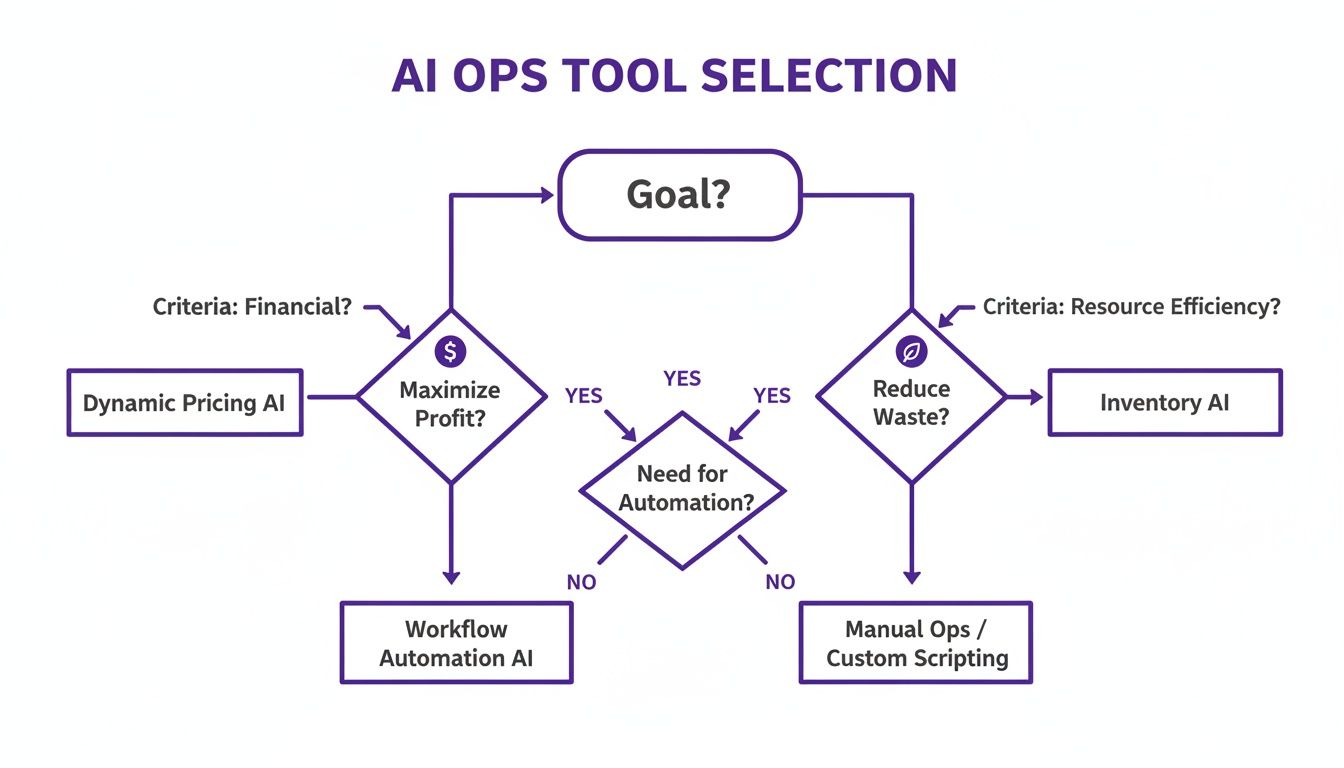
The chart is clear: if profit is the main goal, dynamic pricing is a logical start. If you're trying to cut waste, inventory AI is the direct path.
For many fashion brands, the fastest return comes from fixing the content creation bottleneck. This is where tools like Picjam offer a low-risk, high-impact entry point. The savings are direct and easy to calculate — just compare a monthly subscription to what you're spending on a single product shoot.
Evaluating AI Tool Categories for Your Fashion Brand
Key Evaluation Criteria for Any AI Tool
Once you've picked a category, use these four pillars to vet the actual tools.
- Accuracy and Reliability: Does it actually do what it says? For a visual AI tool, that means creating realistic, high-quality images. For an analytics tool, it means giving you numbers you'd bet your business on. Always get a demo or run a free trial.
- Ease of Integration: How much work is it to get this running? The best AI tools are built for marketers, not developers. A platform like Picjam needs zero code. Steer clear of tools that require a team of engineers unless the return is massive.
- Data and Privacy: Where is your data going? Ensure any tool is compliant with regulations like GDPR. For creative tools, double-check that you own the final images with no sneaky licensing fees.
- Cost vs. ROI: Is it worth the price? Calculate not just direct cost savings but also the value of time saved and new revenue unlocked. A $200/month subscription that saves you $5,000 on a photoshoot has an undeniable ROI.
A common mistake is to chase the "most powerful" tool instead of the most practical one. For a small brand, a user-friendly platform that solves one problem well is far more valuable than a complex system that requires a dedicated team.
Ultimately, picking an AI tool is a business decision, not a tech one. Start with a clear problem, focus on solutions that deliver immediate value, and stick to what makes sense for your brand's goals.
The Takeaway: Your Roadmap to a Smarter Fashion Brand
Building an intelligent, profitable fashion brand is about making strategic upgrades, not tearing everything down. The best AI tools for ecommerce help you solve your most expensive problems first, freeing up capital and streamlining your workflow.
Start with Visuals for an Immediate Win: Your first move should be replacing costly photoshoots with an AI photography platform like Picjam. It's a single change that delivers a clear, measurable win, slashes content costs by up to 90%, and gets products to market faster. This quick ROI can then fund your next AI projects.
Add Personalization to Turn Browsers into Buyers: Once your visual library is full, use AI personalization tools to create a shopping experience that feels made for each customer. According to Statista, shoppers who engage with AI features convert at a rate nearly 4 times higher than those who don't. This is how you build loyalty and increase average order value.
Use Analytics to Run a Tighter Ship: Finally, look beyond customer-facing tools and focus on your back office. AI analytics for inventory and pricing turn your business from reactive to predictive, helping you avoid tying up cash in products that won't sell. This creates a lean, agile operation ready for growth.
Ready to see what this could look like for your bottom line? The first step is to quantify the potential.
Use our free photography savings calculator to compare your current photography spend with Picjam's AI alternative and see your ROI in minutes.
Frequently Asked Questions
Stepping into the world of AI can feel like a big leap. Here are straight-talking answers to the most common questions we hear from brand owners thinking about AI tools for ecommerce.
Will Using AI Make My Brand Look Generic or Fake?
Not if you use the right tools. High-quality AI photography platforms like Picjam are built to create unique, on-brand visuals — not spit out generic templates. The point is to give you more creative control, not less.
A sustainable fashion brand like Reformation could use AI to generate images with its earthy, feminine vibe by dialing in warm, natural lighting and lush, garden-like settings. The customization runs deep, from model selection to background details.
Is AI Too Expensive for a Small Fashion Brand?
Many tools that make the biggest impact deliver a serious return, fast. The trick is to compare the cost of the tool against the expense it's replacing.
A monthly subscription for an AI photography platform can cost less than a single traditional photoshoot, which can run you $5,000 or more. Suddenly, AI doesn't look so expensive.
This turns content creation from a massive capital expense into a small, predictable operating cost, freeing up cash for product development and marketing.
How Hard Is It to Integrate AI Tools into My Workflow?
The best modern AI tools are built for marketers, not developers. Most platforms for visual creation, personalization, or analytics are intuitive web apps that require no code.
For example, creating on-model photos with a platform like Picjam is simple:
- Upload a single flat-lay image of your garment.
- Choose from a library of diverse AI models.
- Select your background, lighting, and overall style.
The whole thing takes a few minutes and doesn't require any integration with your site's backend. This "plug-and-play" approach means even a one-person shop can start using powerful AI without friction.
Do I Still Own the Images AI Creates?
This is a critical question. Reputable creative tools like Picjam give you full ownership and commercial rights to the images you generate. You're free to use them everywhere — on your product pages, in social media ads, for email campaigns, and even in print — without licensing fees.
Always double-check the terms of service before you commit to any tool. Your brand's visual assets are incredibly valuable, and you must have unrestricted rights to use them as your business grows. This creative freedom and operational agility are what the future of fashion is being built on.
Ready to stop guessing and see what this looks like in real numbers? Use the Picjam photography savings calculator to put your current photography costs head-to-head with our AI-powered alternative.

Picjam team
The Picjam team blends AI, product, and creative expertise to eliminate the cost and delay of traditional photography for modern eCommerce brands.